
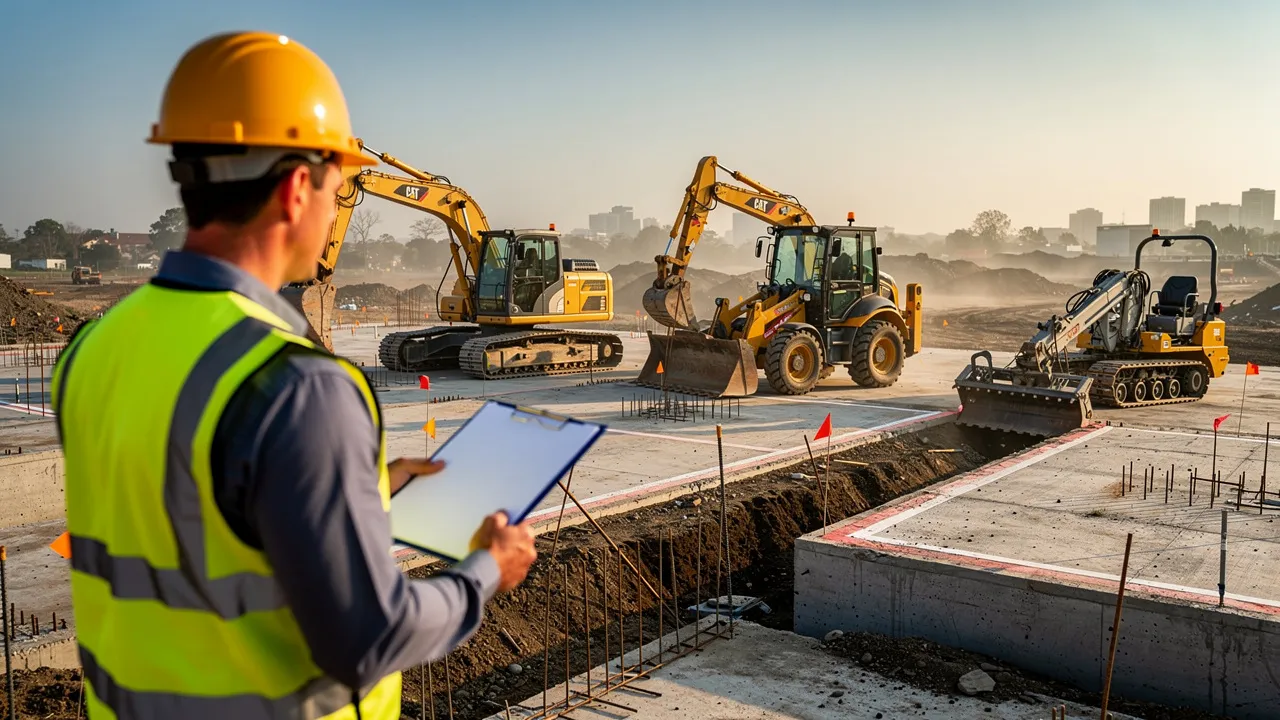
Read the project phase by phase before comparing equipment categories
Read the project phase by phase before comparing equipment categories. For an Irving or DFW construction project, create one project-record entry for each immediate work phase. Each entry describes the outcome needed, the material or ground condition already known, the access available, and the equipment category being considered. When a project includes digging, trenching, moving material, clearing, grading, or site preparation, keep those phases distinguishable rather than treating them as one broad equipment request.
This record makes the comparison more specific without turning a category into a confirmed machine. It shows which general equipment role is being considered for a particular phase and which project conditions still require confirmation. It also keeps the first phase under review visible when several tasks compete for attention.
Use category descriptions as role markers, not as model specifications. Excavators, bulldozers, backhoes, and skid-steer loaders are commonly used for different construction tasks. Site-preparation tractors can support land clearing and work with several attachments. Compactors can crush soil or waste, level a job site, and prepare land before a foundation is laid. Bulldozers can remove the top layer of dirt and perform digging, leveling, and clearing work at industrial sites. Wheel loaders can transport materials and perform excavation.
Compare each role with the phase record. A category associated with excavation does not by itself resolve a material-moving, grading, clearing, or trenching requirement. A broad earth-moving label also does not identify the access or ground conditions at the jobsite. Keep the result at category level until the specific equipment, specifications, availability, rate, rental term, and delivery arrangement have been confirmed.
When the phase is trenching, keep that work separate from general earth moving. Record the intended trenching work and any size or power requirements already known, then ask which available options can be compared with those requirements. The comparison remains a request for category and equipment confirmation rather than an assumption that a particular trencher will fit the project.
After the phase record is complete, carry its relevant details into the rental inquiry with EZ Equipment Rental. Give the DFW city and site address or a practical location description, state plainly if the job is outside DFW, describe the intended work in ordinary terms, and identify the phase being addressed first. Include the expected rental period or the expected window and remaining uncertainty if the schedule is not fixed. State the actual city and jobsite separately, and ask whether pickup or delivery and unloading can be arranged for the requested dates.
Before operation, complete proper training and read the operator's manual. Review jobsite hazards, safety and emergency procedures, and individual responsibilities with all personnel before work begins. Keep site-specific professional, safety, and utility review separate from the category comparison. For digging in Texas, the supplied Texas811 process description uses utility locators and utility companies to mark underground lines and identifies a two-working-day wait, excluding weekends and holidays, before digging. The phase record supports a focused rental discussion; it does not replace equipment-specific confirmation or site-specific review.
Constraint-First Category Screen
Use a constraint-first category screen for an Irving or DFW site-work plan. Begin with the DFW city and site address, or provide a practical location description when the address is not available. State plainly if the job is outside DFW. Your Irving billing or business reference should not stand in for the actual worksite.
Next, describe the intended work in ordinary terms and identify the first part of a multi-part project. Construction alone is too broad for a useful comparison. A more useful description identifies the immediate result you need from the equipment, such as moving material, clearing an area, preparing land, or creating a trench. Keep the description tied to the phase you are asking about first.
Use access, terrain, material, and attachment needs as screening factors. A compact work area or site-preparation task may lead you to compare earth-moving categories. Those are provisional screens, not equipment decisions. For a trencher request, include the size and power requirements you already know and ask which available options can be compared with them. If the schedule is fixed, give the expected rental period. If it is not fixed, describe the expected window and say what remains uncertain. A complete inquiry therefore covers:
- The actual DFW city and jobsite.
- The first work phase and intended task.
- Access, terrain, material, and attachment considerations.
- Known trencher size and power requirements, when applicable.
- The expected rental period or uncertain schedule window.
- Pickup or delivery and unloading questions for the requested dates.
This approach gives you a category to discuss without treating that category as a confirmed machine match.
Define the work outcome and first project phase
The first project phase determines what you should describe before naming equipment. Write the task as an outcome or work activity rather than relying on a broad label. For example, identify whether the immediate requirement is to dig, trench, move material, clear an area, grade a surface, or prepare land. This description gives the category comparison a clear starting point.
A multi-phase construction job needs a first question, not one broad equipment request for every activity. Separate the immediate phase from later work so the rental discussion can address the task that controls your near-term schedule. You can mention later phases as context, but identify which part you are asking about first. The first phase may also determine whether you need a general earth-moving comparison or a specific trencher discussion.
Use a short work statement with four parts:
- Action: What must the equipment help you do?
- Material or area: What will the work involve, based on what you know?
- Phase: Which part of the project needs attention first?
- Question: What equipment category or comparison do you need to resolve?
A useful statement might read: The first phase at our Irving jobsite involves preparing a defined work area; we need to compare earth-moving categories and confirm what access information is required. If the immediate task is trenching, say that directly and move to the separate trencher screen. If the project combines trenching with material movement or site preparation, identify trenching as the first request or explain which phase controls the schedule.
Describe the intended work in ordinary terms. Avoid sending only a project label such as commercial construction, because that label does not identify the work outcome or the category question. A clear task description also helps distinguish the part of the job that needs an equipment conversation from work that remains outside the present request.
Compare earth-moving categories by their general roles
Earth-moving categories serve different construction tasks, so compare their general roles before asking for a particular machine. The table below is a category screen. It helps you frame the question; it does not establish a model, capacity, attachment, availability, or suitability for a specific Irving or DFW jobsite.
| Equipment category | General role | What to record for your project |
|---|---|---|
| Excavators, backhoes, and skid-steer loaders | These are commonly used earth-moving machines for different construction tasks. | Describe the task first, then provide access, terrain, material, and attachment information for comparison. |
| Bulldozers | Can remove the top layer of dirt and perform digging, leveling, and clearing work at industrial sites. | Identify whether top-layer removal, digging, leveling, or clearing is the first phase. |
| Wheel loaders | Can transport materials and perform excavation. | Describe the material movement or excavation task and the site conditions that affect access. |
| Site-preparation tractors | Can support land clearing and work with several attachments. | State whether land clearing is involved and identify any attachment requirement you already know. |
| Compactors | Can crush soil or waste, level a jobsite, and prepare land before a foundation is laid. | State whether the phase involves soil or waste work, leveling, or preparation before a foundation. |
The first row is intentionally a broad screen. Do not assign a particular function to an excavator, backhoe, or skid-steer loader from the category name alone. Describe the work and ask which available category can be compared with it. The remaining rows offer more specific role descriptions, but those descriptions still do not settle the equipment choice.
Use the table by asking what the project needs the equipment to do first. If the answer is top-layer removal, digging, leveling, or clearing, compare that work against the bulldozer role rather than selecting a machine immediately. If the answer is material transport or excavation, use the wheel-loader role as a discussion point. If land clearing and attachments are central, include the site-preparation tractor category. If the work involves soil or waste, leveling, or preparation before a foundation, include compaction in the comparison.
When two categories appear plausible, keep both as open comparison points instead of ranking one without the necessary project details. Compare the functional role first, then the access and terrain conditions, then any material or attachment requirements. Finish by asking which available equipment can be compared with that complete record. This preserves a useful choice without turning a category screen into a machine recommendation.
A category comparison also prevents a common planning error: choosing a machine because its name sounds close to the project description. Earth moving covers several types of work. Your task statement, site constraints, and required attachment information determine which questions to ask next. Keep each category provisional until the equipment details and jobsite conditions are confirmed.
Use the category map as a two-pass screen. In the first pass, follow the immediate work outcome: retain bulldozer as a comparison when top-layer removal, digging, leveling, or clearing is central; retain wheel loader when material transport or excavation is central; retain a site-preparation tractor when land clearing and several attachments are part of the question; and retain a compactor when soil or waste work, leveling, or preparation before a foundation is involved. If trenching is the first phase, leave the general earth-moving comparison and use the trencher branch, recording the size and power requirements already known. When the description is still broad, keep excavators, backhoes, and skid-steer loaders as open categories rather than assigning them a role from their names.
In the second pass, test the remaining categories against access, terrain, material, and attachment information. A category remains a discussion point only when its general role and the recorded site conditions both fit the question. If more than one category remains plausible, preserve the comparison instead of forcing a selection. State which work outcome each category would address, identify the condition that still separates them, and ask which available options can be compared with that record. This produces a narrower, better-defined equipment question without treating an unresolved condition as proof that one category is suitable.
Screen access, terrain, and attachment needs
Access, terrain, and attachment needs narrow an earth-moving comparison after you define the task. Record the physical conditions you already know without turning them into an assumed equipment match. For an Irving or DFW jobsite, describe the available entry route, working area, restricted spaces, terrain conditions, and any attachment requirement that affects the request.
An attachment need may make a category worth discussing when it is part of the project record. It does not confirm that a track skid steer is appropriate for your task, that a particular attachment is available, or that the unit can be arranged for your dates.
Use a practical access screen:
- Entry: How will equipment reach the working area?
- Working space: Where must the machine operate, and what areas are restricted?
- Terrain: What ground or surface conditions do you already know about?
- Task interface: Will the equipment need an attachment, and do you know which type?
- Site logistics: What pickup, delivery, unloading, or route questions could affect the arrangement?
Keep access conditions separate from the work outcome. A machine category may appear suitable for a confined area, but the work task, attachment, equipment specifications, and actual route still require confirmation. If you do not know a detail, mark it as unknown instead of filling the gap with an assumption. Ask EZ Equipment Rental which available options can be compared with the record you have prepared.

Branch to trencher requirements when the task is trenching
A trencher request needs a separate requirements branch because the project question concerns trenching rather than general earth moving. Begin by stating the intended trenching work in ordinary terms and identify the first phase that needs the equipment. Then record the size and power requirements you already know.
Your trencher branch should contain four items:
- Trenching task: Describe what the equipment needs to help you do and identify the first trenching phase.
- Known size requirements: Include any size information already established for the work.
- Known power requirements: Include the power information you already have.
- Comparison request: Ask which available options can be compared with those requirements.
Do not turn an unknown size or power detail into an estimate. Mark it as open and ask what information is needed for the comparison. The category name trencher does not by itself establish a particular machine, specification, cutting arrangement, availability, rate, rental term, or operating condition.
If the project also includes clearing, material movement, grading, or site preparation, keep those activities in separate phases. Explain which phase you are asking about first and whether the trencher request is the immediate equipment question. This keeps a multi-part DFW project from becoming one broad request that does not identify the decision you need to make.
The useful action is simple: include the size and power requirements you already know, identify what remains uncertain, and ask EZ Equipment Rental which available options can be compared with them.
Build the Irving or DFW project record before requesting a rental
A project record turns a general equipment question into a focused rental request. Build the record around the actual jobsite, first work phase, category screen, known conditions, and schedule. For an Irving or DFW project, keep the business location and the jobsite as separate pieces of information.
Use this record structure:
- Jobsite: Name the DFW city and provide the site address or a practical location description. If the job is outside DFW, say so plainly. If the location is approximate, mark it as approximate.
- Intended work: Describe the task in ordinary terms. State what the equipment needs to help you do, not only the broad project type.
- First phase: Identify which part of a multi-part project you are asking about first.
- Category screen: Name the likely earth-moving category, or state that you need a comparison if you do not know the category.
- Access and terrain: Record the entry route, working area, restricted spaces, and terrain conditions you already know.
- Material and attachment information: Describe the material or area involved and list any attachment requirement you already know.
- Trencher requirements: Add known size and power requirements when trenching is the task.
- Schedule: Give the expected rental period. If the schedule is not fixed, give the expected window and state what remains uncertain.
- Logistics questions: Ask whether pickup or delivery and unloading can be arranged for the requested dates.
The jobsite record should distinguish facts from open questions. For example, Irving, Texas; address to follow is different from treating the Irving business location as the worksite. Track skid steer category to compare is different from treating a specific unit as selected. Expected window: the second half of the project period; start date uncertain is more useful than presenting an unconfirmed date.
Our Irving location is 1307 W Airport Freeway, Irving, TX 75062. That address gives you a local reference point, but it does not establish an equipment arrangement for a jobsite elsewhere in DFW. State the actual city and jobsite separately, then include your pickup, delivery, and unloading questions. The route, access conditions, and requested dates belong in the project record rather than being left implicit.
A complete record does not need to answer every question before you ask for a comparison. It needs to show what you know, what you need to compare, and which details remain open. Keeping those three groups separate also makes it easier to revise the request when the jobsite or schedule changes.
Keep a category screen separate from confirmed equipment and terms
A category screen identifies what to discuss; confirmed equipment and rental terms answer what can actually be arranged. Keep those stages separate throughout the inquiry. A likely earth-moving category or trencher category does not establish a specific model, specification, attachment, availability, rate, rental term, delivery arrangement, or unloading plan.
This distinction keeps a request focused on what is known and what still needs confirmation. The actual equipment, attachment, schedule, and rental arrangement remain subject to confirmation.
Use the distinction in your wording:
- Category screen: I need to compare earth-moving options for site preparation.
- Open requirement: The work area has restricted access, and I need to discuss attachment options.
- Confirmation question: Which available equipment can be compared with these requirements?
- Terms question: What rental period and applicable terms would apply to the requested dates?
- Logistics question: Can pickup or delivery and unloading be arranged for this jobsite and schedule?
Do not present an inquiry as a reservation or a category as a confirmed machine. Keep known requirements, requested comparisons, and confirmation questions in separate lines. That format helps you see which part of the decision remains unresolved before proceeding. It also gives EZ Equipment Rental a clearer basis for answering the equipment and arrangement questions that depend on the specific project.
Clarify the actual jobsite and local logistics
The actual jobsite determines which location and logistics questions belong in an Irving or DFW rental request. Our location is 1307 W Airport Freeway, Irving, TX 75062. Use that address as a local reference, not as a substitute for the city and site where the equipment would be used.
State the actual jobsite separately from any billing, business, or pickup reference. Include the DFW city and site address when you have them. If you only have a practical location description, provide that and mark an approximate location as approximate. If the worksite is outside DFW, say so plainly so the location question is not left unclear.
Your logistics portion should ask about the arrangement rather than imply that it has already been made. Include:
- The requested equipment category or comparison.
- The actual city and jobsite.
- The requested dates or expected schedule window.
- Whether pickup or delivery can be arranged.
- Whether unloading can be arranged for the requested dates.
- Any access condition that could affect the handoff or working area.
The Irving address does not establish an equipment arrangement for a jobsite elsewhere in DFW. A project in Dallas, Fort Worth, Grand Prairie, Arlington, or another Metroplex location needs its own jobsite information. Keep the route, access conditions, timing, and unloading question attached to that actual site.
A clear logistics question is more useful than a general request for delivery. Ask whether pickup or delivery and unloading can be arranged for the requested dates, then keep the answer separate from the category screen until EZ Equipment Rental confirms the arrangement.
Apply the safety and utility review before operation
Safety and utility review belongs between equipment planning and operation. Complete proper training and read the operator’s manual before using jobsite equipment. Before work begins, review jobsite hazards, safety and emergency procedures, and individual responsibilities with all personnel.
Use the manual for the specific equipment rather than treating a category-level discussion as operating instruction. The operator’s manual lists hard hats, safety eyewear, foot protection, hearing protection, and gloves—except when near rotating equipment—as personal protective equipment. Follow the applicable instructions for the equipment and work area, including any conditions that affect protective equipment or operation.
Prepare the basic review before the scheduled work:
- Confirm that the people operating the equipment have completed proper training.
- Read the operator’s manual for the equipment that is actually arranged.
- Review the hazards present at the jobsite.
- Review safety and emergency procedures with all personnel.
- Assign individual responsibilities before work begins.
- Keep local emergency and medical facility contact information available as part of the jobsite preparation.
Underground utilities require a separate coordination step when digging is involved. Texas811’s process uses a contact center, utility locators, and utility companies; after a request, utilities send locators to physically mark underground lines. The wait before digging is two working days, excluding weekends and holidays. Treat that timing as part of the project schedule rather than assuming that a machine can be used immediately after an inquiry.
If you are a homeowner, Texas law requires you to contact 811 two business days, excluding weekends and holidays, before digging, even when you are working in your own backyard. If you manage a construction project, account for the applicable Texas811 process and project requirements before excavation or trenching begins.
This section does not select equipment for your site or decide whether a particular work method is appropriate. It identifies the preparation steps that belong in the project record and the questions that need to be addressed before operation.

Key Highlights
The equipment decision becomes easier to manage when you keep the category screen, project record, confirmation questions, and safety review distinct. Use these points as a short pre-inquiry checklist:
- Start with the first work outcome: digging, trenching, moving material, clearing, grading, or site preparation.
- Identify the first phase when the project includes several activities.
- Compare general equipment roles against access, terrain, material, and attachment needs.
- Treat excavators, bulldozers, backhoes, skid-steer loaders, tractors, compactors, wheel loaders, and trenchers as categories to discuss rather than confirmed machines.
- Give the actual DFW city and site address or a practical location description, and state plainly if the job is outside DFW.
- Provide the expected rental period, or give the expected window and explain what remains uncertain.
- State the actual jobsite separately from the Irving business address.
- Ask whether pickup or delivery and unloading can be arranged for the requested dates.
- Keep availability, specifications, rates, rental terms, and logistics open for confirmation.
- Complete proper training, read the operator’s manual, and review jobsite hazards and emergency procedures before operation.
- Account for the Texas811 process before digging where underground utilities may be involved.
A focused record does not need to guess at missing details. It needs to make the known requirements, open comparisons, schedule questions, and site logistics visible.
Turn the project record into a focused rental request
A focused rental request gives EZ Equipment Rental enough project context to discuss the appropriate equipment category without treating the initial screen as a confirmed match. Before you submit your request, assemble the information in this order:
- Jobsite: Give the DFW city and site address or a practical location description. State if the job is outside DFW, and keep the actual jobsite separate from the Irving address.
- First work phase: Describe the intended work in ordinary terms and identify which project phase you are asking about first.
- Category question: Name the likely earth-moving or trencher category if you have one. Otherwise, ask for a comparison based on the work and site conditions.
- Known requirements: Include access, terrain, material, attachment, size, and power information that you already know. For trenching, include the known size and power requirements specifically.
- Schedule: Provide the expected rental period, or give the expected window and explain what remains uncertain.
- Logistics: Ask whether pickup or delivery and unloading can be arranged for the actual jobsite and requested dates.
A concise request can follow this order: jobsite and city; first work phase; intended task; likely category or comparison question; known access, terrain, material, attachment, size, and power requirements; expected rental period or uncertain window; and pickup, delivery, and unloading questions. Keep unknown details marked as open rather than filling them with assumptions.
Keep the wording provisional where confirmation is still needed. A category is a useful starting point, while the exact equipment, specifications, availability, rate, rental terms, and delivery arrangement require confirmation. Use the completed record to ask a precise question rather than to imply that the equipment has already been selected.
For site-specific engineering, excavation, utility, regulatory, or safety decisions, use the qualified professionals and applicable requirements responsible for those decisions. Complete the equipment-specific training, manual review, hazard review, emergency planning, and utility coordination before operation.
When the record is complete, the next conversation can focus on comparing the work requirements with available options and clarifying the applicable arrangement.
What should you include in an earth-moving or trencher rental inquiry?
How do I choose between earth-moving equipment and a trencher for a DFW job?
Start with the immediate work outcome. Use an earth-moving comparison for tasks such as clearing, grading, moving material, excavation, or site preparation; use the trencher branch when creating a trench is the first phase. Then compare access, terrain, material, attachment needs, and any known size or power requirements. Treat the result as a category screen until EZ Equipment Rental confirms the specific equipment and arrangement.
What details should I include when requesting earth-moving or trencher equipment?
Provide the actual DFW city and jobsite, the intended work, the first project phase, access and terrain conditions, material and attachment needs, and the expected rental period or schedule window. For trenching, include the size and power requirements you already know. If a detail is uncertain, identify it as open and ask which available options can be compared with your requirements.
Can I use EZ Equipment Rental’s Irving address as the jobsite for a DFW rental request?
No. The Irving address at 1307 W Airport Freeway, Irving, TX 75062 is a local reference, not a substitute for the equipment’s actual worksite. State the jobsite city and address or practical location description separately, then ask whether pickup or delivery and unloading can be arranged for the requested dates.
What should be confirmed before operating rented digging equipment?
Confirm the equipment-specific requirements and arrangement, then complete proper training and read the operator’s manual before use. Review jobsite hazards, emergency procedures, and responsibilities with the crew. When digging or trenching may encounter underground utilities, account for the Texas811 process and its two-working-day wait, excluding weekends and holidays, before digging.