
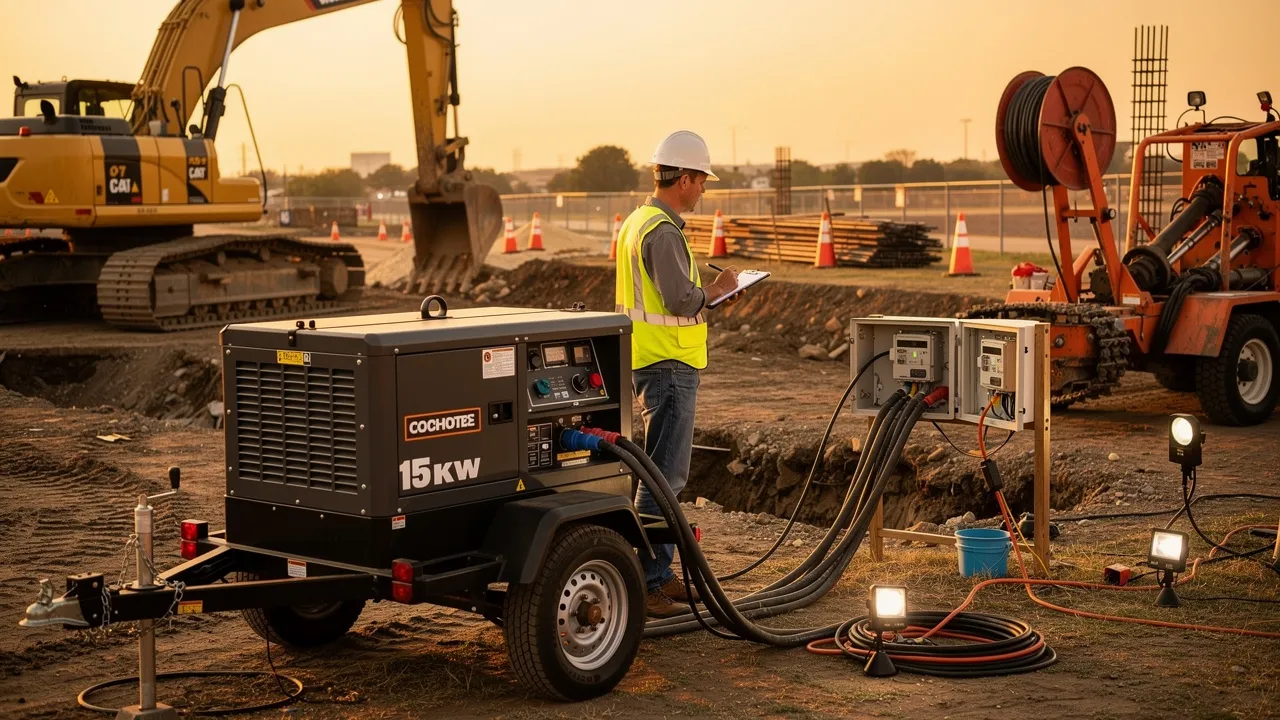
What the 15 kW figure does not establish
On an Irving or DFW construction project, 15 kW identifies a capacity figure, not a list of tools or site loads a particular generator will support. It is not, by itself, a yes-or-no answer about a specific job. What it can establish for your project depends on the confirmed specifications of the actual unit and the electrical requirements involved.
A 15 kW figure does not provide the wattage of each intended piece of equipment. Owner’s manuals can give starting and running wattage; if a manual is unavailable, the model number or identification plate may provide wattage details. Power-consumption charts are estimates, and the equipment manufacturer can clarify uncertain wattage.
Treat the result as a screen, not a promise about which equipment a 15 kW unit can run. If your documented demand is above the confirmed capacity, that capacity does not match the full demand as recorded. If it is at or below the rating, you still need the unit’s specifications and configuration checked against the project. Keep the decision open until those details align.
Build a complete record of the loads and their wattage
A complete load list is the foundation of a useful capacity comparison. Write down everything you intend to run from the generator, not only the largest machine or the main item on the work plan. The list defines what the total covers: include items planned to draw power from the generator, rather than every machine associated with the job. If an intended load is omitted, accurate figures for the remaining items still do not describe the full planned setup. If planned use changes, the list and its total describe a different setup and should be reviewed before being used to judge fit. Generator Source’s sizing guidance warns that missing even a few items can lead to undersizing and power shortages. Make the list with the people coordinating the work so the record reflects the actual intended setup.
Generator Source recommends checking the owner’s manual for those figures. Keep the two values visible in your notes rather than reducing the item to an unlabeled number; you will need a clear record of what each figure measures when you discuss the project and the specific generator.
If an owner’s manual is not available, use the equipment’s model number to look up its wattage details or check its identification plate. Record where each value came from and which item it belongs to. That small bit of organization helps you distinguish a documented equipment figure from an estimate when you review the list.
A power-consumption chart can help you form an estimate, but it does not provide exact wattage details. Mark chart-based figures as estimates rather than presenting them as confirmed values. If you are unsure of an item’s exact wattage, Generator Source recommends contacting the equipment manufacturer. Keep that item flagged until you have a figure you can use in the comparison.
A simple worksheet makes the list easier to review. For each load, include:
- The equipment or item you plan to run.
- Its model number, if available.
- Starting wattage and running wattage, with each value labeled.
- Whether the value comes from a manual, identification plate, model lookup, chart, or manufacturer.
- Any figure that remains uncertain.
Use the worksheet as a working record, not as a substitute for checking the values. A blank or estimated entry is a prompt to obtain better information before treating the project’s demand as settled. Add an operating-pattern note to the worksheet: identify which listed loads are expected to run together during the work and which are used at separate points. This does not establish that separate use will be practical, and it is not a reason to remove an intended load from the record; it makes the setup being evaluated explicit. Keep starting and running wattage in separate labeled fields, since the source guidance calls for both and the project’s suitability boundary includes startup loads. If one figure is unavailable, mark it unresolved rather than using the other figure as a substitute. The note should make clear whether the values describe the same planned operation or leave that question open. That distinction helps prevent a complete list from being mistaken for a complete assessment: the load names, their values, and their intended operating pattern all describe different parts of the setup.
Separate the rating from the equipment list
A total only helps if the figures use consistent units. Generator Source recommends totaling the listed power requirements in kilowatts (kW), which it identifies as the standard unit for commercial generators.
If an item lists power usage in amperes instead of watts, Generator Source advises converting it to watts for consistency before combining figures. Do not add an amperes value directly to wattage values: they are different units. Keep the original label in your notes and identify the converted figure as watts, so the total does not conceal which values still need clarification.
Compare the documented demand with the confirmed capacity of the particular generator you are considering. Do not assume that a unit described as 15 kW has a confirmed rating or configuration suited to your project until those specifications are checked. The comparison is about your recorded loads and that specific unit, not a general promise about what every generator in the 15 kW category can support. Make the comparison against the described operating pattern, not a bare total detached from when loads are used. The available guidance supports listing everything intended to run, checking starting and running wattage, and totaling requirements in kW; it does not provide a starting-capacity specification for a particular 15 kW unit or a rule for how overlapping starts should be assessed. Preserve those startup figures and ask for confirmation against the specific generator’s specifications rather than assuming that the kW label resolves them. Do not treat a running figure as if it also answered the starting question, or combine distinct figures without a clear basis for what the total represents. If the record cannot show how intended simultaneous operation and starting needs relate to the confirmed unit, the comparison remains a preliminary screen. That outcome identifies the question to clarify without claiming that the unit can or cannot run an unverified combination.
A 15 kW label does not identify a specific set of equipment the generator can support. Whether it fits a project depends on the documented demand and the confirmed rating and electrical configuration of the particular unit. That is a clear reason not to treat the label as a match for the full list. If the total is 15 kW or less, the arithmetic provides a preliminary screen only; it does not confirm the unit’s specifications, phase, or fit for the site.
Keep the total traceable. For example, show the individual entries, note which ones are confirmed or estimated, and state how you arrived at the total. Avoid presenting a single number without its load list: a total cannot show whether an item was left out or whether one of its figures is still uncertain. A clear record lets you discuss the actual setup instead of asking someone to infer it from the capacity label.
When a wattage value remains uncertain, keep that uncertainty beside the relevant load rather than treating an estimate as exact. Use a manual, model lookup, identification plate, or manufacturer contact to resolve the item where possible; treat a consumption chart as an estimate. Then revise the total using the documented figures and compare it with the generator’s confirmed capacity. Sort open questions by what they concern before relying on the result. A missing equipment wattage is an equipment-data gap: use the manual, model lookup, or identification plate, and contact the manufacturer when exact wattage is uncertain, as the guidance advises. An unresolved generator rating or configuration is a unit-specification question and needs confirmation for the specific unit being considered. An unsettled phase or site issue remains separate from both the load arithmetic and the equipment wattage. Keeping those categories distinct prevents one answer—for example, an exact load figure—from being mistaken for confirmation of a different question. Mark each unresolved item beside the relevant entry and ask the corresponding question during review. This organizes the next check around the actual gap: obtain better load information where that is missing, or confirm the generator and project interface where the load list alone cannot settle it. Until those details are checked, the record can support an inquiry but not a firm fit conclusion.
Confirm phase and site conditions alongside capacity
Electrical phase is a separate part of the fit check. GenPower USA advises determining whether the project needs single-phase or three-phase power. Record the project’s phase requirement and have it compared with the confirmed specifications of the generator under consideration; the kW total alone does not answer that question.
For context, GenPower USA says most commercial backup systems require three-phase service to provide the required voltage levels. That statement is about most commercial backup systems, not a conclusion about every temporary construction setup. Use your project’s actual requirements rather than assuming that a general category determines the phase you need.
The installation site also belongs in the discussion. GenPower USA advises considering a generator’s noise rating in light of where it will be installed. Describe the intended site clearly and ask which noise-rating information applies to the specific unit. Keep this check distinct from the load total and phase requirement; each is a separate part of deciding whether the proposed arrangement fits.
Before settling on a 15 kW capacity, organize your findings under three headings: documented load demand, required electrical phase, and installation-site considerations. Mark any item that is unresolved. If your load total is within the capacity but phase or site details remain open, treat the generator as a possibility to investigate—not a confirmed match. If the capacity comparison itself does not match the recorded demand, resolve that issue before relying on the unit for the full list.

Use the project details to confirm rental suitability
A useful rental inquiry starts with the job details you have recorded. Gather the intended loads, their starting and running wattage, the source of each figure, your total in kW, the project’s phase requirement, a description of the installation site, and the dates you need the equipment. This gives you a concrete basis for asking whether a specific generator is suitable for the project.
Ask us at EZ Equipment Rental about generator suitability and availability for your project. Confirm the specific unit’s specifications, delivery options, and rental terms directly, along with whether it is available for your timing. A 15 kW label is not confirmation of current stock, equipment details, or the rental arrangement.
We offer a wide assortment of heavy machines for rent to address short-term and permanent heavy construction equipment needs. That general rental offer does not establish that a particular 15 kW generator is available. Bring the project record into the conversation so the question can be answered for your loads, electrical needs, site, and dates.
The practical decision is conditional: use the load record to screen the stated capacity, keep phase and site checks separate, and leave suitability unconfirmed until the specific generator and rental details are known. Save your worksheet and the unresolved questions together; that is the clearest starting point for discussing the project.
What should you have ready when asking about a 15 kW generator?
What will a 15 kW generator run on a construction project?
There is no universal equipment list: suitability depends on the specific loads, their starting and running wattage, and the generator’s confirmed specifications. List every intended load and compare its documented requirements with the unit’s capacity; treat the result as preliminary until phase and site conditions are also checked.
Why should I check starting and running wattage separately?
They are distinct figures for each item, so record and label both rather than relying on one unlabeled number. Check the equipment manual, model information, or identification plate; if the exact wattage remains unclear, ask the equipment manufacturer. Treat chart-based figures as estimates.
What electrical details should I confirm besides a 15 kW generator’s capacity?
Confirm whether the project needs single-phase or three-phase power and compare that requirement with the specific unit’s configuration. Also describe the intended installation site and ask about the unit’s noise rating. A capacity total alone does not establish either electrical or site suitability.
What information should I have ready when asking about a 15 kW generator rental in Irving or DFW?
Prepare the complete list of intended loads, each item’s starting and running wattage and its source, the total in kW, the project’s phase requirement, a description of the installation site, and the dates needed. Ask EZ Equipment Rental to confirm suitability, availability, specifications, delivery options, and rental terms for that project.
Sources
- How to Calculate What Size Generator You Need — www.genpowerusa.com
- About Us - EZ Equipment Rental | Dallas, TX — www.ezequipmentrental.com