
Equipment transport is one of the most consistently underestimated logistical challenges in the contracting
business. The job site planning, crew scheduling, and material procurement can all be dialed in perfectly, and
the project still gets delayed because the wrong trailer showed up for the equipment being moved. For
contractors across the Dallas–Fort Worth area who are moving heavy machinery, large construction
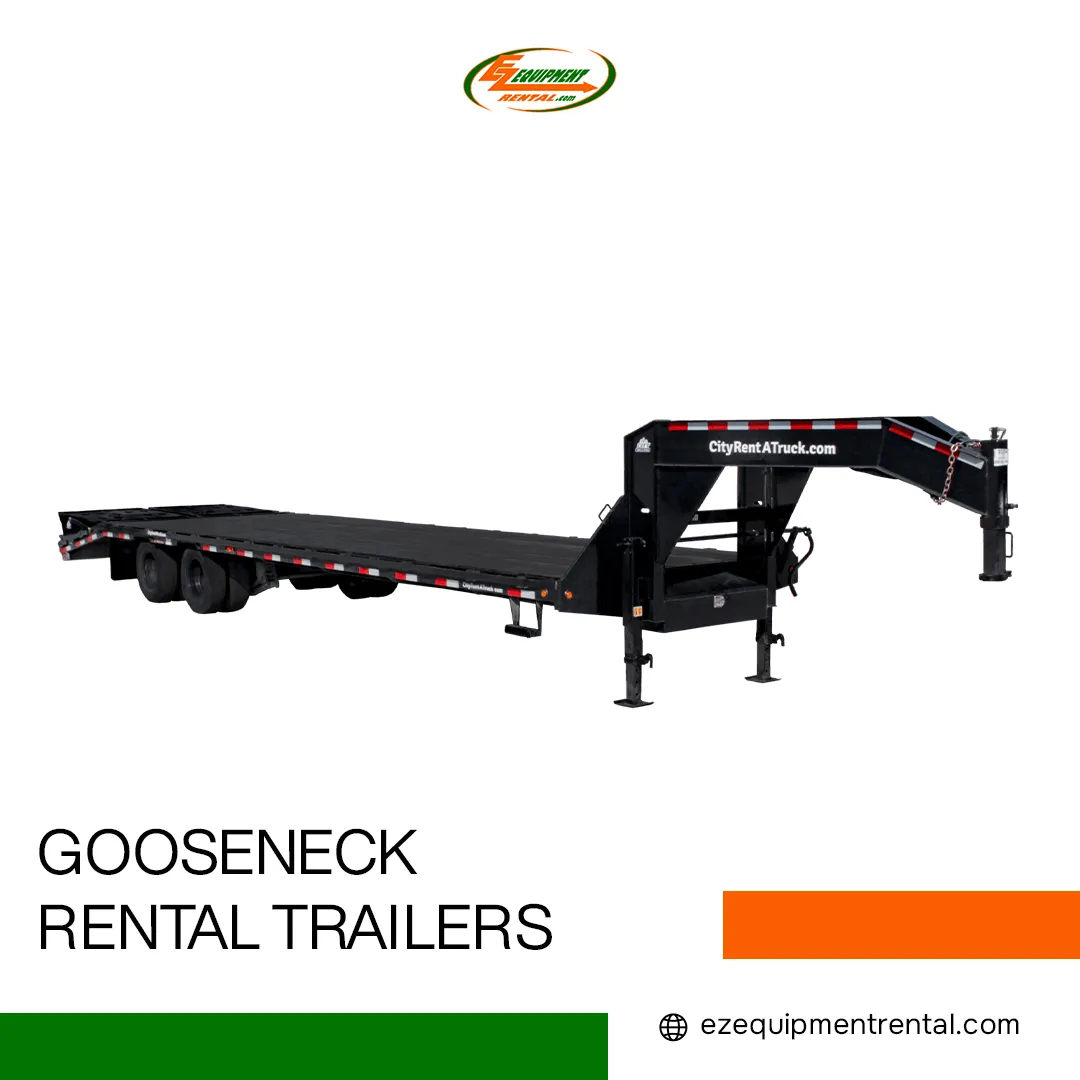
equipment, or oversized loads between sites, a Gooseneck Trailer Rental is frequently the difference
between a smooth equipment move and a complicated one.
The gooseneck design solves a problem that bumper-pull trailers cannot adequately address at higher load
weights. By connecting to a ball hitch mounted in the truck bed rather than to the rear bumper receiver, the
gooseneck transfers tongue weight directly over the truck's rear axle, which significantly improves stability,
raises the practical towing capacity ceiling, and reduces the sway dynamics that make heavy loads
unpredictable on highway segments.
What Load Characteristics Point Toward a Gooseneck Configuration?
Weight is the most obvious factor, but it is not the only one. Load length is equally relevant. Longer loads that
overhang a standard bumper-pull trailer create leverage dynamics that amplify sway under braking or in
crosswind conditions. A gooseneck configuration, with the connection point forward of the trailer axles, handles
longer loads more predictably because the geometry distributes the load mass more favorably relative to the
connection point.
Ground clearance during loading is another consideration. Many gooseneck designs offer a lower deck height
than comparable bumper-pull equipment trailers, which reduces the ramp angle required to load low-clearance
equipment. Compact track loaders, skid steers, and small excavators with limited ground clearance benefit
from that lower loading angle on every move.
What Makes DFW Contractors Choose Gooseneck Rentals Over Other Configurations?
The commercial construction activity across the Dallas–Fort Worth metro creates a steady demand for
equipment transport that exceeds what bumper-pull configurations can handle safely. Contractors moving
equipment between active projects in the northern suburbs, the commercial corridors along major highway
systems, and the heavy industrial zones south and east of Dallas encounter the full range of load types and
hauling conditions that make gooseneck versatility a genuine operational advantage.
The gooseneck trailer rental at EZ Equipment Rental is configured for the load types and distance ranges
typical of DFW contractor operations, with a deck capacity suited for the equipment most commonly moved
between active construction sites in the metro area.
What Is the Practical Difference Between a 30-Foot and a Shorter Gooseneck Configuration?
Trailer length determines how much equipment you can move in a single trip and whether the equipment's
wheelbase fits the deck without overhang. A 30-foot gooseneck accommodates a wider range of machine
sizes than a shorter deck, which matters when the equipment being moved varies from job to job. For
contractors running diverse equipment fleets, the longer configuration reduces the frequency of situations
where the available trailer does not quite fit the machine being transported.
A Gooseneck Trailer Rental in Dallas is a One-Call Solution for Complex Equipment Moves
Coordinating equipment transport across multiple rental providers for different trailer needs creates
administrative overhead that multiplies with every project. Gooseneck Trailer Rental in Dallas through EZ
Equipment Rental consolidates the trailer and the heavy construction equipment it is likely to be carrying under
a single rental relationship, which simplifies both the pickup logistics and the return process when the project
phase is complete.
What Pre-Trip Checks Should You Run Before Every Gooseneck Haul?
Before pulling onto a DFW highway with a loaded gooseneck trailer, confirm that the ball coupler is fully locked
and the safety chains are crossed under the tongue and secured to the truck frame. Verify all marker lights,
brake lights, and turn signals are operational. Check tire pressure on all trailer tires under load. Know the
loaded height and length of your configuration for any route segments with posted restrictions.
These checks take minutes and eliminate the most common issues that turn routine equipment moves into
complicated ones. Visit EZ Equipment Rental to review trailer inventory and availability for your next equipment
transport need.