
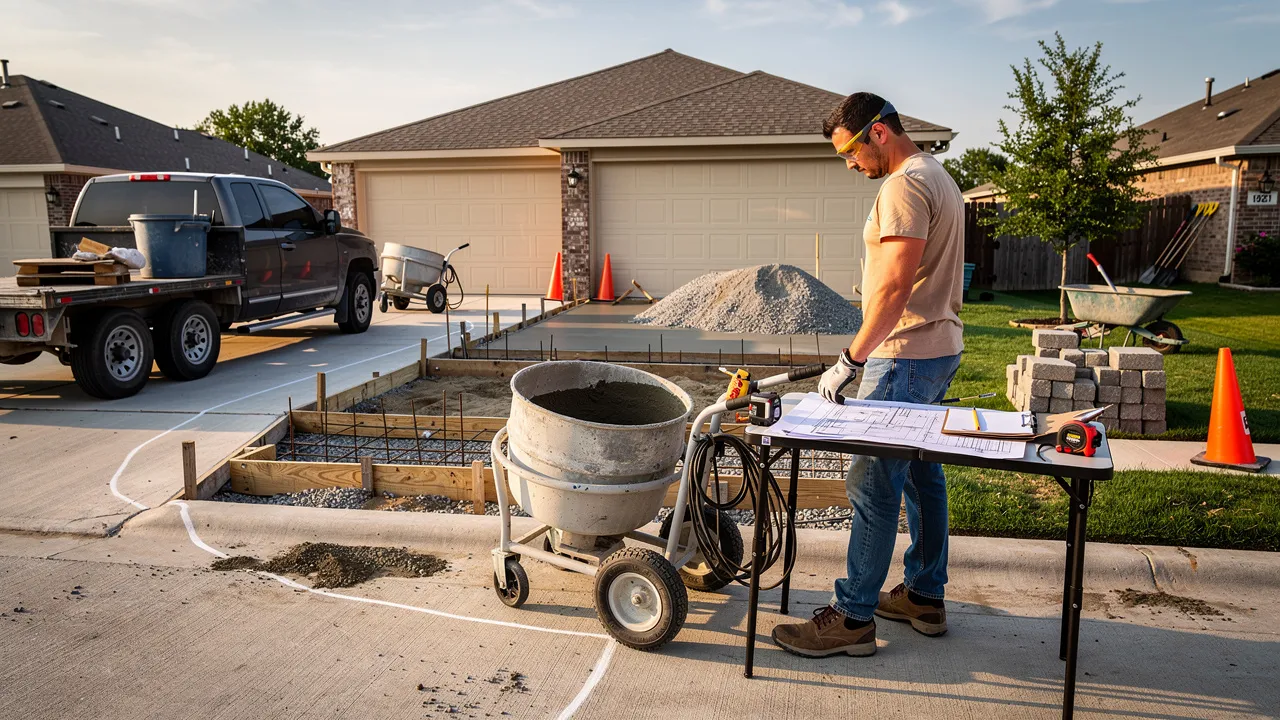
Start with the route and load your project must handle
A concrete buggy is a material-transport machine that moves concrete and other materials across a job site in a bucket measured in cubic feet. That description gives you a practical starting point for an Irving or Dallas–Fort Worth project: identify what must move, where it must go, and what the route looks like before you ask about a particular machine.
The right first question is not simply whether you can rent concrete buggy equipment. The useful question is whether your project has a repeated material-transfer problem that a dedicated buggy may address. A concrete pour that must travel from a mixer access point to forms, footings, or a slab is different from a short transfer across an open driveway. A landscaping project that moves soil, gravel, mulch, or similar material through a yard has different route and access questions again.
Write down four facts before comparing options:
- The material you need to move.
- The loading point and unloading point.
- The approximate distance and route between those points.
- The date and length of the work window.
A concrete buggy may be worth investigating when the route includes a long transfer, uneven ground, tight access, or repeated trips. That possibility is not a confirmation that a particular machine will fit. Use the route-and-load record to make the rental conversation specific.
Your project may point toward a concrete buggy when manual carrying would require repeated trips across the site and the material must follow a defined route. Your project may point elsewhere when the transfer is short, the loading and unloading points are uncertain, or the work requires a function that material transport does not address.
For a DFW homeowner, the route could run from a truck-accessible street or driveway to a backyard form, from a material pile to a low area of a property, or from a demolition point to a designated cleanup location. Describe the actual path rather than relying on a project label such as patio, walkway, driveway, landscaping, or demolition. The label identifies the project; the path identifies the equipment question.
Start with this decision: can you describe the load, the route, and the work window clearly enough for a rental representative to evaluate the request? If you can, prepare the details below and move to a project-specific inquiry. If you cannot, measure or describe the route first instead of requesting a machine by name.
Define what a concrete buggy is designed to do
A concrete buggy is designed to transport concrete and other materials around a construction or work site with a large bucket. Concrete buggies generally use tracks or four wheels, and the bucket is measured in cubic feet rather than described only by the name of the project.
That design makes the machine a transport option, not a substitute for every piece of concrete equipment. The useful comparison is between the task you need to complete and the movement the buggy can perform. If you need to carry material from one point to another across the property, the category may be relevant. If you need to mix, cut, compact, lift, excavate, or finish material, the transport question is only one part of the project.
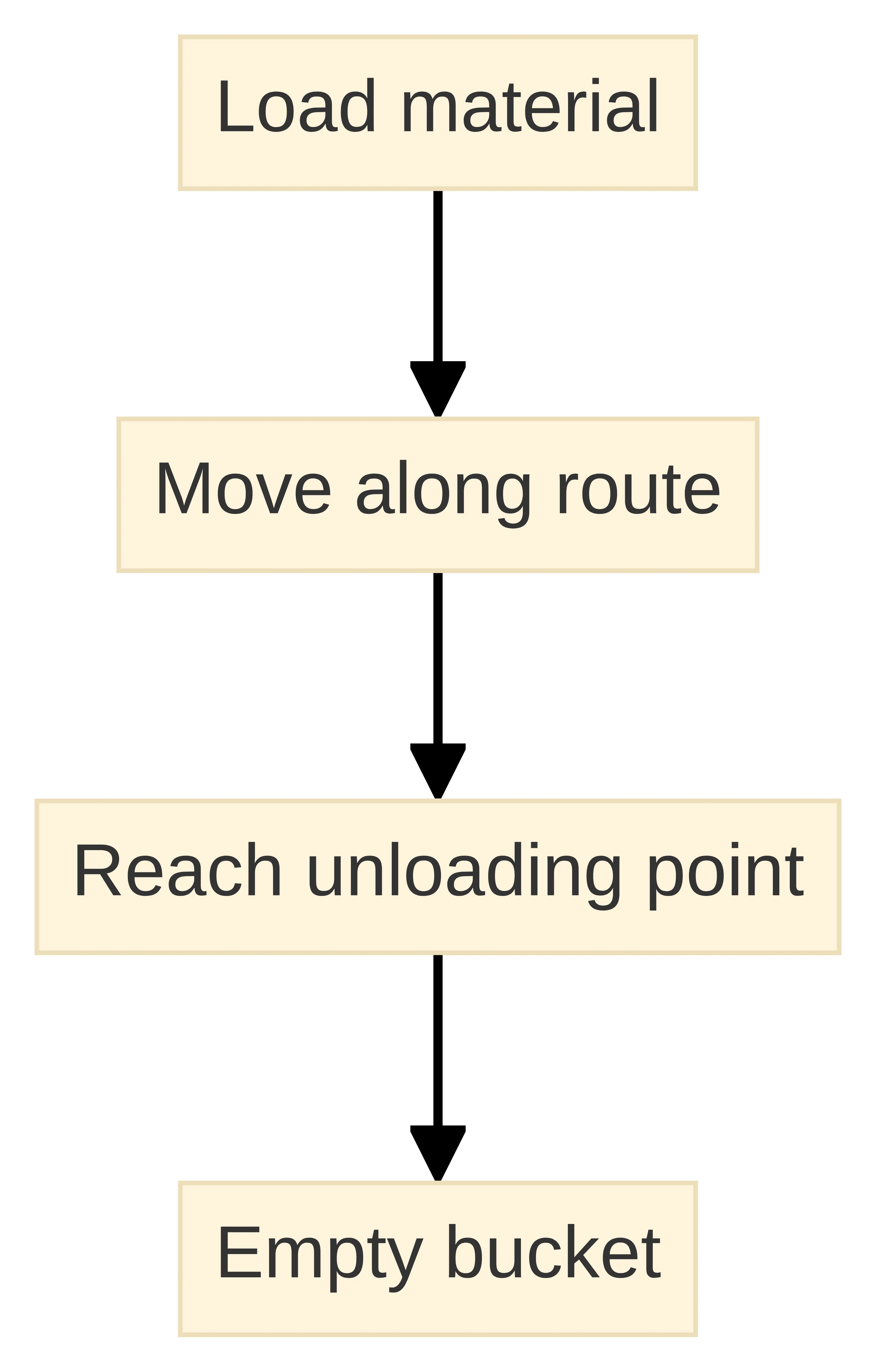
Think about the equipment in terms of four connected actions:
- Load material at a known starting point.
- Move the material along a defined route.
- Reach the intended unloading point.
- Empty the bucket where the work requires it.
The sequence matters because a machine that fits the material but not the route does not solve the whole task. Record where loading would occur, where unloading would occur, and how many transfer cycles you expect to discuss with EZ Equipment Rental.
A concrete buggy can be relevant to more than a concrete pour. Concrete buggies move concrete and other materials across a site for construction, landscaping, and general site cleanup. That broad use does not establish a universal capacity, drive type, bucket size, or rental configuration.
Do not choose a machine from a bucket number copied from another listing. Capacity is one equipment detail that must match the material, route, loading method, and unloading point. A concrete buggy listing from another rental source does not confirm what is available for your Irving or DFW project.
Use the category definition to prepare questions, not to make a specification-based decision. Ask which configuration is appropriate for the material and route you describe, what quantity it can handle under the proposed arrangement, and which details must be confirmed before you commit. Keep the project facts in front of you so the conversation stays tied to the work rather than to an equipment label.
Screen the route for distance, obstacles, and ground conditions
A concrete buggy can aid long-distance material transport and navigation over uneven terrain or around job-site obstacles. Concrete-buggy guidance also describes movement from mixer trucks to forms, footings, and slabs through tight pathways and uneven terrain. Those uses make the route a central part of the rental discussion.
Walk the intended path in your mind or on site and record the features that could change the equipment conversation:
- The approximate transfer distance from loading point to unloading point.
- Narrow gates, side yards, corners, steps, or other restricted passages.
- Slopes, uneven sections, soft areas, and changes between pavement, soil, and other surfaces.
- Fixed obstacles such as landscaping, walls, posts, parked vehicles, or stored material.
- The position where a mixer, delivery vehicle, pile, or other loading source can be reached.
A route that looks open from the street may become restrictive near the house, fence, shed, patio, or backyard work area. Include the narrowest point, not only the average width. Include the section that is hardest to access, not only the section that is easiest to photograph.
Send those facts with your inquiry so the equipment discussion addresses the complete route.
A tracked concrete buggy can haul concrete and landscaping materials, and its track model was made to drive in muddy or wet conditions. That information supports a question about ground conditions; it does not establish that every tracked buggy or every rental arrangement suits wet ground.
For an Irving or DFW project, describe whether the route is dry, wet, muddy, uneven, paved, or a combination of surfaces on the date you expect to work. If weather may change the surface before the work begins, treat that as a planning question rather than assuming the machine will handle the change. Include any area where tires or tracks might leave the intended route.
Use a simple route note:
- Loading surface: describe where material enters the bucket.
- Travel surface: describe each significant surface change.
- Difficult section: identify the narrowest, steepest, softest, or most obstructed area.
- Unloading area: describe where material must be placed.
- Access question: identify anything that needs confirmation before delivery or pickup.
The route note helps EZ Equipment Rental discuss a possible fit without assuming a model, specification, or ground-performance result.
Match the material-moving task to the buggy’s possible uses
A concrete buggy can haul concrete and landscaping materials, while broader equipment guidance also describes concrete buggies carrying materials, tools, and concrete through dense work areas. These uses give you a way to organize the inquiry, but they do not confirm that one configuration handles every material or project condition.
For a concrete project, describe whether the material will move from a mixer access point to forms, footings, a slab, or another placement area. For landscaping, name the material rather than saying only yard work: soil, gravel, mulch, or another material changes the discussion. For a flooring, demolition, or cleanup project, describe whether the task involves moving broken concrete, debris, waste material, or another load across the site.
Use the material description to answer these questions:
- What material will enter the bucket?
- Where will that material come from?
- Where must it be placed?
- Will the material be moved once or through repeated trips?
- What part of the route makes manual movement difficult?
A clear material description helps separate a transport need from a mixing, cutting, compaction, or removal need.
A concrete buggy may be relevant during demolition or cleanup because these machines can transport broken concrete, debris, and waste material. The same source describes their use in industrial construction sites, plants, warehouses, and dense job sites where compact movement can matter. Your residential project may have a different route, load, and access pattern, so use those examples as prompts rather than as a promise of fit.
Describe the phase of work that creates the transport problem. Moving fresh concrete from a truck to a form is not the same task as moving broken concrete away from a demolished walkway. Hauling mulch across a yard is not the same task as carrying material through a narrow side passage. Each task should have its own loading point, unloading point, and route note.
If the requested machine would need to perform more than transport, write down the additional work separately. Ask EZ Equipment Rental whether the proposed equipment arrangement addresses the transport task and whether another category is needed for the remaining work. Do not assume that a concrete buggy replaces every other tool on the project.
Record the material and load before discussing equipment
A concrete buggy transports concrete and other materials using a bucket measured in cubic feet, so your inquiry should describe the material and approximate load before it names a machine. A project label such as driveway repair or backyard landscaping does not tell EZ Equipment Rental what must enter the bucket or how often it must move.
Prepare a load description with these details:
- Material type: concrete, soil, gravel, mulch, broken concrete, debris, or another specific material.
- Approximate quantity: use the unit you know, such as bags, batches, wheelbarrow loads, or a rough volume estimate.
- Loading method: describe whether material comes from a mixer, pile, truck, pallet, demolished area, or another point.
- Unloading method: identify the form, slab, planting area, disposal location, or other destination.
- Transfer pattern: explain whether the work involves one movement or repeated trips.
You do not need to turn an uncertain estimate into a precise equipment specification. State what you know and label what you are estimating. A rough quantity with a clear explanation is more useful than a confident capacity assumption copied from a different machine.
Your load record should connect quantity to the route. A small amount of material may still require many trips if the loading point and unloading point are far apart, while a larger project may depend on a different arrangement if access is restricted. Describe both the amount and the movement pattern.
Ask yourself:
- Does the material arrive ready to move, or does another task happen first?
- Is the material loose, contained, mixed, broken, or irregular?
- Will the loading area remain available throughout the work window?
- Is the unloading point wide and clear enough for the intended placement?
- Will the route change between the first and last transfer?
These questions do not determine capacity or equipment eligibility. They create a factual brief that lets EZ Equipment Rental discuss the unresolved equipment details with you. Keep the brief specific to your Irving or DFW site and avoid presenting a third-party listing as the answer for your project.
Map the Irving or DFW jobsite and access route
An Irving or DFW jobsite map should show the address, loading point, unloading point, and complete travel route. Concrete buggies can aid movement over uneven terrain, around job-site obstacles, and through tight pathways, while tracked models are described as suited to muddy or wet conditions. Those premises make access details useful, but they do not establish a route approval or delivery arrangement.
Record the site in a way that another person can understand without standing there:
- Jobsite address and city.
- Street or driveway access for the loading source.
- Gate locations and the narrowest opening.
- Side-yard, backyard, or interior route details.
- Surface changes, slopes, soft ground, wet areas, and obstacles.
- Loading and unloading locations marked separately.
- A place where equipment could be received, parked, or returned, subject to confirmation.
Photographs or a simple sketch may help you explain the route in your inquiry. Describe the view from the access point to the work area, not only the final work area. If the project is in Dallas, Irving, Fort Worth, Arlington, or another DFW community, include the city and full site address so the service-coverage question is clear.
A buggy-rental inquiry checklist for Dallas includes the equipment definition, rental timing, site address, access details, site constraints, billing questions, insurance requirements, condition documentation, and return requirements. Use that checklist as an information record rather than assuming that each item has already been agreed.
For the access portion, prepare these details before sending the request:
- The site address and a contact who can answer access questions.
- Gate codes, delivery instructions, and the preferred placement area, if applicable.
- Surface and route constraints, including pavement-only areas or areas that may become muddy.
- Any local, property, HOA, or site timing limits that affect access.
- Whether you prefer pickup or delivery, with the reason for that preference.
Then ask which of those details affect the proposed arrangement. The inquiry should invite confirmation of service coverage and delivery or pickup terms for the specific site. It should not present a general DFW service statement as confirmation for your address.
Some site constraints deserve their own line because they can affect coordination even when the route is otherwise clear. Note whether the equipment would be placed on a driveway that needs protection, whether HOA or noise restrictions limit the work hours, and whether any portion of the route must remain on pavement. Ask which of these constraints matter to the proposed arrangement. If the dates include a weekend or holiday, ask how that period is handled, when an off-rent request is due, how a late return is treated, and whether a rental day follows a 24-hour period. These are questions about the proposed contract, not assumptions about EZ Equipment Rental’s terms.
Set the work window before requesting a rental
Your rental inquiry should state the planned start date, expected duration, and date or time when the equipment would no longer be needed. A Dallas buggy-rental checklist specifically includes rental start and off-rent timing, so timing belongs in the first message rather than being left for the end of the conversation.
Separate the work window from the rental window. The work window is when you expect to load and move material. The rental window is the period that would need to cover that work, subject to confirmation. If you expect concrete delivery on one day but site preparation or cleanup on another, describe those phases separately.
Write down:
- Preferred start date and approximate start time.
- Expected number of workdays or weekend days.
- Date and time the equipment should no longer be needed.
- Any schedule uncertainty caused by material delivery, weather, inspection, or another project phase.
- Whether the route or load changes during the expected period.
Do not assume that a daily, weekly, or monthly period is available or that a particular billing clock applies. Ask EZ Equipment Rental to confirm the rental period, off-rent process, and any timing conditions for the specific arrangement.
A clear schedule helps distinguish a one-day transfer from a project that needs equipment across multiple phases. The inquiry checklist also calls for the expected off-rent date and time, which gives you a concrete point to discuss when the work is complete.
Use a simple schedule statement such as: planned loading begins on a named date, the primary transfer is expected to take a stated number of days, and the equipment should be off rent after the final movement and cleanup. If those dates are estimates, say so. If the project depends on another delivery, state that dependency.
Ask about the practical timing questions that affect your decision:
- When would the rental period begin?
- How is the off-rent request made?
- What time marks the end of the rental period?
- What happens if the work finishes earlier or later than expected?
- Which dates and times are available for the proposed equipment?
Treat the answers as unconfirmed until EZ Equipment Rental responds for your project. A schedule request is useful even when the dates need to change.
State whether pickup or delivery is preferred
Your inquiry should state whether you prefer pickup or delivery and explain the site access that supports that preference. The Dallas buggy-rental checklist calls for the site address, access details, delivery window, placement information, and site constraints, so those facts belong with the preference.
Choose a preference based on the actual project logistics:
- Pickup may be the question if you have a suitable way to transport the confirmed equipment and can coordinate collection.
- Delivery may be the question if the equipment must reach a residential site, side yard, or other location that needs a coordinated placement discussion.
- Either arrangement may require access details, a contact person, a gate code, and a planned arrival window.
These are inquiry branches, not promises about what EZ Equipment Rental can arrange for a concrete buggy. State your preferred option and ask what is available for the address, date, equipment configuration, and route. Do not assume that the existence of an Irving location establishes delivery coverage for every DFW site.
A delivery or pickup conversation should include the point where equipment would arrive, the route from that point to the work area, and the person who can receive or release it. Add the gate code, preferred delivery window, placement area, and any surface restriction that could affect the arrangement.
Ask for confirmation of:
- Whether pickup or delivery is available for your specific request.
- Where the equipment would be placed or collected.
- What access dimensions or route conditions must be provided.
- Which delivery or pickup timing applies.
- What responsibility you have for documenting condition at arrival and return.
The rental checklist includes condition documentation, such as recording visible damage and equipment details when applicable, as well as return requirements. Ask how those steps apply to the proposed arrangement. Keep the request practical and specific; do not promise that a delivery window, placement location, or return method has been approved.
Before accepting or returning equipment, ask how condition and return steps should be documented. The checklist raises questions about noting scratches or dents, recording an hour-meter reading when one applies, and taking photos at delivery and return. It also identifies possible return conditions such as broom-clean equipment, refueling or recharging, and accounting for accessories. Ask which requirements apply to the proposed arrangement; do not present them as EZ Equipment Rental’s confirmed terms.
Separate a plausible project fit from a confirmed rental
EZ Equipment Rental provides equipment such as concrete equipment, earthmoving equipment, attachments, and trailers. That business fact makes EZ Equipment Rental a relevant local contact for a project-equipment inquiry, but it does not confirm a concrete buggy, a specific configuration, or a rental commitment.
Treat these items as unresolved until EZ Equipment Rental responds to your project details:
- Whether a concrete buggy is available for the requested dates.
- Which capacity, drive type, bucket arrangement, or other specification would fit.
- Whether the equipment is suitable for your material and route.
- The rental rate, billing period, deposit, or other financial terms.
- Pickup or delivery availability and delivery terms.
- Service coverage for the exact Irving or DFW address.
- Eligibility, insurance, documentation, and return requirements.
A route-and-load assessment can justify an inquiry without producing a yes-or-no rental decision. Use the assessment to explain why you are asking, then request confirmation of the details that can change with equipment, date, location, or project conditions.
A plausible fit means the project has a material-transfer task, a defined route, and conditions worth discussing with a rental business. A confirmed rental means the equipment, dates, terms, access arrangement, and eligibility have been addressed for your request. Keep those two stages separate.
Do not turn a third-party equipment description into a promise for your project. Do not treat a general category such as concrete equipment as proof that a concrete buggy is part of the confirmed inventory. Do not calculate a project budget from an unverified rate or assume that a published capacity applies to an available unit.
Use this boundary when you make the decision:
- If the route and load are clear, send a project-specific inquiry.
- If the route or load is unclear, gather those facts first.
- If EZ Equipment Rental cannot confirm the required arrangement, pause before committing and ask what alternative equipment or next step addresses the transport task.
The goal is a useful equipment conversation, not an unsupported assumption.
Use the decision stages as a stop-and-check sequence. First, identify a material that needs to travel. Second, describe the route and its limiting feature. Third, give the work window and logistics needed to discuss the request. A “yes” at these stages means you have a well-defined inquiry, not that a concrete buggy is the right or available unit. A “no” tells you which fact to clarify before asking for a commitment. This keeps the decision useful for a homeowner who is still comparing a transport solution with another equipment category.
Ask EZ Equipment Rental for project-specific guidance
EZ Equipment Rental provides personalized recommendations based on your specific needs and budget, and we serve industrial businesses and homeowners with equipment for various projects. For an Irving or DFW homeowner, that makes a detailed project brief more useful than a short request for a machine name alone.
Tell us what you need to move, where the material starts, where it ends, how the route is configured, and when the work is planned. Include your city and site address, material or load description, route conditions, expected duration, and pickup or delivery preference. Then ask us to discuss the equipment category and confirm whether a concrete buggy arrangement is available for those facts.
A project-specific request lets the equipment conversation stay connected to your actual work. It also gives you a clear place to ask about the details that remain unresolved, including capacity, specifications, pricing, timing, service coverage, and eligibility.
Your request should distinguish known facts from estimates. For example, you can state that the material is concrete, that the loading point is at the front driveway, that the unloading point is a backyard form, and that the travel route includes a narrow side passage. Add the expected start date and the number of days you anticipate needing the equipment.
Ask EZ Equipment Rental to respond to the project rather than to a generic keyword. Useful questions include:
- Does a concrete buggy arrangement fit the material and route described?
- Which equipment details must be confirmed before you proceed?
- Is the requested date available for the proposed arrangement?
- What pickup or delivery options apply to the site?
- Which pricing, billing, insurance, eligibility, and return terms should you understand first?
These questions request guidance without asserting that a concrete buggy is confirmed inventory. Keep the inquiry open to a different equipment category if the route, material, or access conditions point elsewhere.
Use the contact form as a confirmation brief
Organize the message in this order:
- Project location: city, full address, and the relevant Irving or DFW area.
- Intended use: concrete placement, landscaping-material movement, demolition cleanup, or another transport task.
- Material and load: what will move, approximate quantity, loading point, and unloading point.
- Route: distance, narrow passages, surfaces, slopes, wet or muddy sections, and obstacles.
- Timing: desired start date, expected duration, and anticipated off-rent date.
- Logistics: pickup or delivery preference, access instructions, and a site contact.
- Questions: equipment fit, availability, specifications, pricing, terms, service coverage, and eligibility.
A Dallas buggy-rental checklist also includes billing rules, insurance requirements, condition documentation, and return requirements. Add those as questions rather than assumptions.
If the form has limited space, put the facts that identify the request first: site address, intended use, material or load, most restrictive route condition, dates, and pickup or delivery preference. Then add the unresolved questions about fit, availability, specifications, pricing, terms, coverage, and eligibility. This order helps keep a short message useful without turning an estimate into a confirmed equipment requirement.
A useful message can be direct and complete without pretending that any detail is settled. Use this structure in your own words:
- I need to move [material] from [loading point] to [unloading point] at [city and address].
- The route includes [distance, surface, narrow access, slope, obstacle, or wet area].
- The work is planned for [start date] and should take about [duration].
- I prefer [pickup or delivery], and the access details are [brief description].
- Please advise whether a concrete buggy or another equipment category fits this task and confirm the available specifications, timing, pricing, terms, service coverage, and eligibility.
Replace each bracketed item with your project facts before submitting the form. If you do not know a quantity or date, label it as an estimate. If you have photographs or a route sketch, mention that you can provide them if requested.
The purpose of the message is to open a fact-based rental discussion. It is not a commitment to a machine, rate, configuration, or delivery arrangement.
Use the Irving location for local coordination
EZ Equipment Rental is located at 1307 W Airport Fwy, Irving, TX 75062. The listed hours are Monday through Friday from 7:30 AM to 5:30 PM and Saturday from 7:30 AM to 5:00 PM; the location is closed on Sunday. Use the Irving address as a local reference when you describe pickup questions, site coordination, or the location of your project.
The Irving location does not by itself confirm concrete buggy availability, pickup eligibility, delivery coverage, or hours for a particular rental arrangement. Include your project address and preferred contact timing in the form, then ask which coordination method applies to the requested equipment and date.
If your site is elsewhere in the Dallas–Fort Worth area, identify the city clearly. A project in Irving, Dallas, Fort Worth, Arlington, or another DFW community may raise different access and delivery questions. Give EZ Equipment Rental enough location information to address the exact site rather than relying on the phrase DFW alone.
Confirm every unresolved rental detail before committing
Before committing, ask EZ Equipment Rental to confirm:
- Whether the proposed equipment fits the material, load, route, and unloading task.
- Which capacity and specifications apply to the proposed unit.
- What rate, billing period, deposit, and other financial terms apply.
- What service coverage, eligibility, insurance, condition, and return requirements apply.
A concrete buggy may be a sensible rental question when your project requires repeated material movement across a defined route, but the route-and-load assessment is not a rental confirmation. A qualified professional should decide any individual engineering, structural, or construction-safety question that falls outside equipment-selection guidance. Submit the facts you have, identify the facts you are estimating, and wait for project-specific confirmation before proceeding.
If your material, route, and work window are clear, you are ready to request guidance. If any of those details are missing, complete the project brief first so the response can address the actual Irving or DFW jobsite. Keep the request focused on the work the equipment must perform, not on an assumed model or unverified specification.
Sources
- Roofing Buggy Rental Rates in Dallas (Daily/Weekly) — 2026 Costs — www.google.com, 2026-08-15
- Tracked Concrete Buggy Gas Rental | EquipmentShare — www.google.com
- Why You Need a Concrete Buggy for Your Jobs - Thompson Tractor — thompsontractor.com
- Concrete Buggies: A Complete Guide for Material Handling on Construction and Concrete Job Sites — www.machinerypartner.com
- About Us - EZ Equipment Rental | Dallas, TX
- Equipment & Tool Rentals in Dallas TX - EZ Equipment Rental