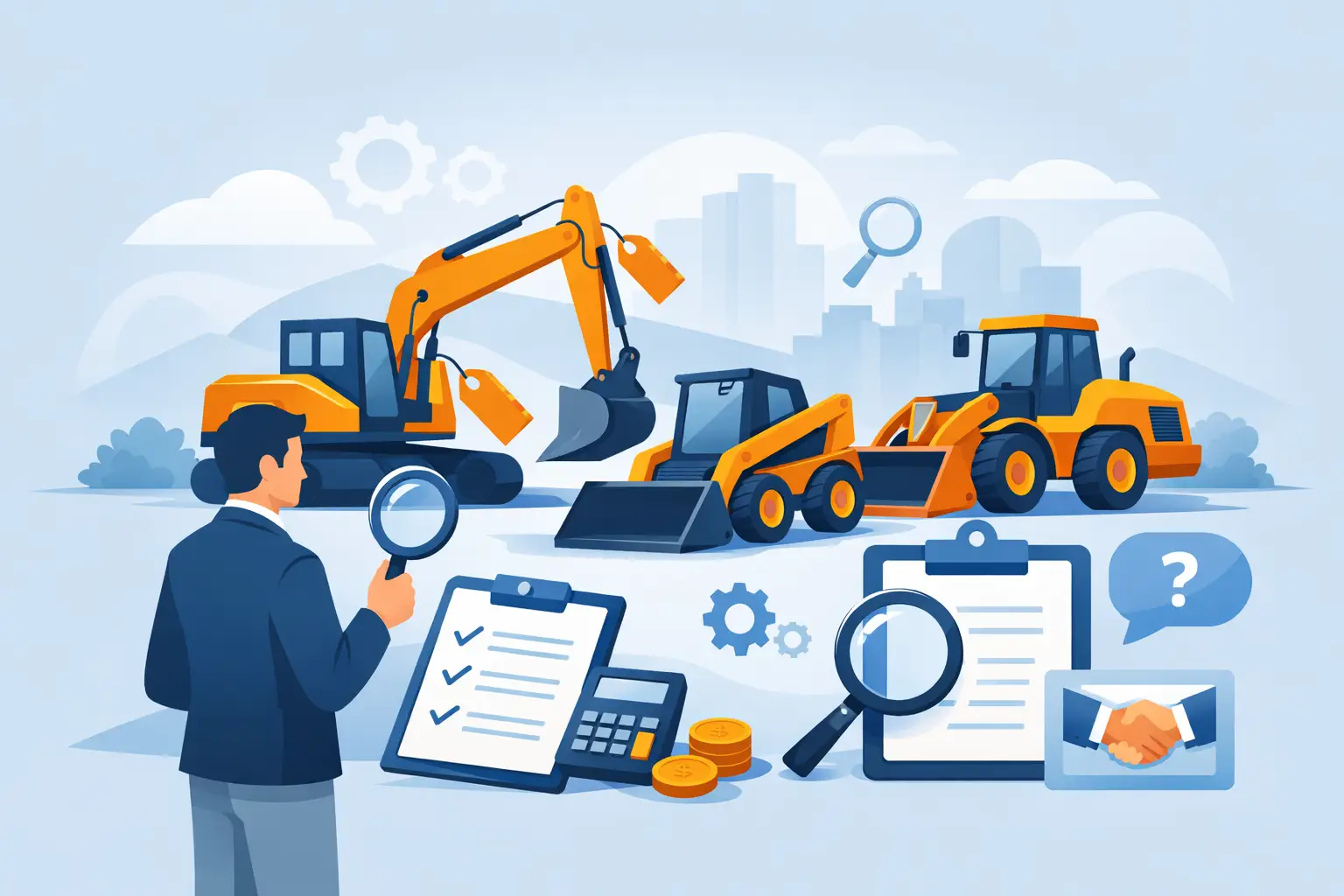
A low price on a used machine can save your job budget - or quietly create a repair bill that wipes out the deal. That is why a solid used equipment buying guide matters before you commit. Whether you are picking up a forklift, skid steer, generator, trencher, lift, or concrete tool, the goal is the same: buy equipment that is ready to work, priced fairly, and matched to the job you actually do.
What a used equipment buying guide should help you avoid
Most bad equipment purchases come from the same few mistakes. Buyers go too fast, focus only on sticker price, or choose a machine that is bigger, older, or more specialized than the work requires. On paper, the deal looks good. On the job, it turns into downtime, transport headaches, or service costs that hit at the worst time.
A good buying process helps you separate value from risk. That does not mean every older machine is a problem. Plenty of used equipment has years of useful life left. It does mean you need to look past paint, hour meter numbers, and sales language. Condition, maintenance history, application fit, and parts support usually matter more than the first price you see.
Start with the job, not the machine
Before you compare brands or years, get clear on what the equipment needs to do. That sounds obvious, but it is where a lot of waste starts. If you buy based on availability alone, you can end up with too much machine for a small task or not enough capacity for daily production work.
Think about load requirements, lift height, reach, power source, operating environment, and how often the equipment will be used. A contractor using a skid steer every week should shop differently than a property owner who needs it for one long project. The same goes for lifts, compressors, pumps, and restoration equipment.
If your workload changes by season or project type, it may make more sense to buy one core machine and rent specialty equipment as needed. That keeps ownership costs tighter while still giving you access to what the job requires.
Used equipment buying guide: what to inspect first
The first inspection should answer one basic question: has this equipment been maintained like a working asset, or just kept running long enough to sell? You do not need to be a master mechanic to spot warning signs, but you do need to slow down and look closely.
Start with the overall condition. Uneven wear, damaged controls, leaks, bent components, or sloppy repairs can tell you a lot. Check tires or tracks, hoses, pins, bushings, forks, platforms, electrical connections, and any visible welds. If the machine has attachments, inspect those too. Wear on the attachment may tell a different story than the base unit.
Then move to operation. Cold starts matter because they can reveal battery, fuel, ignition, and compression issues that a warmed-up machine can hide. Listen for rough idle, excessive smoke, unusual vibration, delayed hydraulic response, and warning lights that stay on. Run all major functions, not just one or two. Lift it, drive it, steer it, engage the hydraulics, and test safety systems.
Service records help, but they are only part of the picture. A clean maintenance log is useful. A machine that performs well under inspection is better. Ideally, you want both.
Hours matter, but not by themselves
Many buyers treat engine hours like a final answer. They are not. Hours are a useful data point, but they do not tell you how the machine was used, stored, or maintained. A lower-hour unit that sat outside, missed service intervals, or handled abusive work may be a worse buy than a higher-hour machine with consistent maintenance and sensible use.
Usage type matters. A forklift used indoors on smooth surfaces may show wear differently than one used outside on rough terrain. A generator with proper service may still be dependable after a lot of hours, while a neglected scissor lift can become a constant repair issue much earlier.
Look at hours in context with age, visible wear, maintenance history, and operating performance. If those pieces do not line up, ask more questions.
Ownership costs are where the real deal is decided
The purchase price gets attention, but ownership cost decides whether the deal was actually good. Before you buy, price out the practical costs you will carry after the sale. That includes expected service, common replacement parts, tires or tracks, filters, fluids, batteries, and any attachment or accessory needs.
Transportation matters too. Some machines are affordable to buy but expensive to move. If you need a larger trailer, delivery support, or special loading capability, that changes the math. Storage can also be a factor, especially for equipment that needs weather protection or secure yard space.
Parts availability is another big one. A great price on an older or less common machine is not much help if you lose a week waiting on parts every time something breaks. For contractors and crews, downtime often costs more than the repair itself.
Buy from a source that can answer real questions
Where you buy matters almost as much as what you buy. A seller should be able to explain the machine, its condition, and how it was maintained. If every answer feels vague, rushed, or incomplete, that is useful information.
A reputable equipment provider should be comfortable discussing service history, known issues, hours, usage type, and basic operating condition. They should also be able to help you compare one machine against another based on your workload, not just push the unit that happens to be on the yard.
That is especially helpful when you are choosing between buying used and renting first. For some customers, a short rental on a comparable machine is the smartest way to confirm fit before making a purchase. For others, buying used right away makes sense because the equipment will stay busy enough to justify ownership.
Matching equipment type to purchase risk
Some equipment categories are easier to buy used than others. Simpler tools and machines with fewer electronic systems can be more straightforward to evaluate. Units with more sensors, emissions components, control systems, or specialized hydraulics may require a closer inspection and a more trusted seller.
For example, a used trailer, ladder package, or basic compressor may be relatively easy to assess if condition is clear. A boom lift, telehandler, or skid steer with complicated systems deserves a more careful review. The more the equipment affects safety, daily production, or jobsite access, the less room there is for guessing.
This does not mean you should avoid advanced equipment on the used market. It means the inspection standard should rise with complexity and consequence.
Questions worth asking before you sign
Ask why the equipment is being sold. Ask where it was used and how often it was serviced. Ask whether any major components were repaired or replaced. Ask whether the hour meter is believed to be accurate. Ask about manuals, keys, attachments, and included accessories.
You should also ask what support looks like after the sale. Even if a used unit is sold as-is, it helps to work with a company that knows the equipment and can still help you source parts, service, or a replacement option if your needs change.
A straightforward seller will not treat basic questions like a problem. They will treat them like part of doing business the right way.
When buying used makes more sense than renting
Buying used usually makes the most sense when the equipment is going to stay busy, when you need it available on your schedule, or when recurring rental costs are starting to outrun ownership costs. That is often the case for core equipment that supports your day-to-day work.
Renting still has advantages when the job is short-term, the equipment is highly specialized, or project demand is inconsistent. For many crews, the best approach is a mix: own the machines you rely on every week and rent the niche equipment when the scope calls for it. A full-service provider like EZ Equipment Rental can be especially useful in that setup because you are not forced into one lane.
Don’t chase the cheapest machine
Cheap and cost-effective are not the same thing. The cheapest machine on the market may need immediate service, come with missing parts, or have just enough life left to get through one project. That might work for a very specific buyer with repair capacity and flexible timelines. For most professionals, it is a gamble.
A better target is equipment with clear condition, fair pricing, and a realistic service life for your workload. That kind of machine may not be the lowest-priced option, but it is often the one that keeps your crew moving and your budget under control.
Used equipment is a practical way to build capability without overpaying, but only if you buy with a clear head. Take your time, inspect thoroughly, ask direct questions, and keep the real cost of ownership in view. The right machine should make work easier the day you bring it on site, not give you a new problem to manage.