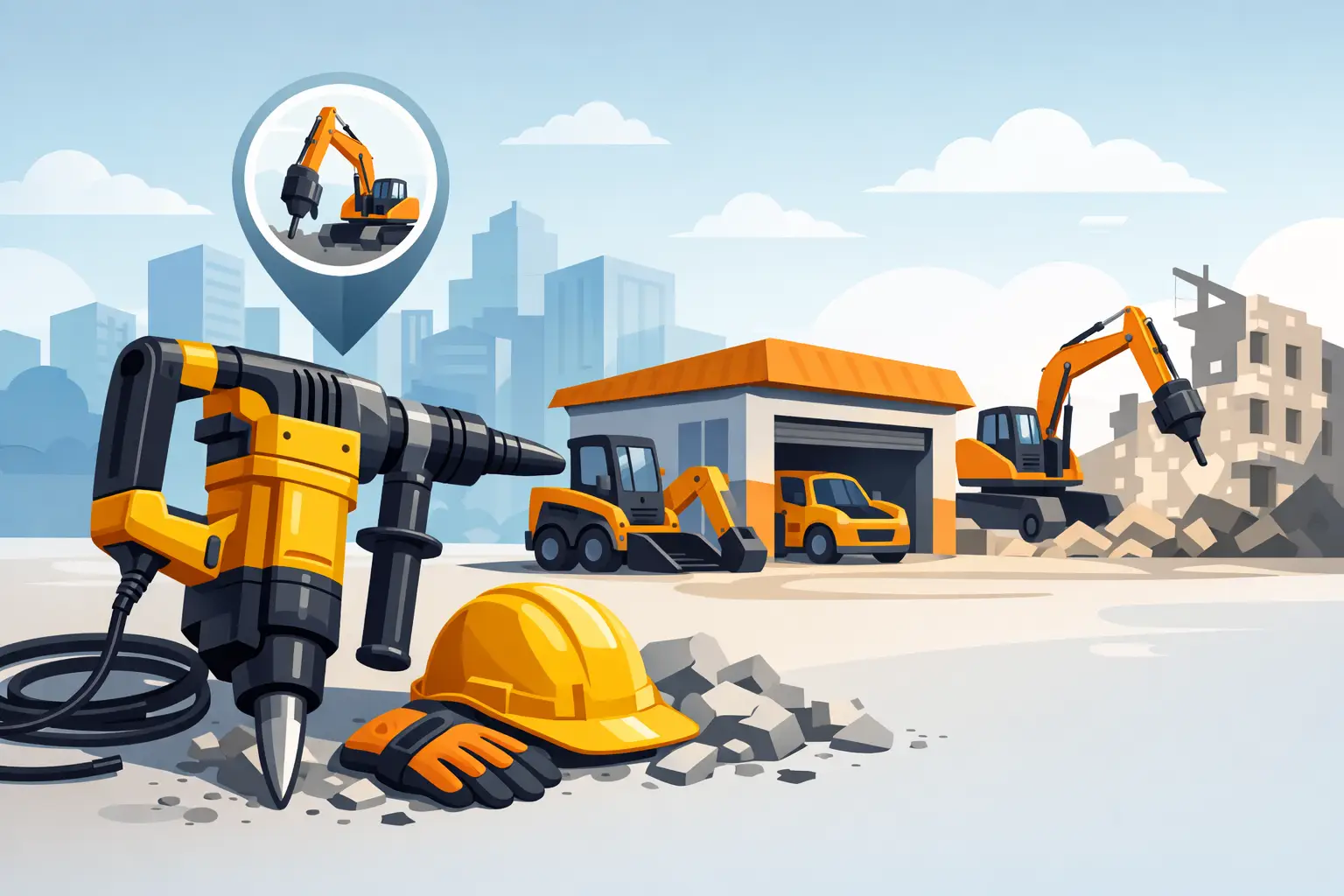
A demo hammer is built for breaking concrete, masonry, tile beds, asphalt patches, and other hard materials that a standard rotary hammer cannot handle efficiently. If you are opening up a concrete floor for plumbing, removing a sidewalk panel, breaking out a porch, or tackling thick mortar and block, renting usually makes more sense than buying.
That is especially true when demolition is only one phase of the project. Many crews need heavy breaking power for a day or two, not every week. Renting keeps upfront cost down and gives you access to a machine that is ready to work when you are.
For homeowners, the case is even clearer. A demo hammer is not a tool most people need sitting in the garage after one patio removal or bathroom tear-out. Renting gets the job done without tying up money in equipment you may not use again.
Not all demo hammers are the same
The biggest mistake people make is renting by price alone. A lower daily rate looks good until the tool is underpowered for the slab in front of you. Then you lose time, burn labor, and often end up swapping equipment mid-project.
Demo hammers generally fall into a few practical classes. Lighter models are useful for tile removal, thin-set, surface chipping, and smaller interior work where control matters more than raw force. Mid-size units are often the best fit for general renovation and concrete removal because they balance impact power with maneuverability. Heavy models are built for thick slabs, hard aggregate, exterior flatwork, and tougher demolition where speed matters and material is dense.
It depends on the jobsite, too. If you are working inside an occupied building, weight, noise, dust control, and electrical access matter. On an outdoor site, you may care more about impact energy and production rate than portability.
How to choose the right demo hammer
Start with the material. Removing ceramic tile over mortar bed is a different task than breaking a 4-inch driveway slab. So is trenching through hard-packed material with concrete mixed in. The hammer needs enough force to fracture the surface consistently, not just chip at it.
Next, look at thickness. Thin toppings and brittle materials can often be handled with a smaller tool. Reinforced concrete, thicker pads, and older dense pours usually call for more weight and more blow energy. If rebar is involved, remember that the hammer breaks the concrete, but you may still need another tool to cut metal cleanly.
Then consider the operator. A heavy demo hammer can remove material quickly, but it also wears people out. On a long shift or in tight interior spaces, a slightly smaller hammer may keep the crew moving better overall. Production is not just about peak power. It is about how long the tool can be used effectively.
Bit selection also matters. A point bit concentrates force for starting breaks and attacking stubborn sections. A flat chisel is better for lifting and separating material. A wide scaling bit can help with tile, mastic, and surface material. The right accessory changes how the tool performs, so it is worth asking what bit fits the material before you leave the yard.
What to ask before you rent
If you want the rental process to stay simple, ask a few direct questions up front. How thick is the material? Is it concrete, block, tile bed, or asphalt? Is the work indoors or outdoors? Do you have power available that matches the tool? Are you carrying the machine upstairs or using it at ground level?
These details help avoid getting a machine that is technically available but wrong for the conditions. They also help with planning transportation and handling. Some demo hammers are compact enough for one person to manage. Others are better loaded, unloaded, and positioned with help.
A dependable rental partner should also be able to explain run time expectations, extension cord needs if electric, and what personal protective equipment you should have on site. That kind of guidance matters because demolition delays usually do not come from the tool itself. They come from poor setup.
Demo hammer rental near me and jobsite efficiency
The reason people search locally is simple. When the project is already moving, waiting around for equipment does not work. A local source makes pickup faster, troubleshooting easier, and exchanges less painful if the job changes.
That matters in demolition work because surprises are common. You may start removing a topping slab and find thicker material underneath. You may hit a denser section than expected. You may realize the tool fits the material but not the access point. Renting nearby gives you options without losing a full day.
In the Dallas-Fort Worth market, crews often need more than one item at a time. A demolition phase can also require generators, air compressors, trailers, dust control equipment, or material handling support to keep debris moving. That is one reason many contractors prefer working with a full-service rental company instead of chasing one-off tools from multiple places.
Cost matters, but downtime costs more
Rental rates vary by hammer size, brand, rental term, and accessory package. Daily pricing is common for short tasks, while weekly rates often make more sense when demolition is tied to a broader renovation schedule. The cheap option is not always the affordable option if it takes longer to finish or forces another rental.
It is better to think in terms of completed work, not just sticker price. If one hammer costs a little more per day but removes material twice as fast, the labor savings usually outweigh the rate difference. That is especially true for commercial crews where multiple people are waiting on the demolition phase to clear.
There are also practical cost factors beyond the hammer itself. Transport, bit wear, power source, and debris handling all affect the total job cost. A good rental experience helps you account for those before the meter starts running.
Safety is part of productivity
Demo hammers are straightforward, but they are not casual tools. Vibration, flying debris, silica dust, and noise all need attention. Operators should use eye protection, hearing protection, gloves, proper boots, and respiratory protection when dust is present. Work areas should be checked for embedded utilities, hidden plumbing, and electrical lines before breaking starts.
Technique matters, too. Forcing the tool rarely helps. Let the hammer do the work, keep a stable stance, and break material in sections instead of trying to win one dramatic fight with the whole slab. Cleaner breaks usually mean faster cleanup and less operator strain.
If the work is indoors, dust containment may be just as important as break speed. In remodels, occupied spaces, and restoration work, controlling debris can protect adjacent finishes and reduce cleanup time. That is another case where the right size machine matters. Too much tool in a small area can create a bigger mess than the job requires.
A practical way to rent the right tool
If you are looking for a demo hammer rental near me, go in with the job details, not just the tool name. Tell the rental team what you are breaking, how thick it is, where the work is happening, and how quickly it needs to be done. That makes it easier to match you with a machine that fits the work instead of guessing based on whatever is available.
EZ Equipment Rental helps contractors, property teams, and homeowners get the equipment they need without adding friction to the day. If your demolition work is part of a larger project, it also helps to rent from a source that can support the rest of the job through one place at https://ezequipmentrental.com.
The best rental is the one that gets the material out, keeps the crew moving, and does not create a second problem by noon. Pick for the job in front of you, not for the name on the tool, and the work usually goes a lot smoother.