
Define Earth-Moving Machinery Before Choosing a Type
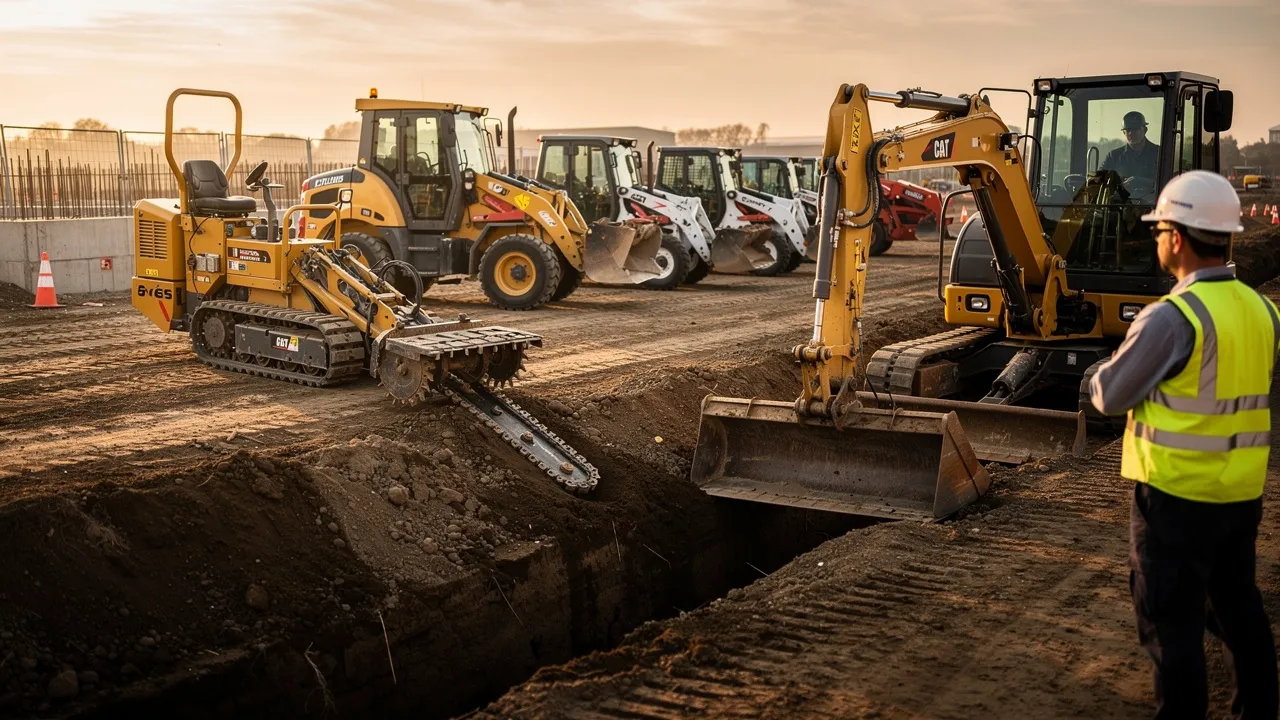
Earth-moving machinery consists of heavy machines that move, remove, or relocate large quantities of soil, rock, and construction materials. On a construction site, that work may involve preparing a building pad, changing a grade, moving material, opening a roadbed, or creating space for another phase of construction. The equipment category is broad, so the right starting point is the work your Irving or DFW project must complete rather than a familiar machine name.
Earthmoving reshapes terrain through grading, leveling, and contouring. Those activities can support construction sites, roads, bridges, landscaping, land reclamation, flood control, and drainage. A project may therefore need a machine that pushes and spreads material, one that scoops and relocates it, or one that removes it from a precise location.
Excavation is targeted digging and removal of earth to create spaces for foundations, trenches, tunnels, and other subsurface structures. That distinction helps you narrow the equipment category: a foundation or utility trench calls for controlled digging, while a broad site-preparation plan may call for grading, leveling, hauling, or material placement.
Start your equipment discussion with four questions: What material must move? Where must it go? How precise is the cut or grade? What access and ground conditions will the machine face? The answers create a useful shortlist before you compare size, attachments, rental duration, or cost.
Compare Earth-Moving Machine Capabilities
The main earthmoving machine categories divide by the task they perform rather than by a universal ranking. There is no single absolutely best earthmoving machine; the right choice depends on the working conditions. Use the following map to identify the category that deserves closer review:
- Excavators dig trenches, foundations, and holes. Attachments may also support material handling, demolition, landscaping, and dredging.
- Trenchers primarily cut narrow trenches for underground utilities. Some configurations can cut asphalt, concrete, and hard soil.
- Bulldozers use a large blade to push and grade soil, sand, and other materials. Tracks help them work across rough terrain.
- Loaders move materials around a site or load them into trucks. Wheel loaders use tires, while skid-steer loaders are smaller and more maneuverable.
- Backhoe loaders combine a front loader bucket with a rear digging arm for mixed digging, backfilling, and material movement.
- Motor graders create flat surfaces and support road construction and site preparation.
Project scale, ground conditions, schedule, machine type, size, and capacity still affect how those capabilities apply. Large projects may use bulldozers or excavators, while smaller projects may suit small loaders or backhoe excavators. These comparisons show why category labels alone do not establish fit; the actual machine type, size, capacity, and site conditions still need to be confirmed.

Choose Excavators, Mini Excavators, or Backhoes for Digging
Excavators use a boom, stick, and bucket to dig trenches, holes, and foundations. Excavators rotate 360 degrees and come in various sizes, which makes the category suitable for projects that need controlled digging and a working envelope around the machine. Attachments may expand the work into material handling, demolition, landscaping, or dredging, but the attachment and machine configuration must match the task.
A mini excavator may suit work requiring substantial power in a tight space. The category can support small-structure demolition, stump removal, snow plowing, or backyard pool excavation, in addition to digging and trenching. Mini excavators, also called compact excavators, range from 2,000 pounds to 18,500 pounds, and digging depth can vary from 6 feet to 24 feet depending on unit size. Use those figures as equipment examples, not as a substitute for confirming the actual model.
Mini excavators may have wheels or tracks. Wheels are best on smooth surfaces such as asphalt, while tracks are better on unstable or rough terrain. That undercarriage choice matters when a machine must travel between work areas or operate close to finished surfaces.
Backhoe loaders combine excavator and loader features, with a loader bucket in front and a digging arm in back. Backhoe loaders may dig, break rock, backfill, move materials, perform light demolition, and, in larger versions, lift heavy objects without a crane. Choose this category when one machine must alternate between digging and loading tasks, but confirm that its size, reach, attachment, and lifting arrangement fit the actual work.

Choose Loaders, Skid Steers, or Dozers for Material Movement
Wheel loaders use a bucket to scoop, move, and unload materials. Other attachments may support additional tasks, but the bucket remains the basic tool for loading and material movement. A wheel loader may fit a site that needs repeated movement of loose material between stockpiles, trucks, and work areas. Wheel-loader attachments can include augers, backhoes, and rippers, so the attachment list belongs in the initial request when a loading job may expand into another task.
Skid steer loaders are compact, maneuverable machines suited to small- or medium-sized construction and landscaping jobs in tight spaces and on hard surfaces. With different attachments, skid steers can move dirt or snow, excavate, compact, grade, level, drill, and lift loads. Their value comes from maneuverability and attachment flexibility, so the attachment must be part of the initial request rather than an afterthought.
Bulldozers use a large front blade to move and grade soil and other materials, and their tracks help them work on soft or muddy ground. Bulldozers can also support digging, excavation, leveling, demolition, breaking up compacted materials, and snow clearing. A dozer fits broad pushing or rough grading more naturally than precise trench work or repeated truck loading.
Track loaders distribute their weight through tracks and can handle soft, uneven, muddy, snowy, or sloped terrain that wheeled skid steers cannot.
Filter the Shortlist by Material, Terrain, and Access
Access limits can eliminate an otherwise capable machine. Record gate width, overhead clearance, turning space, slope, ground-bearing conditions, and transport constraints before you request a recommendation. The equipment examples used for skid steers range from 6,000 to 10,000 pounds, while mini excavator examples range from 2,000 to 18,500 pounds; those ranges show why machine weight and access need to be discussed together.
Match machine type, size, and capacity to the project scope, ground conditions, and budget. Include haul distance, dig depth, dump height, lift requirement, and working hours in the same review. A machine that fits the task but cannot reach the work area, turn safely, or travel over the ground is not a practical match.
Confirm the Attachment, Size, and Configuration Fit
The attachment and configuration should be confirmed before you compare rental terms. A bucket for digging, a tool for trenching, or an attachment for grading changes what the machine can do, how much room it needs, and which capacity questions matter. Consider project scale, site conditions, and schedule when selecting equipment; large projects may use bulldozers and excavators, while small projects may suit small loaders or backhoe excavators.
A machine that is too small can extend timelines and increase labor hours, while one that is too large can waste fuel and increase mobilization costs. For harsh environments, evaluate whether the machine is properly configured for the conditions it will face instead of comparing only engine power, bucket capacity, operating weight, or purchase price. High temperatures, heavy dust, muddy terrain, and continuous heavy-duty operation can cause overheating, abnormal component wear, increased filtration demands, hydraulic-system failures, corrosion, and longer downtime. A configuration review should treat operating conditions as part of equipment fit, not as a secondary cost question. Before accepting a quote, confirm that the selected machine is configured for the conditions it will face.
Equipment staging and material storage are part of equipment fit. Before renting, define the scope of work, consider access points and obstacles, plan equipment staging areas, and plan for material storage. These details help separate a machine that can perform the task from a machine that can be delivered, positioned, used, and removed without disrupting the rest of the site.
Prepare the attachment name or function, the material it will handle, the required working depth or reach, and any clearance restriction. If any of those details are uncertain, preserve the uncertainty in your request instead of assuming that a standard configuration will work.
Build a Job Profile for a Rental Recommendation
A job profile turns a general equipment question into a usable rental request. Record the following before asking for a recommendation:
- Jobsite location in Irving or the DFW Metroplex, including delivery access and any site-entry instructions.
- Primary task, material type and density, cut or fill volume, haul distance, dig depth, dump height, and lift requirement.
- Slope, ground-bearing conditions, working hours, gate width, overhead clearance, turning space, noise limits, and transport constraints.
- Required attachment, equipment staging area, material-storage plan, access points, obstacles, and preferred delivery timing.
- Expected rental duration, whether the schedule is fixed or likely to change, and whether you will arrange a qualified operator.
The job profile does not need to predict every site condition. It needs to make the known conditions visible and identify the questions that still require confirmation. Each job-profile value should be marked as measured, documented, or estimated. A measured gate width, a documented utility location, or an estimated material volume shows which inputs still need confirmation before delivery. Schedule delivery early in the day, request an operation demonstration, keep emergency contact numbers available, and monitor weather forecasts.
The equipment acquisition path should reflect the project schedule and operating plan. Consider whether to purchase, rent, or use subcontractor-provided machinery, along with available space, ground conditions, schedule, operating costs, and operator qualifications.
For equipment used under 60% annual utilization, renting may make sense; buying may win when a machine is used more than 800 hours per year consistently. Maintenance, insurance, storage, and depreciation also affect that comparison. Treat these figures as planning thresholds rather than automatic answers for every business.
Match the Rental Term to the Project Timeline
Rental agreements can cover hourly, daily, weekly, and monthly terms. Longer terms generally offer lower per-hour rates, but renting longer than necessary can add cost. Choose the term by comparing the expected machine-use window with the uncertainty in the project schedule, not by selecting the longest option automatically.
A daily rate can consume the budget when the job needs a week, while a monthly rental can charge for unused machine time when the work finishes in four days.
Larger site-development, extended-excavation, and multi-phase grading projects can make monthly terms worth comparing. When a job approaches three to four weeks, compare the actual monthly and back-to-back weekly quotes, including delivery and other charges, before choosing a term.
Rental duration and equipment service life answer different questions. A rental duration tells you how long you need the machine on the job; service life describes how long equipment may remain useful across operating hours, maintenance, repairs, and business decisions.
Contractors often take hydraulic excavators out of primary production at about 9,800 hours of use; by then, most components aside from the engine may have seen some major repair or replacement. Most general contractors put about 1,200 to 1,500 hours on wheel loaders each year. A wheel loader's average lifespan is about 10 years, or 7,000 to 12,000 hours. Those figures are broad equipment-life references, not a guarantee about a rented machine's condition or remaining hours.
Estimate Earth-Moving Rental Costs Beyond the Base Rate
Earth-moving rental cost depends on machine size and capabilities, rental term, fuel, delivery, attachments, idle time, taxes, insurance, freight, and other contract terms. Compare the base rental rate with fuel, delivery, attachments, and any time the machine may sit idle on site.
Exact excavator rental prices depend on the excavator's size and capabilities, so use the machine category, size, attachment, term, and delivery location when requesting local pricing.
Renting may be a practical cost path for equipment you use only occasionally because it usually avoids ownership costs such as maintenance, repairs, storage, insurance, and depreciation. The rental-versus-buying break-even depends on more than purchase price; maintenance, insurance, storage, and depreciation also matter. A new standard-size excavator can cost between $200,000 and $600,000 to purchase, while a mini excavator often costs less to rent because of its compact size.
Build a like-for-like comparison before deciding. List the machine, attachment, rental period, delivery and return costs, fuel responsibility, insurance or damage terms, taxes, freight, expected idle time, and any additional-hour rule. That list gives you a clearer total than a base daily rate alone.
Complete Site-Readiness and Pre-Operation Checks
Heavy equipment can create serious hazards because of its size, weight, power, and limited visibility. Operators must be trained, qualified, and authorized for the specific equipment they operate. Before equipment arrives, mark utilities and obstacles, create clear access paths, prepare staging areas, and plan for material storage.
Inspect the work area before operating and look for employees, vehicles, structures, overhead power lines, underground utilities, excavations, and changing ground conditions. Excavations and trenches can involve cave-ins, collapses, falling materials or equipment, vehicle traffic, utility hazards, and risks to nearby buildings or structures. Treat the site review as a condition for starting work, not as a formality after the machine is positioned.
Use this pre-operation sequence before moving the machine:
- Check the brakes, controls, and gauges, and confirm that other workers are clear. Correct any defect that affects safe operation before using the machine.
- Confirm that the operator is trained, qualified, and authorized for the specific equipment and that ground workers understand how to work around moving equipment.
- Plan and mark equipment routes to avoid overhead power lines and steeply sloping ground. Reduce speed for adverse site conditions and areas near work in progress.
- Never exceed rated capacity or operating limitations, allow unauthorized riders, or leave raised equipment components unsupported where employees could be exposed beneath them.
- Keep personnel clear of swing radiuses, articulation points, travel paths, and pinch points. Stop operations if communication with a designated signal person or spotter is lost.
- Use the seat belt where equipment has ROPS and a seat belt, follow the manufacturer's slope instructions, and keep a safe distance from excavation and embankment edges.
Stop and Get Qualified Help When Conditions Are Unclear
Complex tasks call for guidance rather than improvisation. Ask for guidance or consider hiring a trained operator when the work involves difficult access, uncertain ground conditions, complex attachments, excavation hazards, or a machine you are not authorized to operate. A rental conversation can address the task and configuration, but site-specific operating decisions still require the appropriate qualified personnel and applicable instructions.
The practical boundary is simple: if you cannot describe the task, site, operator arrangement, or equipment limits clearly enough to establish a safe plan, pause the rental decision and obtain qualified help before work begins.
Send EZ Equipment Rental a Project-Ready Request
EZ Equipment Rental provides earthmoving equipment, attachments, and related construction equipment such as concrete equipment, generators, pumps, saws, jumping jacks, air compressors, pressure washers, and trailers. We offer mini excavators for tasks such as digging trenches, landscaping, excavation, trenching, lifting heavy materials, demolition, and grading. EZ Equipment Rental is headquartered in Irving, Texas, and we offer advice mid-project through knowledgeable team members.
EZ Equipment Rental offers flexible daily, weekly, and monthly rental terms tailored to variable project schedules and emergency repair situations. Your request should identify the machine category you are considering, the task and material, the Irving or DFW jobsite, access and ground conditions, expected duration, delivery or pickup needs, attachment requirements, and the qualified operator arrangement. Those details give the discussion a clear basis for a current recommendation and rental terms.
A useful project brief does not need to force a machine choice before the site details are known. It needs to explain what must be dug, moved, graded, loaded, or trenched; how much space and time are available; and which conditions could change the equipment fit. Include the information you have, identify the open questions, and keep individual suitability decisions with qualified site personnel.
The goal is a narrower equipment category, a realistic rental period, and a cost discussion that includes the machine, attachment, delivery, fuel, idle time, and applicable terms. Prepare those details before the rental conversation so the next step can focus on matching the project rather than repeating basic site facts.
What Should You Confirm Before Requesting Earth-Moving Equipment?
What is earth moving machinery called?
It is also called earthmoving equipment, construction machinery, heavy equipment, or earthmovers. The category includes machines designed to move, remove, or relocate soil, rock, and construction materials, such as excavators, loaders, bulldozers, backhoes, graders, and trenchers.
Should I choose a wheeled skid steer or a tracked machine?
A wheeled skid steer generally suits flat, even, firm surfaces and may be appropriate where minimizing track marks matters. A tracked machine generally suits rough, soft, uneven, muddy, or sloped terrain, but it may travel more slowly and leave marks. Equipment terminology varies, so confirm whether a quoted unit has wheels or tracks and verify the site conditions before choosing.
How should I compare a published equipment price with a DFW rental quote?
Treat published figures as planning references rather than current Irving or DFW quotes. A daily excavator rental may cost $450 to more than $3,000, while the actual amount depends on machine size and capabilities. Ask for separate line items for the rental term, delivery, fuel, attachments, idle time, taxes, insurance, freight, and additional-hour charges.
How do rental duration and machine service life differ?
Rental duration is the time the machine remains on your project, such as an hourly, daily, weekly, or monthly term. Service life describes how long equipment may remain useful across operating hours, maintenance, repairs, and operating conditions. A project may need a machine for several days even though the equipment has a much longer overall service life; do not use general lifespan figures to predict the condition or remaining hours of a specific rental unit.
Sources
- 11 Types of Earth Moving Equipment and a Buying Guide - SANY Group - sanyglobal.com, 2026-05-19
- Blog - LTMG Machinery - ltmgloader.com
- Earthmoving vs. Excavation - HEI Civil - heicivil.com
- Earthmoving Equipment: Types, Uses & Comparison - desimachines.com, 2026-04-17
- What Do You Need for a Construction Site - nationsconstruction.com
- Heavy Equipment Safety | OSHA Safety Manuals - safetymanualosha.com
- Construction OS&H Horizontal movement - ilo.org
- Excavation, Trenching, and Earth-Moving Vehicles - safety.umbc.edu, 2024-02-26
- Guide to Choosing the Right Earth Moving Equipment for Your Project | Renter Center - rentercenter.net
- How to Choose the Right Heavy Equipment for Your Project - scottequip.com
- Types of Earthmoving Equipment for Your Next Project - DW1 - dw1.com
- Construction Equipment Names to Know | Cat Rentals℠ - rent.cat.com
- Your Guide to Heavy Equipment in Construction - fivestarequipment.com
- Understanding Earthmoving Equipment - Rentalex - rentalex.com
- How Construction Businesses Choose Equipment Based on Project Needs | Bites Off Broadway - bitesoffbroadway.com
- Choosing Earthmoving Equipment: Contractor Checklist - seahawkmachinery.com
- RENTAL RATES - wheelercat.com
- A Guide to Heavy Equipment Rental Costs | Warren CAT - warrencat.com
- Average Lifespan of Common Construction Equipment | Blog - thompsontractor.com
- Heavy Equipment Rentals Guide for Construction Projects - papertownrental.com, 2026-11-20
- Daily vs Weekly Equipment Rental: What Costs Less? - jehrentals.com
- Heavy Equipment Rental vs. Buying: Complete Cost Analysis for 2026 - fieldfix.ai