
Build a DFW rental confirmation brief before you inquire
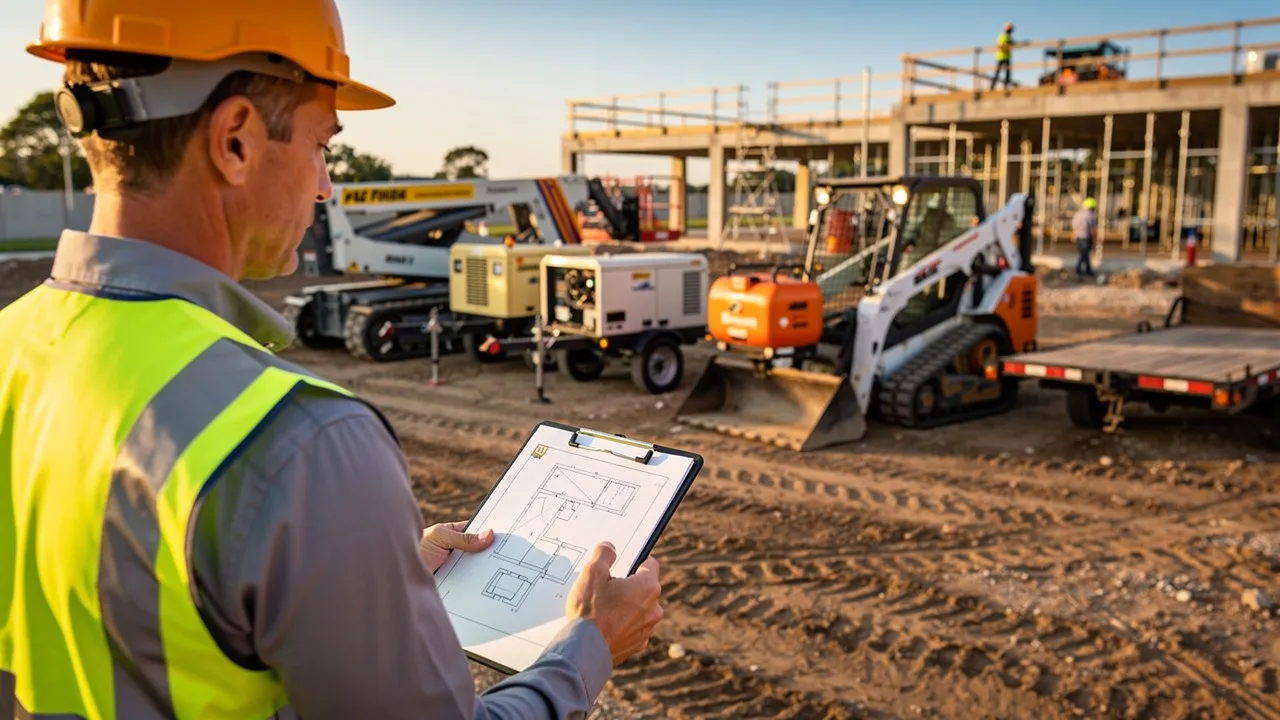
A rental confirmation brief can turn a “near me” search into a focused DFW request. Pair the project task and desired result with the jobsite context, timing, and equipment category under consideration, whether that category is a lift, generator, compressor, trailer, or earthmoving machine. This gives EZ Equipment Rental a defined set of questions without implying that a particular unit, rate, term, or availability will fit.
We provide equipment for industrial businesses, homeowners, and handymen working on residential projects. We also offer heavy machines for rent and sale for construction phases. For a construction project in Dallas-Fort Worth, the first question is practical: which broad equipment category matches the work, and what project information will help us respond to the request?
Build a short project record before you contact a rental company. Include:
- The task and the result you need from the equipment.
- The project address or DFW city where the equipment will be used.
- The approximate start date and expected rental duration.
- Access conditions, including routes into the site and the working area.
- The operator or operators who would use the equipment.
- Attachments or related equipment that the task may require.
These details give a rental company a clearer basis for recommending equipment and preparing a more accurate quote. They also keep the conversation focused on your actual project rather than on a generic category label.
Your work sequence can reveal that you need more than one category. A project may involve access work, temporary power, concrete work, earthmoving, and transport at different stages. Record each stage separately, with its location and timing, so you can ask focused questions instead of treating the entire project as one machine request.
Use access equipment for elevated or overhead work
Elevated or overhead work belongs in an access-equipment discussion before you choose a lift. We offer boom-lift and scissor-lift rentals for outdoor construction projects and indoor maintenance tasks. That description is a starting point, not a suitability decision for your site.
Your access question should describe the work setting and the reach required. State whether the work is outdoors or indoors, what area must be reached, whether the machine must travel through a restricted route, and whether the task needs vertical access or reach beyond the machine’s base. Our equipment description refers to varying platform heights, reach capacities, and maneuverability options, so those are useful subjects for a focused inquiry. Ask us to discuss the category and configuration that match the stated work rather than naming a unit before the conditions are understood.
Operator readiness belongs in the same conversation. Operator certification may be required for aerial lifts and other specialized machines. Record who is expected to operate the equipment and ask what release conditions apply to the request. Keep that question separate from equipment fit: a category may appear relevant to the task while operator requirements still need to be resolved before release.
Your access record should distinguish height from outreach and distinguish the work area from the route to it. Note gates, doors, surfaces, overhead obstructions, and the position from which the work must be performed. Those facts help define the question you need to ask; they do not establish that a particular lift can enter, travel, or perform the task.
Use power, air, concrete, and earthmoving categories for site production
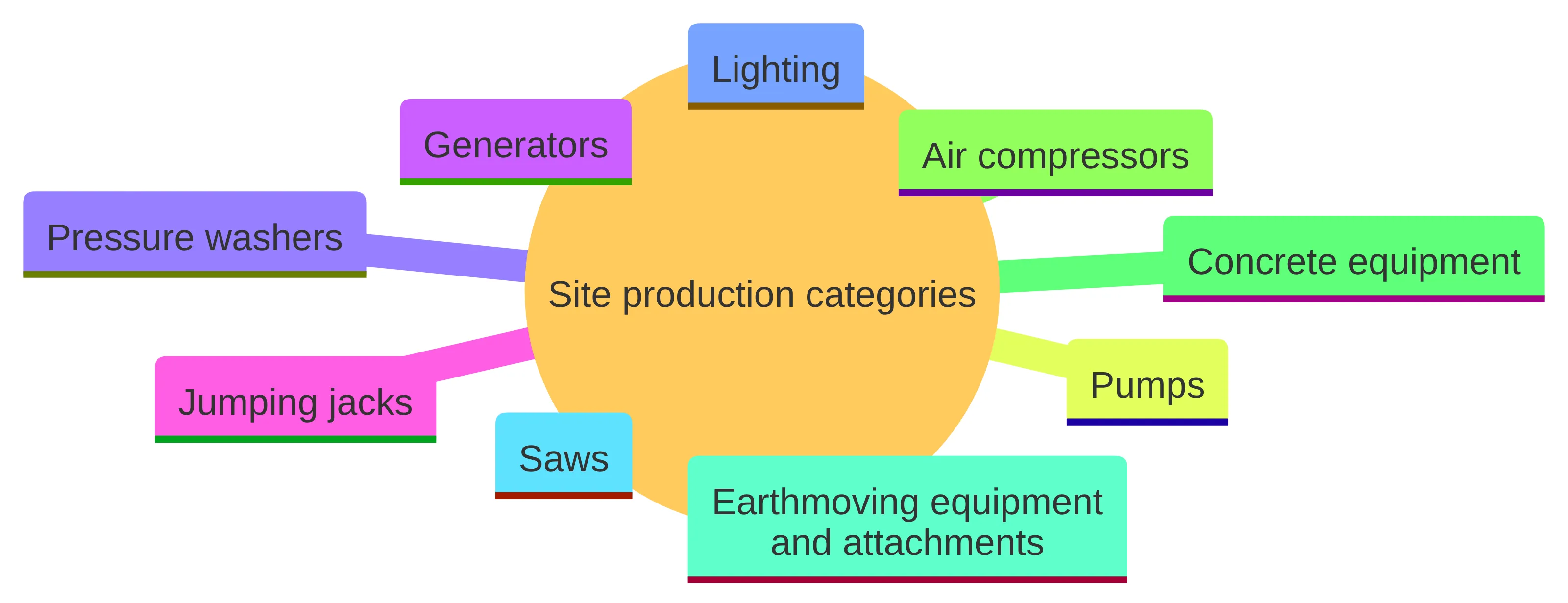
Site-production work often involves more than access. We provide generators, lighting, pumps, air compressors, concrete equipment, earthmoving equipment and attachments, saws, pressure washers, and jumping jacks. Use the task to narrow the category:
- Start with generators or lighting when the project question concerns power or illumination.
- Start with air compressors when the work depends on compressed air.
- Start with concrete equipment when placement, finishing, or related concrete work defines the need.
- Start with earthmoving equipment and attachments when the work involves moving or shaping soil or other material.
- Add pumps, saws, pressure washers, or jumping jacks when those named tasks are part of the work plan.
This list organizes a conversation; it does not select a machine for you.
Your category choice becomes more useful when you connect it to the site sequence. Explain what must happen first, what the equipment must do, and what follows after the task is complete. For example, a project may need power for one phase, concrete equipment for another, and earthmoving equipment or an attachment for site work. Treat each requirement as a separate question when the tasks occur in different areas or on different dates.
Your rental request should include the work scope, the machine requirement as you understand it, the site-access conditions, the timeline, operator availability, and attachment needs. Clear job details can help a rental company recommend equipment and prepare a more accurate quote. If you are uncertain about the category, describe the task plainly and identify what you do not yet know.
Your site-production record should also show where each task occurs and whether one phase depends on another. Note the material or work process involved, the expected dates, and any need for power, air, water movement, lighting, or an attachment. Use those details to ask whether one category or several categories belong in the request.
Treat transport and material movement as separate rental needs
Transport is a separate planning question from the equipment that performs the work. We offer trailer rentals in the Dallas-Fort Worth area, including trailers for moving, transporting heavy equipment, and managing waste. If your project requires equipment to reach the site, material to move between locations, or debris to leave the site, identify that need instead of assuming the primary rental category covers it.
Your movement record should contain three parts:
- What must be transported, such as equipment, materials, or waste.
- Where the load starts and where it must go.
- What timing and access conditions affect loading, travel, or placement.
This distinction helps you ask whether a trailer category belongs in the request alongside a lift, generator, compressor, or earthmoving category. It also keeps the equipment question and the transport question visible when a project has several work areas.
Your trailer question should not assume that a category confirms a particular load, route, or access condition is suitable. State the load and intended use, then ask which details must be confirmed for the request. Include the jobsite city, expected timing, loading conditions, and any route constraint that could affect the discussion.
Your project may need transport at more than one point. Separate delivery to the jobsite, movement between work areas, and removal of equipment or waste when those activities have different dates or locations. That separation gives you a clearer basis for asking about the trailer category and the rest of the rental plan.
Check whether EZ Equipment Rental is geographically relevant to the jobsite
We are located at 1307 W Airport Fwy, Irving, TX 75062. Irving gives you a specific DFW reference point when you are deciding whether our business is relevant to your project location. Location relevance is not the same as a promise of the shortest route, delivery, pickup, or equipment availability, so keep those questions separate.
We serve multiple locations in the DFW Metroplex, including Arlington, Carrollton, Dallas, DeSoto, Euless, Fort Worth, Garland, Grand Prairie, Grapevine, Irving, Lewisville, Mansfield, Mesquite, Plano, Richardson, South Fort Worth, Duncanville, Bedford, Farmers Branch, Oak Cliff, Coppell, Lake Dallas, and Watauga. If your project is in or near one of those communities, include the exact jobsite city in your request so the geographic question is concrete.
Your location screen has three steps:
- Write down the jobsite city and, when useful, the nearby access point or neighborhood.
- Compare that location with our stated DFW service area and Irving location.
- Ask which access arrangement applies to your request rather than assuming that proximity establishes delivery, pickup, or a specific schedule.
The result is a geographic fit question you can answer without calling us the closest option or assuming that every category is available at every location.
Your project address still matters even when the city appears within the DFW area. Include the location, site type, expected timing, and any delivery or pickup question in the same request. That keeps regional relevance separate from the details that require a response for your particular jobsite.
Check local fit before you inquire about DFW equipment rental
Use a location-and-logistics record rather than choosing a machine first. Compare the project city or DFW area with EZ Equipment Rental’s stated DFW service area and its location at 1307 W Airport Fwy, Irving, TX 75062; then note the work, broad category under consideration, timing, site-access details, and whether pickup or delivery is the access question to confirm. This record helps you decide whether EZ Equipment Rental is a relevant local option to contact; it does not establish availability, pricing, rental terms, delivery, or equipment suitability.
Use these decision branches:
- Elevated or overhead work: Begin with the boom-lift or scissor-lift category, identify the indoor or outdoor setting, and ask us to discuss the appropriate access question. Keep the category open until the site and reach conditions are addressed.
- Power, air, concrete, or site work: Begin with the matching generator, lighting, pump, air-compressor, concrete, or earthmoving category, then describe the task and work sequence. Request a category discussion when the machine requirement is uncertain.
- Movement or waste handling: Add the trailer category when the project includes transporting equipment, moving loads, or managing waste, and state what must be moved. Ask which transport details apply before treating the movement plan as settled.
- Mixed project phases: List each category separately when the work changes from one phase to another, and provide the timing for each phase. Send the phases as separate questions when their locations or dates differ.
Do not turn a broad category into a claim that a particular unit will be suitable.
Pause before making an inquiry if the project description contains only a machine name with no task, location, schedule, or access information. Add those facts first. If the category remains uncertain, describe the work in plain language and ask for a category recommendation rather than forcing a choice.
Your inquiry is ready for the next step when it identifies the work, the DFW jobsite, the category under consideration, the expected timing, and the conditions that could affect access or release. Availability, pricing, terms, and suitability remain questions for the rental conversation.
Turn the project description into a useful rental question
A useful rental question connects the job to the equipment category and identifies the facts that still need an answer. Start with the work, then add the location, timing, access conditions, operator information, and attachments. Rental companies may use those details to recommend equipment and prepare a more accurate quote, so a specific description is more useful than a request for a generic machine.
Your project question can follow this structure:
- Project: State the work phase and the result you need.
- Location: Give the DFW city and the jobsite setting.
- Category: Name the category you are considering, such as a scissor lift, boom lift, generator, air compressor, concrete equipment, earthmoving equipment, or trailer.
- Timing: Give the expected start date and rental duration.
- Access: Describe the route, working area, indoor or outdoor setting, and any space constraint.
- People: State who is expected to operate the equipment.
- Attachments or related needs: List any attachment, transport, power, air, lighting, or waste-handling question.
- Open question: Ask what must be confirmed before the equipment can be released.
The structure keeps the request complete without pretending that you already know the final equipment choice.
Your access request might describe an outdoor DFW construction phase, identify overhead work, name the boom-lift category under consideration, give the jobsite city and planned rental period, explain the access route, and ask what platform, reach, operator, and release details require confirmation. A site-production request might instead describe the concrete or earthmoving task, the sequence of work, the location, the expected dates, and whether an attachment or trailer question belongs in the same request. Keep the example tied to your own facts before you submit anything.
Your final message should separate known facts from open questions. State what you plan to do, then identify what you want the rental conversation to resolve. This makes it easier to discuss a category without presenting an unconfirmed machine, price, duration, delivery arrangement, or suitability decision as settled.
When a response comes back, sort each point into three groups: confirmed for this request, dependent on a condition, or still unanswered. Put the equipment category, proposed dates, access arrangement, operator requirements, attachments, and payment or insurance items in the group that matches the response rather than treating the entire reply as a final approval. A response may confirm that a category is worth discussing while leaving availability, pricing, release documents, or jobsite access unresolved. This classification gives you a practical follow-up list and shows which unanswered item could change the project plan.
Use the unresolved items to set the order of your next questions. If the work depends on a fixed date, ask first about availability and the rental period. If the site route or working area is uncertain, keep access conditions prominent. If the request is for a business or commercial jobsite, ask which identification, payment, purchase-order, credit, or insurance information applies. If the project has several phases, keep each phase’s open questions with its own date and location. The result is a request-and-response record that distinguishes a useful recommendation from a confirmed rental arrangement.
Ask for the details that still require confirmation
A category match does not answer every rental question. Before you commit to a project plan, separate the facts you know from the details that need a response. For your specific request, ask about the equipment category or unit, availability for the planned dates, pricing, rental duration, access arrangement, and any conditions that affect release. Treat each answer as a project decision rather than filling in an assumption.
A rental company may request business or personal identification to verify the renter and create the rental account. Payment approval, a deposit, a purchase order, or approved credit may also be required before equipment is released. An insurance certificate may be required for heavy equipment, high-value machines, or commercial jobsites. Ask which of these items applies to your request and prepare the relevant business details before the conversation.
Your confirmation list should cover:
- The category and equipment details being considered.
- The planned rental period and return timing.
- Payment, deposit, purchase-order, or credit requirements.
- Insurance-certificate requirements for the jobsite or equipment.
- Operator certification or trained-operator requirements.
- Pickup, delivery, loading, or access arrangements that apply.
- Attachment, fuel, maintenance, damage, or other agreement conditions.
Operator certification may be required for aerial lifts, forklifts, cranes, and specialized machines. Resolve that question before you treat the equipment plan as ready for release.
Your first questions should address the conditions that could change the plan: whether the category is available for the required dates, whether the jobsite access can support the proposed equipment, what documents or payment arrangements apply, and who may operate the machine. Ask about price and term alongside those conditions so the project schedule is not built around an assumption.
Use a staged confirmation record so equipment questions, release requirements, and agreement terms do not become one undifferentiated checklist. At the inquiry stage, describe the work, jobsite, category, timing, access, operator, and attachments. At the release stage, ask which identification, payment approval, deposit, purchase order, approved credit, insurance certificate, or operator certification items apply to that request. At the agreement stage, verify the rate, rental period, return deadline, damage terms, fuel policy, maintenance rules, and extra charges in the document you will sign. These stages may be discussed together, but they answer different project questions.
This separation also helps when several people are coordinating the rental. The project manager can maintain the work and schedule details, while the business contact can confirm account or payment information and the intended operator can identify certification questions. Keep the responsibility for each unanswered item visible in the project record, without assuming that any person or document has been accepted until the rental company confirms it. A concise record can then show what is ready for discussion, what is needed before release, and what must be checked against the agreement.
Review release and agreement conditions before committing
A signed rental agreement can set the rate, rental period, return deadline, damage terms, fuel policy, maintenance rules, and extra charges. Review those items before you commit the equipment to the project schedule. The agreement is the place to identify the responsibilities and dates that affect your budget and work plan; do not rely on a verbal assumption about a term, fee, or return condition.
Your receiving check should cover the equipment’s visible condition before work starts. Inspect for leaks, the condition of tires or tracks, controls, lights, alarms, attachments, fuel level, hour-meter reading, and safety labels. Record visible issues and clarify the process for reporting them before the equipment enters the work sequence. That creates a clear condition record for the equipment you receive.
Your return plan should address the agreed pickup conditions. Clean excessive debris, return fuel to the required level, gather attachments, park the equipment in the agreed pickup location, take final photos, and confirm the pickup time when those conditions apply. These are practical preparation items, not a guarantee against every charge or dispute.
Your project schedule should include the rental period, the planned return timing, and the work phase that depends on the equipment. If the work date changes, treat the rental period as a question to revisit rather than assuming that the original arrangement continues unchanged. Keep the agreement details with the project record used for the rental request.
Use a simple change log whenever a project fact changes. Record the original date, location, task, access condition, operator information, or attachment need; note the new fact; and write the question that the change creates. A changed work phase may affect the rental duration, while a changed jobsite or route may require a new access discussion. A changed operator may make certification or release requirements worth revisiting. The log does not determine whether the equipment remains suitable or available; it identifies what needs to be confirmed before the schedule is treated as current.
For a project with multiple phases, keep separate entries when the phases have different dates, locations, or categories. Link each entry to its planned return timing and the agreement conditions that apply. This prevents an early phase’s dates or assumptions from being carried into a later phase without review, and it gives the contact-form conversation a clear record of what changed and why the rental questions need another answer.
Use the contact form as the next decision step
Your DFW project location, work description, equipment category, timing, access conditions, operator information, and open questions give us a usable starting point. We provide personalized recommendations based on your specific needs and budget. Availability, pricing, rental terms, and equipment suitability still require confirmation for your particular request.
Before you make the request, keep the project record in front of you and include the facts that affect category selection and release. Use the completed record to ask a focused rental question, then resolve those project conditions before committing.
Sources
- How to Rent Construction Equipment: Process, Documents, Costs & Tips — constructionleadpro.com
- Boom lift & scissor lift rentals Dallas TX, Where to rent boom lift & scissor lifts in Dallas, Irving, Grand Prairie, Mesquite, Garland, Plano, Richardson, and Fort Worth TX — www.ezequipmentrental.com
- About Us - EZ Equipment Rental | Dallas, TX — www.ezequipmentrental.com
- Cargo Trailer Rental Dallas, TX | Rent Cargo Trailers | Equipment Rental Trailer
- Equipment & Tool Rentals in Dallas TX - EZ Equipment Rental