

Introduction
In an increasingly dynamic marketplace, the demand for cargo containers has surged, offering businesses and individuals a versatile solution for their transportation and storage needs. As the rental market for these robust units expands, understanding the various options available becomes essential for optimizing logistics.
From temporary storage during construction projects to mobile office spaces, the flexibility of renting cargo containers allows for efficient resource management without the long-term financial burden of ownership.
With projections indicating significant growth in the cargo container rental industry, exploring the types, benefits, and processes involved in securing these containers can empower project managers and businesses alike to make informed, strategic decisions that enhance operational efficiency.
Understanding Cargo Containers: An Overview of Rental Options
Cargo boxes serve as robust, standardized units primarily utilized for transporting goods across various modes of transport, including ships, trucks, and trains. Lately, the leasing market for cargo containers for rent has experienced considerable growth, offering individuals and companies a versatile option for both storage and transport needs. The worldwide freight rental market is anticipated to experience a significant growth rate, with a forecasted CAGR of 6.72% from 2025 to 2033, highlighting the rising demand for such services.
Key players in the shipping crate market, such as TLS Offshore Crates International and Maersk Crate Industry, are pivotal in driving this growth. Renting allows for without the long-term financial commitment associated with buying. These containers are particularly advantageous for:
- Facilitating smooth transitions during relocations
- Functioning as mobile offices
For instance, the market is segmented based on:
- Storage Type
- Container Length
- Application
- Container Type
This segmentation allows for targeted strategies tailored to. Incorporating expert insights, as mentioned by Ismail Sutaria, Principal Consultant, Talk to Analyst, highlights the significance of when navigating leasing choices. Understanding the array of rental options, such as a ranging from short-term to long-term rentals, is crucial for making informed decisions tailored to specific project needs.
This knowledge enables construction project managers to optimize resource allocation and.
Exploring Different Types of Cargo Containers for Rent
Cargo containers for rent are vital instruments for enabling effective handling and transport in the logistics industry, available in different varieties designed for particular requirements. Standard units, typically measuring 20 or 40 feet in length, are the preferred option for general storage and transportation. Their versatility makes them suitable for a wide range of applications.
For projects requiring extra vertical space, provide an additional foot of height, accommodating bulky items more effectively. Specialized choices, such as for temperature-sensitive products and open-top structures for storage, are also available to meet distinct project requirements. According to the United Nations Conference on Trade and Development and the World Shipping Council, 70% of the world’s goods are transported by sea, emphasizing the importance of selection in logistics.
The economic effect of shipping is further underscored by the fact that the Port of Long Beach supports 2.6 million jobs nationwide, highlighting the significance of efficient logistics in the construction industry. A practical illustration can be observed with PODS Enterprises LLC, which offers a storage solution to clients, allowing them to fill the units with their possessions for safekeeping or transport. This demonstrates how a container can offer practical solutions for both storage and transportation.
Furthermore, comprehending the existing market trends, including the anticipated growth, is essential for making informed rental choices. Recent innovations in container technology further enhance functionality, ensuring that project managers can select units that align with their specific demands. By evaluating these options, construction project managers can optimize their storage and transportation strategies, ultimately contributing to project success.
Benefits of Renting Cargo Containers: Cost-Effectiveness and Versatility
Renting cargo containers presents a multitude of advantages, particularly in terms of cost-effectiveness and versatility. For businesses, the decision to rent rather than purchase containers eliminates significant capital expenditure, enabling more strategic allocation of resources. This is particularly beneficial when compared to signing a lease for office space, which often involves long-term commitments and higher upfront costs. Storage container rentals can start at just $115 a month, making it an accessible option for many companies. Furthermore, the flexibility inherent in rental agreements allows organizations to scale their container needs in response to fluctuating project demands. For instance, whether a business requires temporary storage during a renovation or needs to transport goods over considerable distances, cargo containers can adapt to various applications seamlessly. It's important to also consider delivery fees and the location of the supplier when budgeting for storage containers, as these costs can vary significantly based on distance and weight. Additionally, by opting for rentals, businesses can bypass maintenance costs typically associated with ownership, thereby amplifying the financial benefits of this choice. As On-Site Storage Solutions succinctly puts it, renting a shipping container is straightforward: determine size and duration, compare rates, contact the provider, arrange delivery, sign the agreement, ensure permits, and schedule pick-up. This streamlined process further reinforces the appeal of rental options for construction project managers seeking efficient storage solutions. Moreover, the growing trend of using shipping containers for homes highlights their versatility and cost-effectiveness, showcasing how these containers can serve various functional needs beyond traditional storage.
The Rental Process: Key Considerations and Security Features
When renting for rent, it is essential to consider several critical factors that can significantly impact. Initially, it's crucial to determine the tailored to specific needs, as this ensures optimal usage for storage or transportation. Tenants should also examine closely, including duration, pricing structures, and delivery options, to find a that best fits their budget and schedule.
In 2024, typical leasing conditions for freight boxes are anticipated to demonstrate an increasing demand, shaped by market trends and economic influences. For context, the is projected to be a significant factor in rental pricing trends, as reported by Statista.
represent another vital aspect of storage rentals. Numerous businesses now outfit their shipping vessels with advanced locking mechanisms, significantly improving the security of stored items. For example, some storage units feature tamper-proof locks and secure access controls, which are crucial due to the increasing worries about theft and vandalism in storage facilities.
Additionally, insurance options are often available, providing coverage for potential for renters. Recent insights indicate a, with industry experts suggesting that these features are no longer optional but rather essential for safeguarding assets. As observed by Colliers International, the competitive environment of the, where the three largest firms are projected to represent 54.6% of industry revenue in 2023, influences pricing and service offerings significantly.
As the intermodal unit leasing market experiences a compound annual growth rate (CAGR) of 4.3% from 2024 to 2032, grasping these elements will enable renters to make informed choices that align with their operational needs and financial limitations.
Sustainability in Cargo Container Rentals: Eco-Friendly Practices
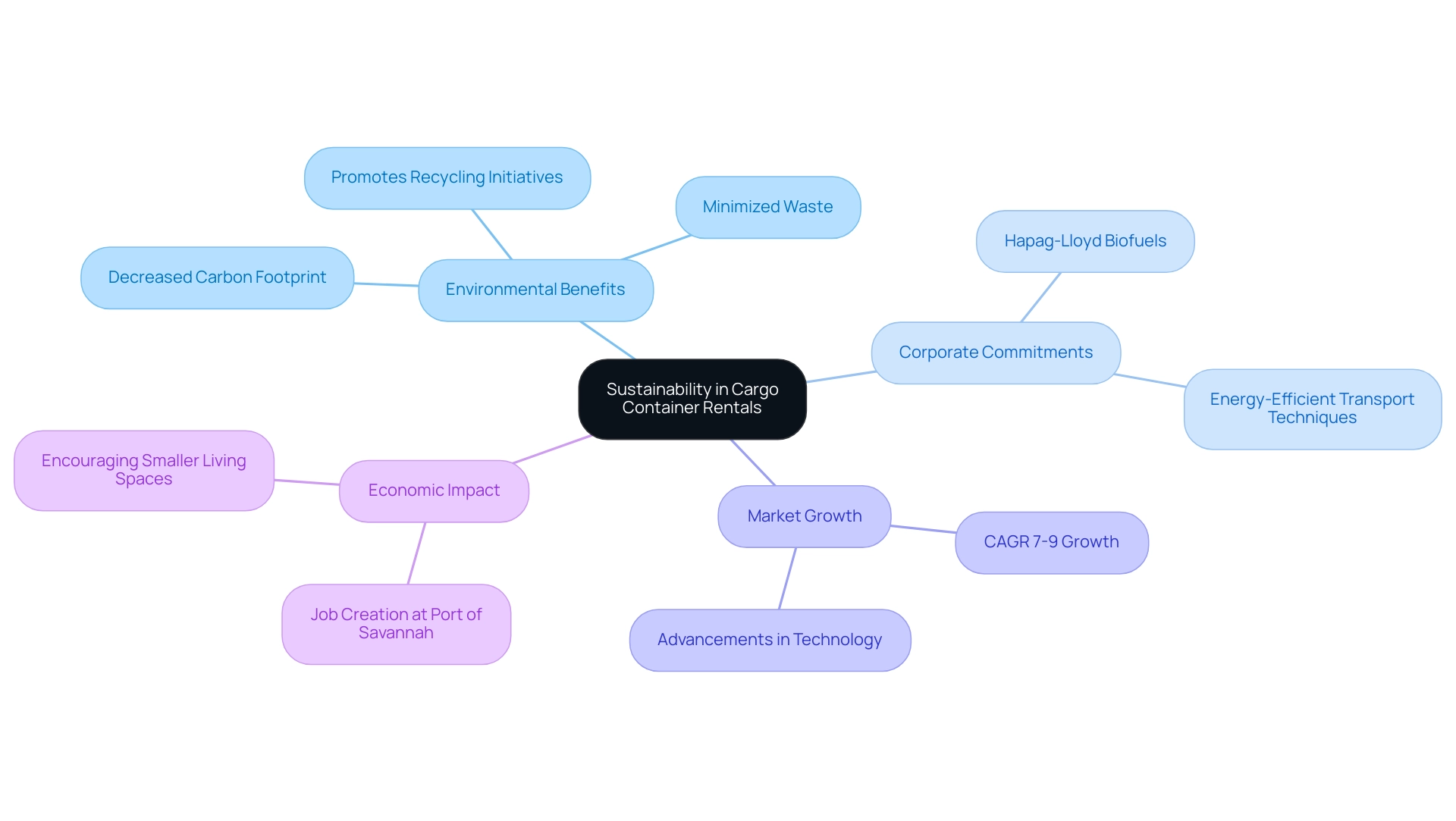
Sustainability is becoming a vital emphasis in logistics and construction, and provides a significant opportunity for. By opting to rent instead of buy, businesses can significantly decrease the carbon footprint linked to producing new items. Numerous leasing firms are at the forefront of sustainability by renovating utilized units and adopting, which correspond with the increasing industry movement towards.
This is echoed by Hapag-Lloyd's commitment to sustainability, as they state,
By using biofuels and dual-fuel ships, Hapag-Lloyd is positioning itself as a leader in sustainable shipping.
Furthermore, for storage or as temporary structures not only minimizes waste but also promotes recycling initiatives, fostering a more sustainable approach to operations. As the is projected to grow at a CAGR of 7-9% from 2024 to 2030, embracing rental solutions allows businesses to meet their operational demands while actively.
Notably, living in smaller spaces encourages individuals and businesses alike to shed excess belongings, further decreasing consumption and waste. Such strategies are crucial, especially considering that the Port of Savannah generates over 250,000 jobs statewide, underscoring the interconnectedness of and economic growth. Additionally, adopting practices from the case study titled 'How to Make Logistics More Sustainable,' which emphasizes optimizing routes, using renewable energy, and partnering with sustainable suppliers, can collectively enhance the environmental impact of logistics operations.
Conclusion
The surge in demand for cargo containers presents businesses with a unique opportunity to enhance their logistics and storage capabilities without the burdens associated with ownership. By exploring the various types of containers available for rent, including standard, high-cube, and specialized options, organizations can tailor their choices to meet specific project needs, ensuring optimal efficiency in operations.
The benefits of renting cargo containers extend beyond mere flexibility; they encompass significant cost savings and the ability to adapt to fluctuating requirements. With rental agreements that are often straightforward and affordable, businesses can allocate resources more strategically, avoiding the long-term financial commitments tied to purchasing. Additionally, the rental process is streamlined, allowing project managers to focus on core activities rather than logistical challenges.
As sustainability gains prominence in the logistics and construction sectors, opting for cargo container rentals aligns with eco-friendly practices. By choosing to rent, businesses not only reduce their carbon footprint but also support initiatives that promote recycling and waste reduction. With industry leaders increasingly embracing sustainable practices, the rental market for cargo containers is poised for continued growth, offering an effective solution for environmentally conscious operations.
In summary, understanding the diverse options and processes associated with rental cargo containers empowers businesses to make informed decisions that enhance operational efficiency and contribute to sustainability goals. Embracing these solutions can lead to improved logistics management, cost savings, and a positive impact on the environment, positioning organizations for success in a rapidly evolving marketplace.
Frequently Asked Questions
What are cargo boxes and their primary uses?
Cargo boxes are robust, standardized units used for transporting goods across various modes of transport, including ships, trucks, and trains. They are increasingly utilized for both storage and transport needs, particularly in the leasing market.
What is the current trend in the cargo container leasing market?
The cargo container leasing market has experienced significant growth, with a forecasted compound annual growth rate (CAGR) of 6.72% from 2025 to 2033, indicating rising demand for rental services.
Who are the key players in the cargo container market?
Key players in the shipping crate market include TLS Offshore Crates International and Maersk Crate Industry, which are instrumental in driving market growth.
What are some advantages of renting a cargo container?
Renting a cargo container allows for efficient logistics management without the long-term financial commitment of purchasing. It is particularly advantageous for temporary storage during construction, smooth transitions during relocations, and functioning as mobile offices.
How is the U.S. Portable Storage Container Rental Market segmented?
The U.S. Portable Storage Container Rental Market is segmented based on storage type, container length, application, and container type, allowing for tailored strategies to meet specific customer needs.
What types of cargo containers are available for rent?
Available cargo containers include standard units (20 or 40 feet), high-cube units (for additional vertical space), refrigerated units (for temperature-sensitive products), and open-top structures (for oversized shipments).
What are the cost implications of renting a cargo container?
Renting a cargo container can be cost-effective, with storage unit leases starting at around $115 a month. This approach eliminates significant capital expenditure and allows for flexible resource allocation based on project needs.
What factors should be considered when renting a cargo container?
Key factors include determining the appropriate size and type of container, examining leasing terms (duration, pricing, delivery options), and considering security features and insurance options for stored items.
How does sustainability play a role in the cargo container rental market?
Renting cargo containers supports sustainability by reducing the carbon footprint associated with producing new items. Many leasing firms are adopting eco-friendly practices, such as renovating used units and utilizing energy-efficient transport techniques.
What is the anticipated growth of the Moving and Storage Container Rental market?
The Moving and Storage Container Rental market is projected to grow at a CAGR of 7-9% from 2024 to 2030, highlighting the increasing demand for rental solutions that support environmentally responsible practices.
List of Sources
- Understanding Cargo Containers: An Overview of Rental Options
- imarcgroup.com (https://imarcgroup.com/shipping-container-market)
- stellarmr.com (https://stellarmr.com/report/Shipping-Container-Market/1195)
- verifiedmarketresearch.com (https://verifiedmarketresearch.com/product/us-portable-storage-container-rental-market)
- futuremarketinsights.com (https://futuremarketinsights.com/reports/shipping-container-market)
- Exploring Different Types of Cargo Containers for Rent
- discovercontainers.com (https://discovercontainers.com/shipping-container-statistics)
- cbre.com (https://cbre.com/insights/reports/2023-north-american-cargo-volume-returns-to-pre-pandemic-levels)
- cognitivemarketresearch.com (https://cognitivemarketresearch.com/portable-storage-containers-market-report?srsltid=AfmBOopaUeUSozEtbAYcNqUQiy7iC4dW4gNl8ISq6ssdIX_FNiFPpSdH)
- Benefits of Renting Cargo Containers: Cost-Effectiveness and Versatility
- shippingcontainertool.com (https://shippingcontainertool.com/renting-vs-buying-shipping-containers-which-is-best)
- onsitestorage.com (https://onsitestorage.com/how-much-to-rent-a-shipping-container?srsltid=AfmBOopv3EM0AZykpZ-cwBv7oQcBTHzwBUO3GTopHdi1-g2Z7NDPYIB4)
- 360connect.com (https://360connect.com/product-blog/how-much-does-a-storage-container-cost)
- universal-containers.com (https://universal-containers.com/news/why-hire-a-shipping-container)
- rentacontainer.com (https://rentacontainer.com/renting-vs-buying-storage-containers)
- The Rental Process: Key Considerations and Security Features
- ibisworld.com (https://ibisworld.com/united-states/market-research-reports/intermodal-container-leasing-industry)
- statista.com (https://statista.com/statistics/1469348/warehouse-space-real-estate-rent-new-york-city)
- container-xchange.com (https://container-xchange.com/blog/container-leasing-market)
- Sustainability in Cargo Container Rentals: Eco-Friendly Practices
- container-xchange.com (https://container-xchange.com/blog/sustainable-logistics)
- linkedin.com (https://linkedin.com/pulse/what-driving-global-moving-storage-container-rental-market-w5ede)
- construction21.org (https://construction21.org/articles/h/sustainable-shipping-container-homes-offer-cities-unique-green-architecture.html)
- cbre.com (https://cbre.com/insights/reports/north-american-cargo-volume-rebounds)


