
Turn the Planned Work Into an Equipment Question
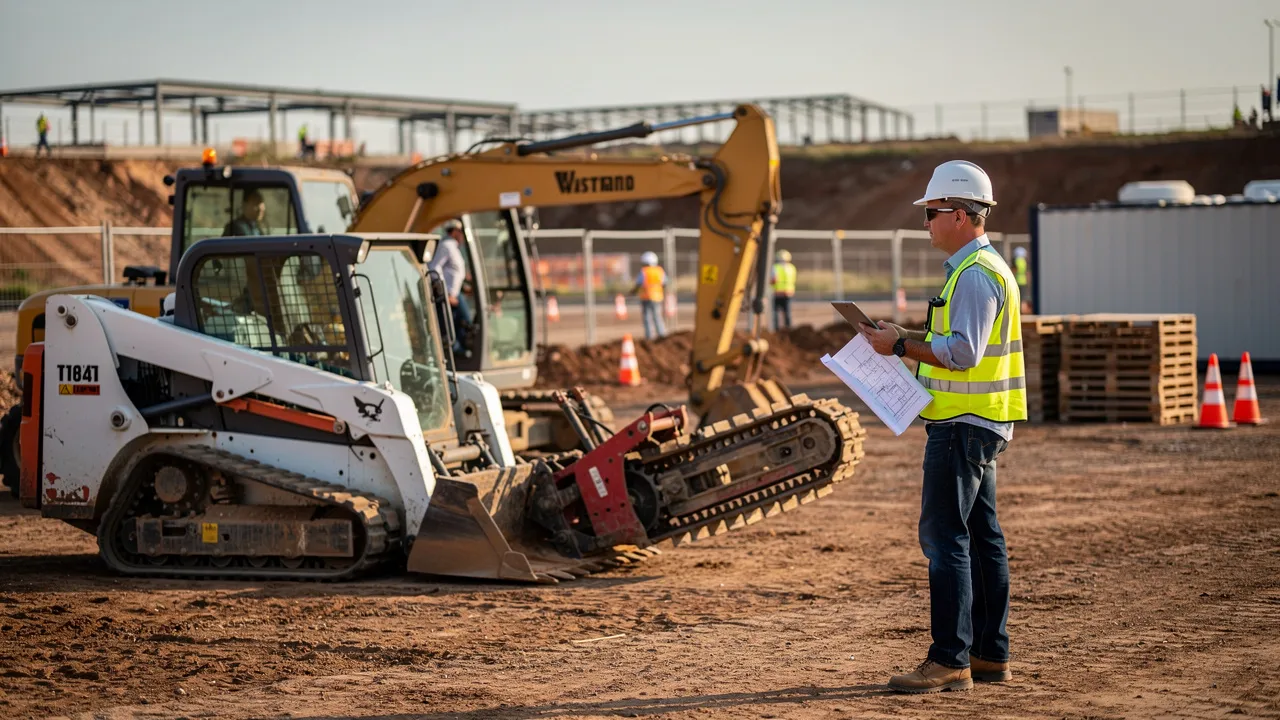
Earth moving equipment covers machines used to dig, push, load, grade, and move soil, rock, and other materials. Excavation is the more targeted removal of earth to create foundations, trenches, tunnels, and other subsurface spaces. That distinction gives you a useful starting point: describe the result the Irving or DFW site needs before you choose a machine name.
The primary work may involve one or several of these functions:
- Pushing and clearing: move soil, sand, debris, vegetation, or overburden across the site.
- Loading and transport: scoop soil, gravel, or debris and place it into trucks or another location.
- Grading and leveling: shape a surface for a road, parking lot, foundation, drainage path, or landscape area.
- Compacting: consolidate soil or asphalt after placement.
- Trenching: cut a narrow, elongated path for pipe, drainage, conduit, cable, or related work.
No single earthmoving machine is universally best. The suitable choice depends on the working conditions, including the task, ground, access, schedule, and required configuration. A compact excavator may address confined digging, while a dozer, loader, grader, backhoe, skid steer, or trencher may address a different part of the same project. Earth moving equipment can also support material transport, compaction, and clearing, so the first question is not “Which machine should I rent?” It is “What must the machine do, where must it do it, and what must happen next?”
For a construction, landscaping, excavation, grading, or utility task in Irving or elsewhere in the DFW Metroplex, write that answer down before requesting a recommendation. Your work description becomes the basis for comparing machine categories, attachments, delivery needs, operator requirements, and rental duration.
Map the Primary Task to a Machine Function
Machine function determines the first rental category you should investigate. Use the primary task as the filter, then check whether the ground, access, attachments, and project sequence support that category.
- Excavators: Excavators use a boom, stick, and bucket to dig trenches, holes, and foundations, and they rotate 360 degrees. They can also support demolition and material handling. Compact models may suit confined spaces, while larger models are used for heavier construction and demolition work. Choose this category when targeted digging is the main outcome.
- Bulldozers and dozers: Bulldozers use a large front blade to push soil, sand, debris, and other materials and to level surfaces. Track-mounted dozers can provide traction on uneven terrain. Choose this category when pushing, clearing, rough shaping, or moving large quantities of material is central to the phase.
- Loaders: Loaders move materials around a site or load them into trucks. Wheel loaders use tires, while skid steer loaders are smaller and more maneuverable. A wheel loader uses a front-mounted bucket to scoop and move soil, gravel, and debris, but a wheel loader is not suited to every tight work area.
- Backhoe loaders: Backhoe loaders combine a front loader bucket with a rear digging arm. They can dig, lift, and move materials, making the category worth considering when one project phase combines excavation with loading or material movement.
- Motor graders: Motor graders use adjustable blades to create level or inclined surfaces and are often used for roads, parking lots, and structural foundations. A grader is for shaping a surface rather than loading trucks.
- Trenchers: Trenchers create elongated, narrow excavations for pipes, drainage, pavement cutting, and related work. Walk-behind models are compact and manually operated for small-scale work in tight spaces. Ride-on trenchers can dig deeper and move faster for bigger jobs, while track-drive units require attention to rollover and terrain stability.
If your phase combines functions, identify the function that controls the result and list the others as secondary needs. For example, a trenching phase may also need spoils moved away, while a grading phase may need material loaded first. Ask about a carrier or attachment that can support both tasks only after the trench dimensions, material, access route, and work sequence are clear.
Narrow the Carrier by Scale, Soil, and Access
Project scale, site conditions, and schedule narrow the carrier after you identify the primary function. Large projects may use bulldozers and excavators, while small projects may suit small loaders or backhoe excavators. Treat those categories as starting points rather than automatic selections.
Soil and terrain change the question. Rock or hard soil calls for more powerful equipment with greater digging force, while sandy or loose soil can be paired with lightweight equipment. Record whether the work area is firm, soft, uneven, wet, rocky, compacted, or sensitive to disturbance. If you have a geotechnical report or prior site information, include the soil type, rock depth, and groundwater information in the rental request rather than describing the ground only as “normal.”
Carrier differences matter in an Irving or DFW worksite where gates, buildings, pavement, utility corridors, landscaping, and neighboring work areas may limit movement. Compare the following options:
- Skid steer: A skid steer is compact and maneuverable. It can use buckets, augers, trenchers, and grapplers for material moving, site clearing, and small-scale excavation. Skid steers are lighter, easier to transport, and usually less expensive than track loaders, but they are not suited for soft ground or rough terrain.
- Compact track loader: A compact track loader provides traction and stability on soft or uneven ground, supports material handling, light grading, landscaping, and attachments, and may minimize ground disruption. It can be a better category to investigate where a wheeled skid steer would struggle with the surface.
- Backhoe loader: A backhoe is typically used to dig and lift materials such as dirt or gravel. Its combined front bucket and rear digging arm may suit a project that moves between digging and loading.
Do not select a carrier only because it is available. Compare the work envelope, access points, turning space, surface sensitivity, attachment compatibility, and schedule. If the site has a narrow entrance or a sensitive finished surface, state that before anyone discusses a specific model. The final recommendation must fit the actual site, not just the general task label.

Choose a Trencher Configuration for the Run and Cut
Trencher configuration depends on the run, required cut, soil, access, and terrain. A trencher creates a narrow, elongated excavation, but the suitable type can change substantially between a small landscaping run and a longer commercial installation.
- Walk-behind trenchers: Walk-behind trenchers are commonly used for small-scale irrigation, cable installation, landscaping, and other work in tight spaces. Compared with ride-on trenchers, walk-behind models offer less power but are more compact and may cause less ground disturbance. A walk-behind trencher may be appropriate for residential trenches about 4-6 inches wide and 18-24 inches deep; treat those dimensions as guidance, not as a universal capability for every rental unit.
- Ride-on and track-drive trenchers: Ride-on trenchers can dig deeper and move faster for bigger jobs. A track-drive trencher with a 24-inch dig-depth capacity is described as suited to harder soil, longer runs, or deeper installations. Track-drive units also require attention to rollover and terrain stability. Confirm the actual unit, cut requirements, ground conditions, and operator instructions before selecting one.
- Wheel trenchers: Wheel trenchers are suited to jobsites with many rock formations and can be used in hard and soft soils. Their suitability still depends on the required trench dimensions, the rock conditions, and the available wheel or tooth configuration.
- Micro trenchers: Micro trenchers cut smaller trenches than conventional trenchers. Micro trenchers may range from 0.5 to 2 inches in width and roughly 2 feet in depth, so state the required width and depth rather than asking for a micro trencher by name alone.
- Chain trenchers: Chain trenchers use a chain or digging belt to create deep, narrow trenches and are often ideal for utility work. Soil, rock, pavement, required cut, and the chain or tooth configuration all affect the recommendation.
Rocky ground deserves a direct question rather than a shortcut. Confirm the rock conditions, trench dimensions, attachment or tooth configuration, and manufacturer guidance with the rental team before choosing between those configurations.

Check Attachments Before Committing to the Carrier
Attachments can change the rental question from “Which dedicated machine do I need?” to “Which compatible carrier and attachment can perform this phase?” That choice depends on the trench dimensions, carrier, attachment interface, soil, access, and the other work scheduled on the site.
Portable trenchers are lightweight and versatile for tight spaces and small-scale residential construction and landscaping projects. A backhoe loader can support excavation, trenching, pipe placement, trench filling, and material lifting. A compatible trencher attachment can support narrow trenches for irrigation, electrical conduit, water lines, drainage, cable, fiber, utilities, and landscaping. These are different paths, so describe the work before assuming that an attachment will fit a carrier already planned for the project.
Use this attachment screen before requesting a recommendation:
- Define the cut: Record the required trench width, depth, length, and whether the cut must pass through soil, pavement, roots, gravel, or rock.
- Define the carrier: Identify whether you are considering a skid steer, compact track loader, mini skid steer, excavator, backhoe, or dedicated trencher. Compatibility is not automatic across carriers.
- Define the attachment: Ask about the chain, wheel, rock saw, bucket, auger, or other implement required for the work. Many full-size professional trencher attachments provide approximately 6-, 8-, 10-, or 12-inch chain options, but the appropriate option depends on the actual attachment and project requirements.
- Define the sequence: Explain whether the carrier must switch between trenching, loading, grading, lifting, or cleanup. A carrier that supports several phases may reduce equipment changes, but only if each attachment and operating condition is suitable.
- Define the operator question: State who will operate the carrier and attachment, what training they have, and whether site policies require a qualified or certified operator.
For commercial trenching, one guide describes chain trenchers, rock saws, or compact equipment platforms rated at 15 horsepower or higher, with chain trenchers handling depths up to 48 inches in one pass. Those figures are not a promise about a rental unit. Ask for the equipment specification that matches your required cut and confirm the attachment before arranging delivery.

Define the Trench Before Comparing Equipment
Trencher selection starts with the cut, not the equipment label. Build a trench brief that captures the dimensions, ground, access, attachment, and work sequence the rental team must compare before discussing a category.
Record these trench conditions:
- Cut and sequence: State the task, such as work for pipes, drainage, utilities, or similar uses; give its length, required width and depth, spoil-handling plan, and order of project phases. A clear scope helps avoid a machine that is too small to handle the work efficiently or equipment that is larger and more powerful than needed.
- Soil and rock: Describe sandy, loose, clay, compacted, rocky, wet, or mixed ground, including known rock depth or groundwater. Use those details when discussing the machine and attachment with the rental team; check operating choices against the machine and operator instructions.
- Ground information: Before bidding, obtain geotechnical reports that identify soil types, rock depth, and groundwater levels when the project calls for that level of investigation. Include relevant findings in the equipment discussion.
- Access and staging: List gates, slopes, overhead obstructions, pavement, turning areas, sensitive surfaces, staging space, and nearby people or operations. Mark utilities and describe any restricted access times.
- Equipment fit: Compare the required trench width and depth with machine size, capacity, power, cost, attachment, machine condition, power requirements, rental period, delivery arrangements, and applicable documentation. Choosing equipment only because it is available can create delays, compatibility issues, or additional project costs.
- Operator fit: State the operator's experience and whether a demonstration or additional instruction is needed. If you are unsure, consider starting with smaller equipment and requesting an operation demonstration, but do not use either step to bypass the actual task, site, and operator requirements.
For trench runs over 50 linear feet, the equipment guidance identifies a compact skid steer with a trenching attachment as an option; for short, shallow runs under 25 feet, it identifies a trenching shovel. Treat those length conditions as prompts to compare the cut, access, soil, and safety requirements rather than as a universal equipment rule.
Sequence the Trencher Rental Around the Cut
Rental cost is a timeline question, not only a posted base rate. Compare the rate period with the work sequence, then add the costs and conditions that affect the machine before, during, and after use.
Rental rates vary widely by equipment type. The right comparison therefore includes the machine category, size, capacity, attachment, fuel or charging requirement, delivery, pickup, return, and expected idle time. Compare rental rates with ownership costs for the project's duration if the equipment may be needed repeatedly or for an extended period.
Use a timeline review:
- Before the start: Identify when the site, crew, materials, access route, and staging area will be ready. Poor scheduling can cause equipment to arrive too early and sit idle while crews or materials are unavailable.
- During the work: Track whether the machine is being used for the planned phase or waiting for another activity. A machine that is too small may fail to handle the scope efficiently; a machine that is too large may add cost and create access or staging problems.
- At a phase change: If production stops, tasks finish early, or sequencing changes, trigger the off-rent process rather than leaving the machine on site by default. If the process is not triggered, you may pay for idle time.
- At return or pickup: Confirm the return condition, fuel or charge requirement, pickup notice, access for the collection vehicle, and any documentation needed to close the rental.
Cost-estimation guidance recommends adding 10-15% contingency for straightforward projects and 20-25% for complex sites with unknowns. Use those percentages only as planning guidance for estimating project costs; identify the project type and unknown conditions before applying them, and do not treat them as a rental quote.
Weekly rates can offer significant savings for longer projects, while monthly rates can suit extended construction. Ask for the day, week, or month option that matches the actual schedule, and compare the full cost rather than assuming a longer period is automatically less expensive.
Prepare Delivery, Operator, and Site Details
Delivery and operator details belong in the initial request because an equipment category can be suitable for the work but unsuitable for the route, unloading area, or available operator. Include transport costs in the total project budget and plan equipment pickup and return logistics before the start date.
Send these details with your request:
- Rental period: State the planned start date, work duration, likely extension risk, and whether you want a day, week, or month rate.
- Site and access: Provide the delivery address, access route, gates, overhead clearances, road surfaces, slopes, turning-radius constraints, unloading area, and staging space. Check that the delivery vehicle and equipment can reach the intended location.
- Handoff: Name the site contact, provide the delivery window, identify restricted site hours or security procedures, and state whether a spotter or traffic control is needed for loading or unloading.
- Operator: Identify who will operate the equipment and whether the person is trained and authorized. Some machines require certified operators, and operator experience should be considered when selecting equipment size. Applicable rules or site policies may also require a qualified or certified operator.
- Equipment details: State the needed capacity, specifications, attachment, power requirement, surface condition, and documentation. Ask about machine condition and the inspection or handoff process.
- Return plan: Explain whether pickup or return is expected, how the machine will be accessed, and when the work phase ends.
Rental arrangements may include delivery cutoffs of 2:00-4:00 p.m., off-rent notice of 24 hours, and refuel or recharge fees of $25 - $75. Those are general figures from that checklist, not EZ Equipment Rental terms. Ask for the applicable arrangement for your rental rather than assuming those times, notice periods, or fees apply.
If the site cannot be accessed by semi-truck, alternative delivery may be needed and may change the price. State that limitation at the beginning. A complete delivery brief reduces back-and-forth and gives the rental team a clear basis for discussing equipment, transport, timing, and site handoff.
Ask EZ Equipment Rental About the Trench Setup
EZ Equipment Rental provides equipment rental services in Dallas, Texas, and we are headquartered in Irving, Texas. We provide earthmoving equipment, attachments, trailers, generators, pumps, concrete equipment, and other contractor equipment. Our related equipment categories include heavy earthmoving machinery, high-reach aerial work platforms, towable air compressors, concrete demolition tools, surface preparation systems, mobile generators, trash pumps, and utility trailers.
EZ Equipment Rental is located at 1307 W Airport Fwy, Irving, TX 75062. Our listed hours are Monday to Friday from 7:30 a.m. to 5:30 p.m. and Saturday from 7:30 a.m. to 5:00 p.m.; we are closed on Sunday.
For an Irving or DFW trenching project, describe the proposed cut rather than asking only for “earth moving equipment.” Include the trench length, required width and depth, material or soil, utilities and access, attachment question, work sequence, operator information, and delivery or pickup needs. We offer advice mid-project through knowledgeable team members, so explain whether the request concerns the initial trench setup, a changed site condition, a replacement category, or the next phase.
A request for current equipment fit, availability, pricing, delivery or pickup information, and rental arrangements still needs project-specific confirmation. The listed location and categories provide a starting point for the conversation; they do not establish that a particular machine, price, delivery time, or project result is available for your site.
Complete the Equipment and Site Pre-Start Checks
Pre-start checks connect the rental decision to the actual machine and site. Complete them before operation, and keep the manufacturer's manual, training instructions, and site procedures available to the operator.
Use this sequence:
- Confirm the operator: Use a trained and authorized operator. Determine whether applicable rules or site policies require a qualified or certified operator, and review whether the worksite requires protective equipment, spotters, traffic control, fall protection, or exclusion zones.
- Inspect the machine: Complete a daily pre-operation inspection before using the equipment. Report damage or defects, and take the equipment out of service when an issue creates a safety risk. Do not treat a rental handoff as a substitute for the operator's inspection.
- Check the surroundings: Before digging or moving, identify hazards above, below, and around the equipment. Look for power lines, overhead structures, water and gas lines, people, animals, ditches, washouts, traffic, and changing ground conditions.
- Follow operating instructions: Operate according to training, instructions, and the manufacturer's manual. Do not operate equipment that poses an immediate safety risk. Keep hands, feet, and clothing away from moving parts, and never stand or work under raised equipment or attachments unless they are suitably supported.
- Use safe access: Operators and passengers must wear the seat belt, including when loading equipment onto or off a trailer. Maintain three points of contact when climbing in or out, never jump when exiting, and never mount or dismount a moving machine.
- Shut down deliberately: Stop on a level surface, lower attachments to the ground, place controls in neutral or Park, set the parking brake, disengage power, and remove the key when leaving the machine unattended. Wait for moving parts to stop before exiting.
Stop the task when the machine, attachment, utilities, ground, visibility, access, or operator conditions cannot be confirmed safe. Resolve the condition with qualified help before work resumes.

Set Excavation Controls Before Anyone Enters
Excavation controls apply before anyone enters a trench or other excavation. Equipment selection does not replace the site assessment, protective system, competent-person inspection, worker training, or emergency planning required for the work.
For United States work governed by OSHA requirements, set these controls before entry:
- Protective system: OSHA requires a protective system for trenches 5 feet deep or more unless the excavation is entirely in stable rock. Shallower trenches may also need protection when a competent person identifies hazards. Protective systems can include sloping, benching, shoring, or shielding as appropriate to the excavation and applicable requirements.
- Competent-person review: A competent person must identify excavation hazards, have authority to correct them, and inspect excavations daily before work begins. OSHA also requires additional inspections after hazard-increasing events such as rainstorms, equipment vibration, or nearby construction.
- Egress: Safe egress is required in excavations 4 feet deep or more, with ladders, ramps, or stairs positioned so workers travel no more than 25 feet laterally. Plan access before entry rather than relying on the machine or a nearby ladder that has not been assessed for the excavation.
- Atmosphere: Atmospheric testing is required before workers enter excavations greater than 4 feet deep where hazardous atmospheres could exist. Establish the testing and response process before anyone enters.
- Spoils and edges: Keep excavated materials at least 2 feet from trench edges. Account for spoil placement when deciding where the machine will stand, where materials will be staged, and how workers will move.
- Training and emergency response: Train workers entering excavations on hazard recognition, protective systems, and emergency procedures. Keep rescue equipment and emergency action plans available for cave-ins or other incidents.
- Deep excavations: For excavations 20 feet or deeper, protective systems must be designed by a registered professional engineer.
These controls are tied to excavation entry and site conditions, not simply to the equipment category. If the depth, ground, protective system, egress, atmosphere, inspection, or emergency plan is unresolved, keep people out and obtain qualified site-specific direction before continuing.
Stop When Trench or Machine Work Cannot Be Confirmed Safe
Stop work when a condition changes the risk beyond what the approved plan, operator training, machine instructions, or site controls address. Do not keep operating to protect a schedule when the equipment or excavation cannot be confirmed safe.
Pause and seek qualified evaluation when:
- underground utilities, overhead lines, people, traffic, unstable ground, washouts, or other surrounding hazards have not been identified or controlled;
- the machine or attachment has damage, an active defect, an unsafe hydraulic condition, or a problem that could affect operation;
- the operator is not trained or authorized, or the site requires a qualification or certification that has not been established;
- the carrier, attachment, delivery vehicle, access route, staging area, or surface does not fit the confirmed site conditions;
- a trench or excavation lacks the required protective system, safe egress, atmospheric evaluation, daily inspection, spoil separation, worker training, or emergency preparation;
- a rollover, cave-in, collision, utility strike, equipment failure, or other incident has occurred; or
- raised equipment, moving parts, unstable ground, or changing weather creates a condition the current controls do not address.
If a machine must be shut down, stop on a level surface when possible, lower the attachments, place controls in neutral or Park, set the parking brake, turn off the engine, and wait for moving parts to stop before exiting. In a rollover, never jump out; hold the handholds or steering wheel or controls, keep your arms inside, plant your feet firmly, and remain with the equipment until it stops.
Review whether the site needs protective equipment, spotters, traffic control, fall protection, or exclusion zones. Keep workers out of an excavation or away from unsafe equipment until a qualified person has evaluated the condition and established the next safe action.
Send the Completed Project Brief to EZ Equipment Rental
Your project brief should make the equipment question specific enough to discuss without turning an unconfirmed category into a promise. Include the following information:
- the work type and primary result: digging, trenching, grading, loading, pushing, clearing, transport, or compaction;
- the excavation or trench length, width, depth, material, and required attachment;
- soil, rock, groundwater, terrain, surface sensitivity, and nearby hazards;
- access points, gates, overhead clearance, turning space, staging area, road surface, and delivery constraints;
- the planned start date, expected duration, rate period to compare, and pickup or return plan;
- the operator's training, authorization, experience, and any applicable site requirements; and
- the requested equipment recommendation, current availability, pricing, delivery or pickup information, and rental terms.
Send the brief to EZ Equipment Rental for a project-specific discussion. A clear description helps separate equipment-category fit from confirmed machine specifications, rates, availability, delivery timing, and site requirements. A qualified professional must decide individual suitability where the work involves excavation controls, operator authorization, engineering, regulated requirements, or an incident.
A focused request gives your Irving or DFW project a practical starting point while leaving the final equipment and rental arrangement to confirmation for the actual site and schedule.
What Should You Confirm Before Renting Earthmoving Equipment?
What is earth moving equipment used for?
Earth moving equipment includes machines used to dig, push, load, grade, compact, clear, and transport soil, rock, debris, and other materials. Excavators and backhoes support targeted digging, dozers push and level material, loaders move or load it, graders shape surfaces, and trenchers cut narrow paths for utilities, drainage, or similar work.
When should I consider a trencher instead of an excavator?
Consider a trencher when the main result is a narrow, elongated cut for pipe, cable, conduit, drainage, or related work. An excavator is generally more suitable when the work requires broader or deeper targeted excavation, foundation digging, demolition, or material handling. The final choice depends on the required width and depth, soil or rock, access, length of the run, and attachment or operator requirements.
What details should I provide when requesting an earth moving equipment rental?
Provide the task and work sequence, material, required trench or excavation length, width and depth, soil and terrain, access points, gates, overhead clearances, staging area, surface conditions, attachment needs, operator information, start date, expected duration, delivery address, and pickup or return plan. Also identify utility or safety constraints and ask for the applicable machine specifications, availability, pricing, delivery or pickup details, and rental terms.
What should I check before equipment is delivered to an Irving or DFW jobsite?
Confirm that the delivery vehicle and machine can use the access route and unloading area. Check gates, overhead clearances, road surfaces, slopes, turning space, staging space, restricted hours, and site security procedures. Provide a site contact and delivery window, and state whether unloading requires a spotter or traffic control. If semi-truck access is not possible, discuss alternative delivery because it may change the price.
What safety issue requires stopping earthmoving or trenching work immediately?
Stop when utilities, overhead hazards, unstable ground, machine defects, attachment compatibility, operator authorization, or site controls cannot be confirmed. Keep people out of an excavation when required protective systems, safe egress, atmospheric evaluation, inspections, spoil placement, training, or emergency planning are unresolved. For United States work governed by OSHA requirements, trenches 5 feet deep or more generally require a protective system unless entirely in stable rock, while shallower trenches may also require protection when a competent person identifies hazards.
Sources
- Trencher Safety Requirements: What Operators Must Know - rntr.com, 2026-06-22
- Equipment Safety Overview - mafes.msstate.edu
- Construction Excavation: What You Need to Know in 2025 - mideastequip.com, 2026-02-19
- Earthmoving Safety: Working Around Heavy Equipment - safetydocs.safetyculture.com
- A Full Guide to Trenchers - Thompson Tractor - thompsontractor.com
- 11 Types of Earth Moving Equipment and a Buying Guide - SANY Group - sanyglobal.com, 2026-05-19
- Guide to Choosing the Right Earth Moving Equipment for Your Project | Renter Center - rentercenter.net
- 20 Types of Construction Vehicles and How They’re Used on Jobsites | EquipmentShare - equipmentshare.com
- What Does It Cost to Rent Heavy Equipment | Cat Rentals℠ - rent.cat.com
- Boom Lift Rental Rates in Miami (Daily/Weekly) - 2026 Costs - countbricks.com, 2026-03-11
- Targeting Rental Overspend in Construction | Construction Business Owner - constructionbusinessowner.com
- Your Guide to Heavy Equipment in Construction - fivestarequipment.com
- Mastering Trencher Use: A Complete Step-by-Step Guide - replacementdiggingparts.com
- Heavy Equipment Rentals Guide for Construction Projects - papertownrental.com, 2026-11-20
- Earthmoving vs. Excavation - HEI Civil - heicivil.com
- Understanding Earthmoving Equipment - Rentalex - rentalex.com
- A Guide to Earthmoving Equipment - Earthmoving Machinery Used in Construction | EquipmentShare - equipmentshare.com
- The 5 Most Common Types of Earthmoving Equipment You Need to Know - blog.miltoncat.com, 2023-03-01
- Industrial Equipment Rental Checklist: 10 Things to Check - zoair.com
- The Ultimate Checklist Before Signing for Heavy Equipment Rentals - bluegrassequipmentrental.com, 2026-11-04
- Earthmoving Equipment: Types, Uses & Comparison - desimachines.com, 2026-04-17
- Trencher Attachment - bladesdirect.net, 2026-09-26
- Best Tool for Digging a Trench: A Step-by-Step Guide - forgeclaw.com, 2026-04-28
- RFP Template for Construction Equipment Rentals - PowerRFP - powerrfp.com