
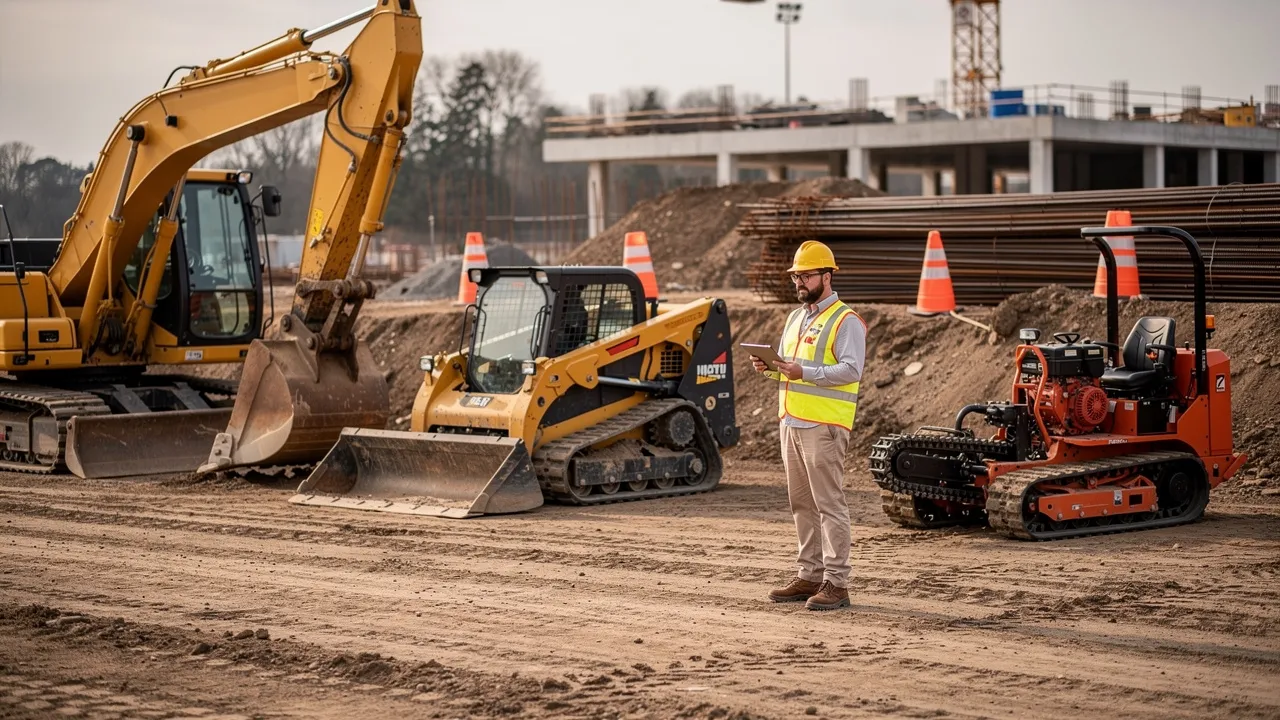
Build an EZ Equipment Rental Quote Worksheet From the Work Pattern
Use the EZ Equipment Rental quote worksheet as a project-specific decision brief. Rather than choosing from a generic machine list, record the work pattern, fit constraints, candidate machine lines, cost lines, schedule, and transport details in one place. The completed worksheet lets you ask about a machine class, attachments, and rental terms without assuming a model, price, or availability.
Start with the work-pattern block and capture the facts that will shape the quote request:
- Primary work: digging, trenching, loading, grading, clearing debris, or moving materials.
- Work envelope: required digging depth and reach, trench dimensions, material volume, and travel distance.
- Site constraints: gates, structures, turning room, obstacles, ground conditions, and surfaces that could be disturbed.
- Rental variables: lifting or loading needs, attachments, operating weight, transport arrangements, unloading access, and project duration.
A wheeled skid steer is generally better for loading, moving materials, grading, and cleanup, while a mini excavator is designed for digging, trenching, and precision below-ground excavation. Record that distinction in the worksheet because a machine that handles one work pattern well may create extra passes, handling, or cleanup when assigned to another.
A skid steer trencher is an attachment, so the carrier must be compatible with the attachment. Include the carrier model or the required hydraulic and attachment information in the rental question rather than treating the trencher as a standalone machine.
A backhoe loader digs like an excavator, loads and grades like a wheel loader, and drives between work areas at 20+ mph without a trailer for on-site moves. That combination can matter on a spread-out site, but the job still needs to justify the machine's digging, loading, and grading roles.
Those figures describe a very broad class, not a recommendation for your site. Give the rental specialist the required depth, reach, access, and material volume so the machine class can be narrowed without guessing.
Published planning ranges put walk-behind trenchers at roughly $100 - $400 per day and ride-on trenchers at $320 - $620 per day. The figures are planning context from a cited 2026 guide, not an EZ Equipment Rental quote, and they do not establish availability, included attachments, transport, or the machine that fits your work. Treat the machine category as the first question, not the final selection.
Compare Machine-Class Lines in the EZ Equipment Rental Worksheet
Write one candidate line for each machine class you want EZ Equipment Rental to assess. Each line pairs an equipment class with the trench shape it may fit and the fit questions that must be answered before rates are compared. This turns the worksheet into a consistent basis for comparing a skid steer trencher, dedicated trencher, and excavator rather than sending a machine name without its work pattern. Trench shape and production pattern separate a dedicated trencher from an excavator more clearly than the word trenching does. A skid steer trencher may suit narrow, repetitive trench runs, while an excavator may be more appropriate when the work also involves larger excavation, trench widening, spoil handling, lifting, or greater reach.
| Equipment class | Work pattern it may fit | What to check before choosing |
|---|---|---|
| Skid steer trencher | Long, narrow, repetitive runs | Carrier compatibility, trench dimensions, attachment weight, hydraulic requirements, and spoil placement |
| Dedicated trencher | Narrow, controlled trenching | Whether the trench width, depth, terrain, and production pattern match the specific unit |
| Excavator | Deep trenching, large trenches, widening, lifting, or broader excavation | Digging depth, reach, bucket, working radius, material handling, and access |
A skid steer trencher is generally faster for long, continuous trenching and produces narrow, consistent trenches; an excavator is better suited to deep trenching and large trenches. A trencher is designed for narrow, controlled trenches, and depth-control systems can help maintain uniform trench dimensions. Those characteristics are useful only when the planned trench dimensions and ground conditions fall within the machine's actual operating range.
Mini trenchers are suited for shallow trenching between 0.5 inch and 4 inches wide, with adjustable depth controls down to 13 inches deep. Use those dimensions as a boundary for the cited mini-trencher example, not as a universal specification for every available unit.
Walk-behind trenchers handle trenches to about 4 feet deep, while ride-on trenchers can cut hundreds of feet of deeper trench per hour. The machine type still needs to be matched to the actual trench depth, length, soil, access route, and required spoil handling.
Mini and compact excavators, roughly 1.5-6 tons, handle trenching, footings, landscaping and tight-access work, while standard machines, 13-25 tons, handle mass excavation and site development. Use the work pattern to decide which class deserves a quote: narrow repeated trenching points toward a trencher, while a project that combines trenching with substantial excavation or material handling may point toward an excavator. Ask for project-specific dimensions before treating any class as suitable.

Fill Fit Constraints Before Requesting Rates
Fill the fit block in the EZ Equipment Rental quote worksheet before asking about rates or a machine recommendation. It records the site facts that turn a candidate machine class into a project-specific equipment question. Match the machine to the task, digging depth, material volume, lifting needs, operating space, ground conditions, attachments, project duration, operating weight, transport plan, and unloading access.
Record these details before you request a recommendation:
- Required digging depth, reach, trench width, trench length, and working radius.
- Material volume, loading requirements, and the distance material must travel.
- Rated lifting or loading capability, working height, and the attachments the machine must carry.
- Gate width, overhead clearance, structures, turning room, obstacles, and the route from unloading point to work area.
- Ground conditions, including firm ground, mud, soft soil, uneven terrain, and surfaces that could be disturbed.
- Operating weight, transport arrangements, trailer requirements, and unloading access.
For below-ground excavation, check the required digging depth and reach. Assess the material volume, loading requirements, and travel distances before choosing equipment. Check the actual machine's rated lifting or loading capabilities, working height, and intended attachments. These checks turn a general equipment request into a fit question that can be answered.
Tracks affect traction and surface loading, while tires and steering can disturb surfaces depending on conditions; tracked machines can still damage surfaces. Describe the surface and the consequences of disturbance instead of assuming that tracks or tires automatically solve the access problem.
Not every attachment works with every machine, so check attachment compatibility before selecting equipment. The attachment must also match the intended work: a bucket, trencher, auger, blade, or other tool changes the question you need to ask about carrier compatibility and operating limits.
Standard excavators, 13-25 tons, take on mass excavation and site development. Confirm the current machine class, capacity, and project-specific terms rather than treating a published figure as a quote.
Turn Candidate Lines Into Like-for-Like Totals
Turn each candidate line into a like-for-like cost comparison in the EZ Equipment Rental quote worksheet. Separate the machine class and rental term, attachments and operating costs, and delivery or pickup and other fees before comparing totals. In Irving, mini excavator rental costs depend on operating weight, digging depth, bucket size, hydraulic attachments, and rental duration. Ask EZ Equipment Rental for daily, weekly, and monthly rate options for your dates, then compare the complete totals.
Rental pricing may be quoted by the day, week, or month. Request each applicable rate for the actual dates and compare complete totals, including included meter hours, delivery, fees, and return conditions. Do not treat a general example or multiplier as the price for a particular machine or Irving job.
Do not choose a rental term from a calendar rule alone: compare the actual dates, included meter hours, delivery, fees, and return conditions before selecting a term.
A complete comparison should put every quote on the same basis. Standard rental rates may include the machine, a basic orientation or walkthrough, and standard wear items; delivery, fuel or charging, damage waiver or insurance, attachments, and environmental fees are usually separate. Delivery and pickup may be available, but whether they are included depends on the job and location; ask about distance and trailer charges.
A rental quote can depend on machine class, delivery distance, whether an operator is needed, and billing method. Compare quotes on the same basis, including delivery, pickup, damage waiver, tax, fuel, and required fees. Rental periods usually control possession time, while included meter hours control use; ask about both limits before comparing quotes.
The 2025 cited guide says delivery and pickup are often not included; they may cost $150-500+ depending on distance and machine size. Use that figure only as published planning context. Ask for the actual transport line, because distance, machine size, trailer requirements, and the job location can change the total.
A rental agreement may charge for cleaning or fuel servicing when equipment is returned dirty or low on fuel, and may bill additional accumulated hours. Put cleaning, fuel, meter hours, overtime, damage-waiver or insurance terms, taxes, attachments, delivery, pickup, and other required fees on the same comparison sheet.
Keep Planning Ranges Separate From the Project Total
Keep published planning ranges in a separate column of the EZ Equipment Rental quote worksheet from the project-specific total. They provide budget context for a machine category, while the actual comparison uses the equipment, term, attachment, transport, and fee details confirmed for the job. An auger can drill holes for footings, signposts, and fencing. Confirm its compatibility with the selected carrier before adding it to the quote.
Treat attachment choice as a separate cost line. Ask whether the attachment is included, whether it requires a compatible carrier or hydraulic setup, and whether its use changes transport, meter-hour, or damage terms. A lower machine rate can stop being lower after the required attachment and logistics are added.
A useful budget request asks for three totals when applicable: the machine and rental term, the attachments and operating costs, and delivery or pickup. Ask EZ Equipment Rental to identify the assumptions behind each total rather than applying a general daily-to-weekly multiplier to an incomplete rate.
Complete the EZ Equipment Rental Inquiry Record
Make the completed EZ Equipment Rental quote worksheet the rental inquiry record: it puts the work envelope, logistics, schedule assumptions, and comparison details in one place before you ask for project-specific equipment recommendations, availability, and rental terms. This is the handoff from machine-class screening to a request for current options; prepare the information in this order:
- Jobsite: Give the city, address or work area, access route, gate width, overhead clearance, unloading point, and surface conditions.
- Work pattern: Describe whether you need digging, trenching, loading, grading, cleanup, material movement, or a combination.
- Dimensions: State trench width and depth, excavation depth and reach, material volume, lifting or loading needs, and travel distance.
- Machine and attachment needs: Name the task the attachment must perform and identify any carrier, hydraulic, bucket, auger, trencher, or blade requirements you already know.
- Schedule: Give the planned start date, working days, expected duration, shift pattern, and uncertainty caused by weather, inspections, permits, subcontractors, or material deliveries.
- Logistics: State whether you need delivery or plan pickup, how the machine will be unloaded, and whether the transport plan accounts for operating weight.
- Operator details: Explain who will operate the machine and what operator-related requirements need to be addressed before use.
Schedule equipment from the beginning of the project and account early for site preparation, crew readiness, subcontractor needs, inspections and permits. The quote worksheet should record both rental duration and equipment productivity because each affects total cost.
Same-day rental works best when the project is scheduled and the equipment category is clear, but availability depends on the branch, time of day, and competing bookings. Treat same-day service as an availability question, not as a delivery or equipment promise.
When possible, avoid Friday delivery, late-day delivery, and bringing equipment in before the crew is 100% ready to work. A prepared site and ready crew help you use the possession period as planned, while an unprepared site can leave the machine waiting after rental time begins.
Published rate relationships can differ across rental situations, so ask for the actual daily, weekly, and monthly figures for your dates instead of assuming a multiplier.
Use the planned start date and requested rental period as contact-planning details, while confirming the equipment, schedule, and terms for your project.
Make Safety Prerequisites Part of the Quote Record
Make the safety gate a required section of the quote worksheet before equipment reaches the ground. Before any digging project, dial 811 or make an online request two-business days before digging. Wait the two business days for utility companies to mark the work area, confirm that all affected utility companies have responded, and respect and replace the markings provided for the project.
Confirming the response means comparing the markings with the utilities listed on the 811 ticket. Do not treat an incomplete response, missing marking, or unclear marking as permission to begin. Keep the markings as the guide for the work area and account for them in the equipment plan, access route, and excavation sequence.
Trench depth and protective-system requirements belong in the equipment conversation before trenching begins. The machine choice does not by itself resolve the protective-system requirement, and a trenching plan should address protection before trench entry or operation.
Use the safety gate as a stop point in the schedule:
- Complete the Texas 811 request two business days before digging.
- Wait for the utility markings and confirm that all affected utilities responded.
- Preserve and replace the markings as work progresses.
- Compare the planned trench depth with the applicable protective-system requirement before anyone enters or works in the trench.
- Pause the excavation when the utility response, markings, trench dimensions, or protective-system plan cannot be confirmed.
Do not let an available machine or an urgent schedule replace the utility and trench-protection checks.
Hold the Rental Inquiry When a Required Field Is Unknown
Mark the quote worksheet incomplete rather than force a machine choice when an equipment or site condition is unverified. Stop before digging when the 811 response is incomplete, affected utilities cannot be matched to the markings, or the work area does not reflect the marked information. The Texas 811 process requires waiting for markings and confirming that all affected utility companies have responded.
Pause the rental decision when the required depth, reach, operating space, surface and terrain, transport route, unloading access, lifting needs, or attachment compatibility remain unknown. Ask for project-specific guidance before proceeding with a machine that has not been matched to the work envelope.
If an underground utility line is damaged, stop the work and seek immediate qualified help. Damaging an underground utility line can interrupt service and risk the safety of workers, families, and neighbors. Do not continue excavation to finish the task or treat the incident as an ordinary equipment delay.
A machine recommendation cannot replace manufacturer instructions, operator training, a site-specific assessment, applicable regulations, or qualified professional advice. Use those requirements to resolve uncertainties before operation, trench entry, or a decision that could expose people or utilities to harm.
Send the Completed EZ Equipment Rental Quote Worksheet
Submit the completed EZ Equipment Rental quote worksheet with the work pattern, trench or excavation dimensions, site access, ground conditions, attachments, schedule, rental duration, transport plan, unloading method, operator considerations, and safety prerequisites. It gives EZ Equipment Rental a consistent project record for discussing machine fit, availability, delivery or pickup, and complete rental terms rather than a machine label or an incomplete daily rate.
We provide earthmoving equipment, attachments, and trailers, among other equipment categories. Our knowledgeable professionals provide guidance, maintenance, and prompt support during the rental period; use the completed worksheet to frame the equipment-fit and rental-term questions.
EZ Equipment Rental is located at 1307 W Airport Fwy, Irving, TX 75062. Include the jobsite city and address, intended work, dimensions, requested dates, expected duration, delivery or pickup preference, and operator details when you submit the project question. A qualified professional must decide individual suitability when site or operating conditions remain uncertain.
Use the completed project record to ask about the equipment category, attachments, project-specific availability, delivery or pickup options, and daily, weekly, or monthly rental terms. Keep the 811 status, trench-protection plan, site measurements, and transport details with the inquiry so the equipment discussion starts with the conditions that control the decision.
The next step is to send those prepared Irving or DFW project details to EZ Equipment Rental for a project-specific response.
Questions to Confirm Before Requesting Earth-Moving Equipment
Can I rent a skid steer trencher without renting a skid steer?
A skid steer trencher is an attachment, not a standalone machine, so it requires a compatible carrier. Confirm the carrier, hydraulic requirements, attachment weight, trench dimensions, and spoil-handling needs before requesting the attachment. If you do not already have a compatible skid steer, ask whether a complete carrier-and-trencher combination is available for your Irving or DFW project.
What does earth-moving rental typically cost in the DFW area?
There is no verified single DFW price because cost changes with machine type, size, rental duration, attachments, delivery distance, fuel, insurance or damage-waiver terms, meter hours, and return conditions. Published planning ranges cited in the article include roughly $100 - $400 per day for walk-behind trenchers, $320 - $620 per day for ride-on trenchers, and $450 - $3,500 per day for a typical 15- to 20-ton excavator; these figures are not an EZ Equipment Rental quote. Request daily, weekly, and monthly totals for the specific machine and dates.
What charges should I check before accepting an equipment-rental quote?
Check whether the quote includes delivery, pickup, attachments, fuel or charging, taxes, insurance or a damage waiver, environmental fees, and any operator-related costs. Also ask about included meter hours, overtime, minimum rental periods, cleaning or fuel-servicing charges, and late returns. Compare every quote on the same basis and read the rental agreement before signing.
What should I confirm before digging or trenching at an Irving jobsite?
In Texas, contact 811 or submit an online request two business days before digging, wait for utility markings, confirm that all affected utilities responded, and preserve the markings. Stop and seek qualified help if markings, utility responses, site conditions, equipment fit, or the protective-system plan cannot be verified.
Sources
- RENTAL RATES - wheelercat.com
- Skid Steer vs. Mini Excavator: Which Is Better for Your Job? | Avanza Equipment - avanzaequipment.com
- Skid Steer Trencher vs. Excavator: Which Is Better for Trenching? - skidpro.com
- Same Day Construction Equipment Rental: What to Expect - articles.hokerentals.com
- Equipment Rental Costs: What to Expect in 2025 - versirentals.com, 2025-06-01
- Rental FAQ | EZ Equipment Rental | Dallas TX - ezequipmentrental.com
- Equipment Rental Cost Calculator: Daily vs Weekly | ERC - equipmentratecalc.com
- What is 811? - texas811.org
- Know Before You Trench - MCON Underground - mconunderground.com
- Homeowner - texas811.org
- What Does It Cost to Rent Heavy Equipment | Cat Rentals℠ - rent.cat.com
- What Affects Heavy Equipment Rental Costs (and How To Control Your Budget) | Contractor’s Budget Guide - herculift.com
- Earth Moving Equipment Rental: 2026 Guide - sunstateequip.com