
Start with the work the machine must perform
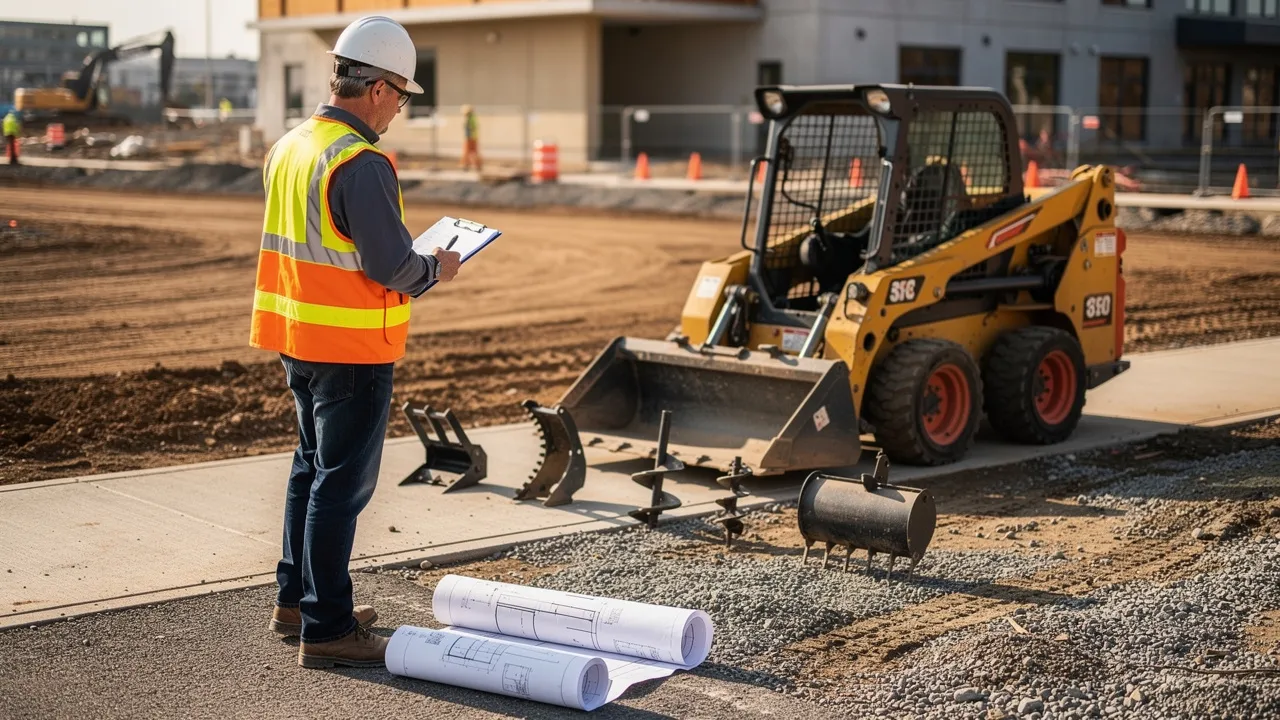
A mini skid loader rental decision starts with the work sequence, not the machine name. Write down what you need to move, dig, clear, load, grade, or break, then identify the attachment that would perform each task. Mini skid steers may help where a compact machine can access spaces that larger equipment cannot, including some areas between buildings, residential settings, and indoor environments, but the specific machine and site still require evaluation. Attachments can expand the work a mini skid steer can perform, provided the attachment matches the machine and the planned task.
Your project brief should describe the jobsite in Irving or elsewhere in the Dallas-Fort Worth Metroplex, the work area, the material, the intended sequence, and the dates when the equipment must be available. A tight-access renovation in Irving, a landscape-clearing job in Carrollton, and material handling at a commercial site in Grand Prairie may all lead to different equipment questions even when the requested category sounds similar. Start with the actual work so the rental inquiry can address fit, attachment needs, access, and timing together.
A useful fit audit answers five opening questions:
- What must the machine do first, next, and last?
- Where must it enter, turn, travel, and work?
- What material will it handle, and in what form?
- Which attachment appears relevant to that material and task?
- What rental window, delivery or pickup plan, and operator arrangement will support the work?
Use those answers as the outline for your request. Do not treat the equipment category alone as proof that the machine, attachment, or schedule will fit.
Use access as the first fit screen
A mini skid loader access screen begins with the path from transport point to work area. The compact size of a mini skid steer may help it maneuver through narrow spaces, between buildings, and in some indoor or residential settings where larger machines may not fit. The cited equipment guidance also describes a zero-turn radius as useful for navigating around obstacles in tight areas. Treat those characteristics as reasons to investigate the category, not as a clearance decision for your particular Irving or DFW site.
Your access notes should cover the full route rather than only the final work area. Record:
- The narrowest opening, including gates, doors, corridors, and passageways.
- Overhead restrictions, low structures, branches, and other obstructions.
- Surface changes between the unloading point and the work area.
- Turning areas, staging space, and the place where the machine will be parked.
- Whether people, vehicles, materials, or other crews will share the route.
- Ground conditions that could change during the planned work window.
Photographs and measured dimensions can make the equipment conversation more precise. Include the location and access route in your inquiry, especially when a machine must pass through a backyard, building opening, alley, or constrained commercial site.
Access is a fit screen, not a promise that a machine can enter or operate safely. Ask for the dimensions and operating requirements of the specific unit under consideration, then compare them with your measured route and site rules. If the path is uncertain, pause the request at the category level and provide the measurements, photographs, and obstacles instead of assuming that every mini skid loader has the same clearance or maneuvering characteristics.
Describe the material and handling sequence
Material handling requirements determine whether a mini skid loader is being asked to perform the right work. Describe the material before you describe the attachment: soil, gravel, demolition debris, logs, brush, stones, pallets, or another material each creates a different handling question. State whether the work involves digging, scooping, carrying, placing, clearing, leveling, or repeated movement between two points.
Your handling sequence should answer these practical questions:
- Where does the material begin?
- How far must it move?
- Where will it be placed, loaded, or stacked?
- Will the machine work around buildings, parked vehicles, workers, utilities, or landscaping?
- Will the task repeat throughout the rental period or occur only once?
- What changes when the material is wet, loose, irregular, bulky, or mixed?
A construction project manager in South Fort Worth might need to clear brush before moving debris, while a site in Lewisville might involve repeated material movement through a narrow access route. Those examples should be described as work sequences, not as assumptions about which machine or attachment is available.
Attachment selection should account for the material, load capacity, project scope, frequency of use, hydraulic-flow requirements, attachment weight and dimensions, mounting-system compatibility, and intended durability. The attachment guide identifies root grapples for land clearing and rake attachments for brush clearing. Use those categories to frame a question, then provide the material and sequence so the requested attachment can be assessed against the machine rather than chosen from the task label alone.
Choose the attachment by compatibility, not by task name
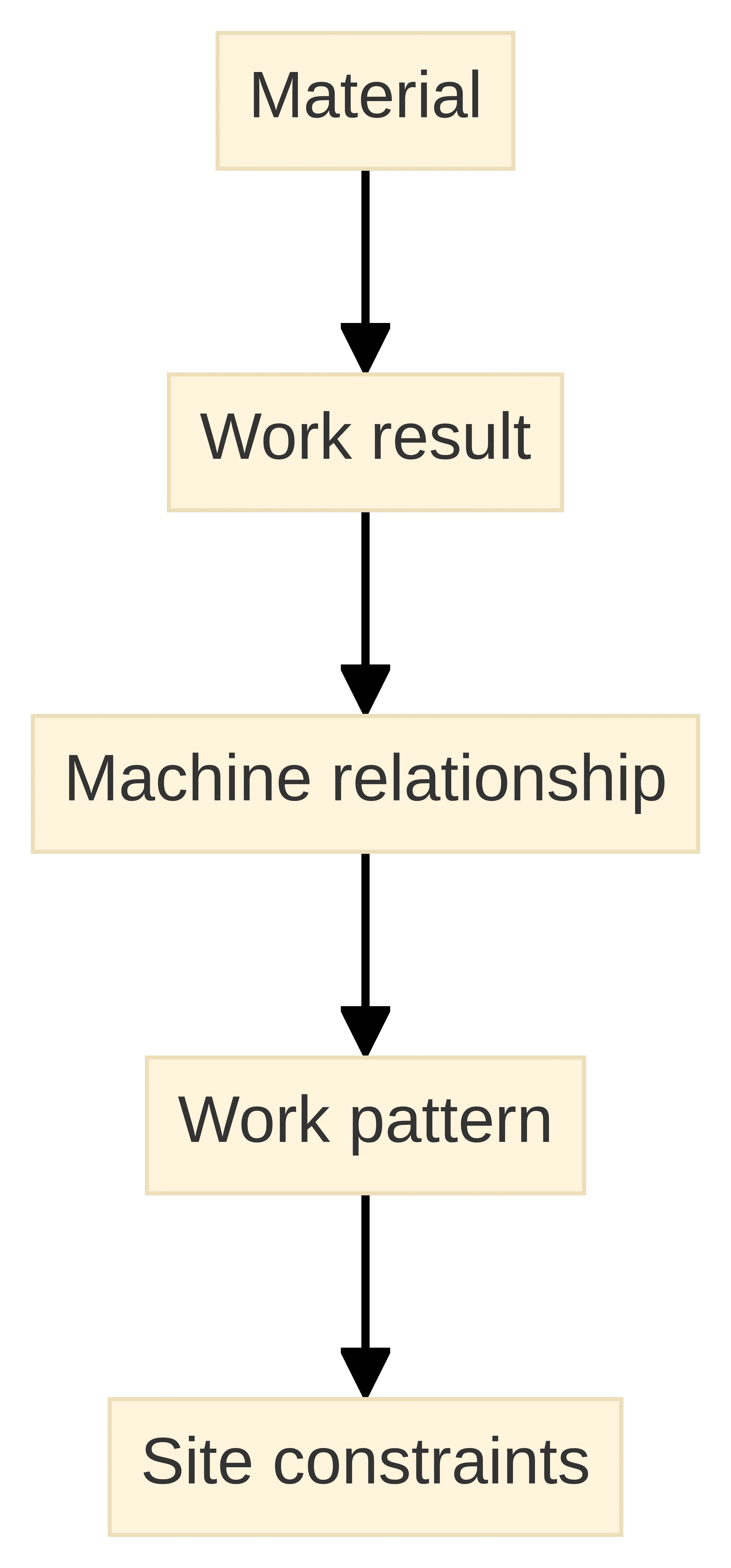
Your attachment request should include the following details:
- Material: Identify what the attachment will contact and move.
- Work result: Explain whether you need to cut, dig, rake, lift, carry, break, place, or clear.
- Machine relationship: Ask about capacity, hydraulic-flow requirements, attachment weight, dimensions, and mounting-system compatibility.
- Work pattern: State whether the attachment will be used for a single phase, repeated cycles, or several tasks.
- Site constraints: Include access, turning room, surface conditions, nearby structures, and the areas where material will be placed.
This list turns a general request into a technical question that can be answered with the specific equipment under consideration.
A grapple request illustrates the difference between task language and compatibility language. A root grapple may fit a land-clearing question, while a rake attachment may fit brush-clearing work, according to the attachment guidance. Neither label establishes that the attachment will fit every mini skid steer or handle every load. State the material, dimensions, expected handling pattern, and machine category, then ask which compatible option is available for the job.
Separate a likely category from details that require confirmation
A mini skid loader may be a reasonable category to investigate when your work needs compact maneuvering and attachment flexibility. The category alone does not establish the unit’s dimensions, capacity, hydraulic requirements, attachment compatibility, rental rate, availability, or suitability for your site. Keep those details as questions for the specific rental request.
We provide earthmoving equipment, attachments, trailers, and other equipment categories. That gives you a local starting point for discussing a mini skid loader and the related attachment, but it does not replace a project-specific equipment conversation. Describe the work and ask about the combination that matches your access, material, and schedule.
Your request should ask for the details that affect the rental decision:
- The available mini skid loader category or unit for the intended dates.
- The compatible attachment options for your stated material and task.
- The applicable rental period and rate structure for the work window.
- The pickup or delivery arrangement for the Irving or DFW jobsite.
- The site-access information needed for the equipment movement.
- Any operating, maintenance, or return instructions that apply to the selected equipment.
We offer flexible rental durations tailored to project requirements, and we provide advice during a project through knowledgeable team members. Use that conversation to narrow the choice without treating an unconfirmed specification or date as settled.
The decision at this stage is deliberately narrow: determine whether a compact, attachment-capable earthmoving category deserves a project-specific inquiry. Do not turn that preliminary decision into an assumption about price, delivery, capacity, or availability. Carry each unresolved detail into the request.
Turn the work window into a rental logistics plan
A rental logistics plan connects the machine’s work window to the project schedule. List the planned start date, expected end date, work phases, daily operating windows, and any schedule uncertainty. We offer flexible rental durations tailored to project requirements, so state whether you are considering a short daily period, a weekly period, or another duration that matches the project phase. Ask for the applicable arrangement rather than assuming that a longer or shorter rental will be priced or scheduled in a particular way.
Your pickup or delivery plan should answer practical site questions:
- Where should the equipment arrive or where will you collect it?
- Is there a suitable unloading and loading area?
- What access route will the transport vehicle use?
- Who will be present to receive the equipment?
- When can the site accept the machine, and when must it leave?
- What happens if the work phase moves or the site is not ready?
Include the jobsite city, street access, gate or opening information, and any restrictions that could affect the arrival. A delivery question is incomplete if it gives only a ZIP code but leaves the unloading route unknown.
We are located at 1307 W Airport Fwy, Irving, TX 75062, and we provide equipment rental services in Dallas, TX. That Irving location gives your request a clear local reference point, but the jobsite arrangement still belongs in the inquiry. State whether you are asking about pickup or delivery, identify the DFW city where the work will occur, and provide the date range before discussing the equipment choice.
Treat schedule and logistics as fit gates. A machine that matches the task but cannot reach the site at the needed time does not solve the project requirement. Put the work dates, site readiness, access route, and return timing beside the equipment and attachment questions so the rental discussion covers the complete operating plan. To keep that plan usable, organize the request as a confirmation record with four groups: work and attachment, access and site readiness, dates and duration, and pickup or delivery and return. Mark each item as confirmed, open, or dependent on the specific unit under discussion. This prevents an answer about rental duration from being mistaken for confirmation of attachment compatibility or site access. If the work phase changes, update the related group rather than assuming the original request still describes the job. Copy the record into the contact form and leave unresolved questions visible, so the response can address the missing decision points instead of starting with a category name alone.
Make operator readiness part of the rental decision
Operator readiness belongs in the rental decision before equipment arrives. Before use, the person operating the machine should learn the controls, receive a qualified demonstration of basic movements and attachment functions, and complete the machine’s required pre-use inspection. Mini skid-steer training material uses a pre-operational inspection and operating-control demonstration as part of training. Treat training and inspection as planned work, not as tasks to handle after the machine reaches the jobsite.
Your operator-readiness plan should identify:
- Who will operate the machine and what instruction or demonstration is needed.
- How the controls, basic movements, and selected attachment functions will be introduced.
- What pre-use inspection the machine requires before work begins.
- How the operator will enter, exit, start, stop, steer, and position the machine.
- How the attachment will be engaged, changed, and used according to its instructions.
- Which site conditions must be addressed before operation starts.
A rental inquiry can include these questions so the equipment conversation covers the operating plan rather than only the delivery date.
The selected attachment changes the readiness questions. Breaker use, for example, requires understanding the equipment manual and the operating and maintenance instructions that apply to the machine, attachment, and worksite. Ask which manual and attachment instructions apply to the proposed combination, then plan for the operator to review them before use. Do not treat familiarity with another machine as a substitute for learning the selected controls and attachment.
Add operator readiness to the project brief with a simple statement such as: “The machine will be operated by [role], and we need the applicable control, attachment, inspection, and operating instructions for the selected equipment.” That statement identifies a condition of use without claiming that a particular person or machine is already approved.
Treat entry, attachment movement, and terrain as safety gates
Skid-steer loaders have crushing hazards around the operator’s space, lift arms, bucket, and attachments. Controls, lift arms, buckets, and attachments can be close to the operating position, so the entry route, control awareness, and attachment movement must be part of the jobsite plan. Keep workers and bystanders outside the machine’s hazardous movement areas, and follow the operating instructions for the selected equipment.
Safe entry and exit are specific planning points. Use the machine’s handholds and tread plates with three points of contact when entering or exiting, then fasten the seat belt or lower the restraint bar when seated. Your rental brief should identify who will operate the machine and how the site will keep the entry area clear, particularly when mud, wet surfaces, stored materials, or active work could affect footing.
Overturning is a hazard to consider when operating a self-propelled loader; follow the machine manual and site-specific safety requirements. Include slopes, uneven ground, edges, excavations, soft areas, overhead restrictions, and changing surface conditions in the site description. Training guidance also directs the operator to understand prohibited work areas such as excessive slopes and dangerous terrain conditions before using an attachment. Keep terrain questions open until the selected machine, attachment, and worksite requirements have been addressed.
Use these safety gates before arranging the rental:
- Entry gate: The operator can enter and exit using the machine’s handholds, tread plates, and three-point contact.
- Control gate: The operator has learned the controls and received a qualified demonstration of basic movements and attachment functions.
- Inspection gate: The required pre-use inspection is planned before operation.
- Attachment gate: The operator understands the applicable attachment instructions and the machine’s operating limits.
- Terrain gate: The site’s slopes, surfaces, edges, and restricted areas have been addressed through the manual and site safety requirements.
If any gate is unresolved, keep it as a direct question in the rental request instead of treating the project as ready for operation.
Submit a project-specific request to EZ Equipment Rental
A project-specific rental request should give EZ Equipment Rental enough context to discuss the machine, attachment, schedule, and logistics together. Include:
- Jobsite city and access details in Irving or the DFW Metroplex.
- The work sequence and material to be moved, cleared, dug, loaded, or placed.
- The narrowest access point, overhead restrictions, surface conditions, and staging area.
- The attachment you are considering and the compatibility questions it raises.
- Planned rental dates, expected duration, pickup or delivery preference, and site readiness.
- Operator-readiness details, including the planned inspection, control demonstration, and applicable instructions.
- The equipment details, rate structure, availability, and delivery or pickup questions that still need an answer.
We provide earthmoving equipment and attachments, and we provide advice during a project through knowledgeable team members. Use the request to describe the project clearly rather than asking for a machine by category alone.
The decision is ready to move forward when your brief connects the task to the access route, material, attachment, work window, logistics plan, and operator-readiness conditions. Keep specifications, rates, availability, delivery arrangements, and site suitability as questions for the specific rental conversation. A qualified professional must decide whether the selected machine, attachment, and operating plan suit your particular site and work; follow applicable manufacturer instructions, site requirements, and trained-operator practices.
Your next step is to send the completed project brief with the jobsite, intended work, timing, and equipment questions together. That gives the rental discussion a defined starting point and keeps the decision tied to the work your DFW project actually requires.
What should you confirm before arranging a mini skid loader rental?
How do I determine if a mini skid loader fits my project?
To determine if a mini skid loader fits your project, consider the specific tasks it needs to perform, the materials involved, the access points to the job site, and the required attachments for the work.
What information should I include when contacting EZ Equipment Rental for a mini skid loader rental?
When contacting EZ Equipment Rental, include details such as the jobsite location, the work sequence and materials, access restrictions, desired rental dates, and any operator readiness requirements.
What safety considerations should I keep in mind when operating a mini skid loader?
Safety considerations include understanding the machine's controls, performing a pre-use inspection, ensuring safe entry and exit, and being aware of potential hazards such as crushing and overturning.
How can I ensure the mini skid loader can access my job site?
To ensure access, measure the narrowest points along the route to the work area, check for overhead restrictions, and consider the ground conditions. Provide this information when making your rental inquiry.
What rental logistics should I consider for a mini skid loader?
Consider the rental duration, delivery or pickup arrangements, and the schedule for when the equipment will be needed. Ensure that the site is ready to accept the equipment upon delivery.
Sources
- The Complete Guide to Mini Skid Steers and Attachments — skidpro.com
- SKID-STEER LOADER SAFETY — agsafety.tamu.edu
- Select the Right Mini Skid Steer Grapple Attachment in 4 Steps — blog.ezequipmentrental.com, 2026-10-21
- LOADER-SKIDSTEERS-MINI-Mini-Skid-Steer-Safety- ... — www.brieserconstruction.com
- SKID STEERS — ag-safety.extension.org
- Boom Rental | Rent A Boom Lift | Articulating Boom Lift | Forklift Rental Near Me
- About Us - EZ Equipment Rental | Dallas, TX
- Cargo Trailer Rental Dallas, TX | Rent Cargo Trailers | Equipment Rental Trailer
- EZ Equipment Rental provides industrial equipments -
- Equipment & Tool Rentals in Dallas TX - EZ Equipment Rental